

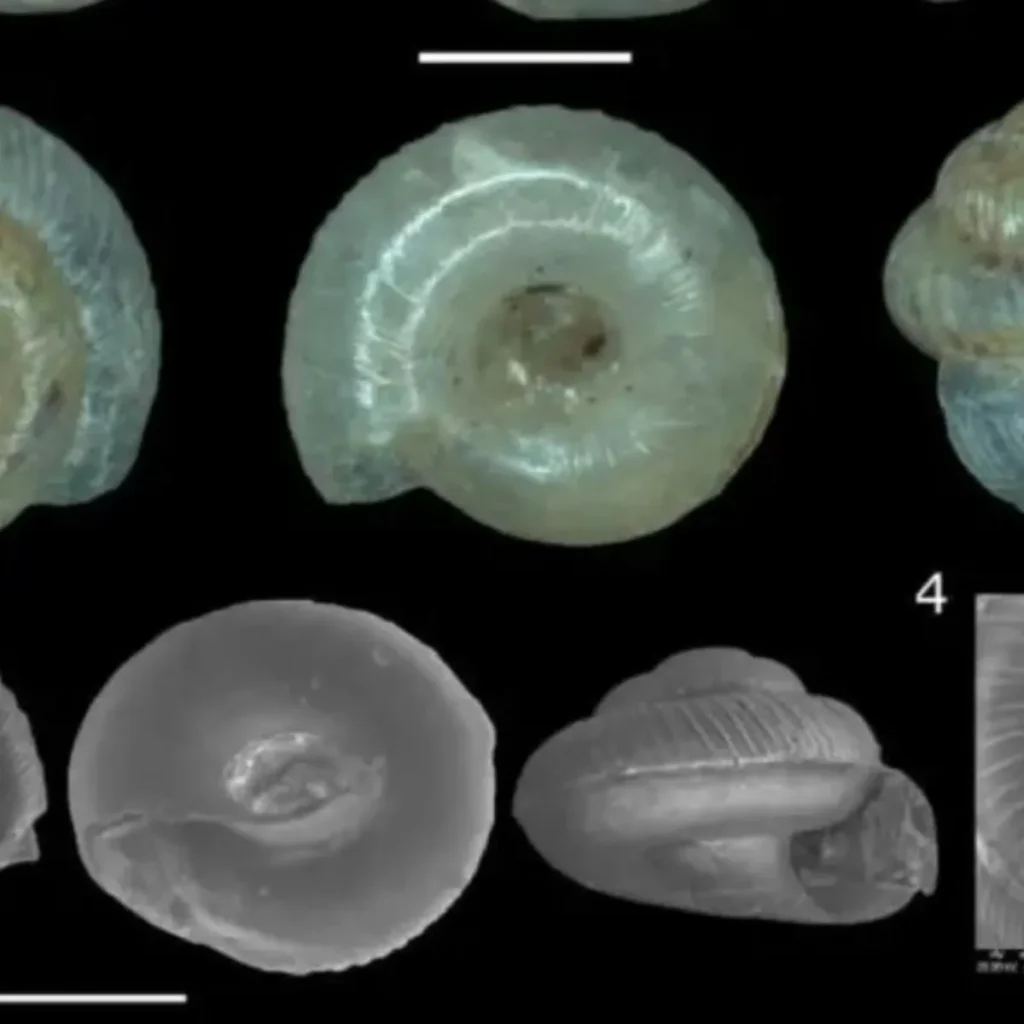
Ecuador’s National Institute of Biodiversity (Inabio) reported that researchers documented the presence of the terrestrial micromollusk genus Habeastrum in Ecuadorian territory for the first time and described three species new to science in Amazonian provinces.
RELATED:
Ecuadorian Researchers Document a Species of Weevil Genus Cydianerus
The terrestrial snail species were named Habeastrum striolatum, Habeastrum tayos, and Habeastrum decussatum. The specimens were found in the Amazonian provinces of Pastaza and Morona Santiago—which border Peru—and Sucumbíos, which also borders Colombia.
According to Inabio, researchers conducted extensive explorations in caves, Amazonian forests, and Andean ecosystems to locate these tiny land snails. This record extends the known distribution of the genus—previously documented only in caves in Brazil—by more than 3,000 kilometers.
“The three species exhibit unique morphological characteristics that allowed them to be distinguished from the previously known Brazilian species,” the institute stated in a press release.
#INABIOEnMedios | Ecuador identifica más de 8.000 posibles nuevas especies de insectos mediante análisis de ADN https://t.co/PuY4ayQhEB
— INABIO.EC (@INABIO_EC) August 7, 2026
The text reads, “Ecuador identifies more than 8,000 possible new insect species through DNA analysis.”
The study’s authors are affiliated with the Leibniz Institute for the Analysis of Biodiversity Change and the University of Hamburg, Germany, Ecuador’s Inabio, and the Natural History Museum Rotterdam and the Naturalis Biodiversity Center, Netherlands. The institute noted that these discoveries provide new information regarding the evolution and distribution of South American terrestrial micromollusks.
Inabio also highlighted the value of Amazonian ecosystems and Ecuadorian caves as refuges for highly specialized biodiversity, reinforcing the importance of conserving these natural environments and promoting taxonomic studies.
This discovery demonstrates that Ecuador’s biodiversity still harbors numerous species unknown to science and that questions remain regarding the ecology and evolutionary relationships of these organisms.
#Ecuador: A study documented the presence of the weevil genus Cydianerus for the first time, after identifying the species Cydianerus ornatus, a brightly colored beetle whose distribution ranges from the humid Choco region to the Amazon and the dry forestshttps://t.co/ZivCWy2YQL
— teleSUR English (@telesurenglish) August 7, 2026
From teleSUR English via This RSS Feed.