

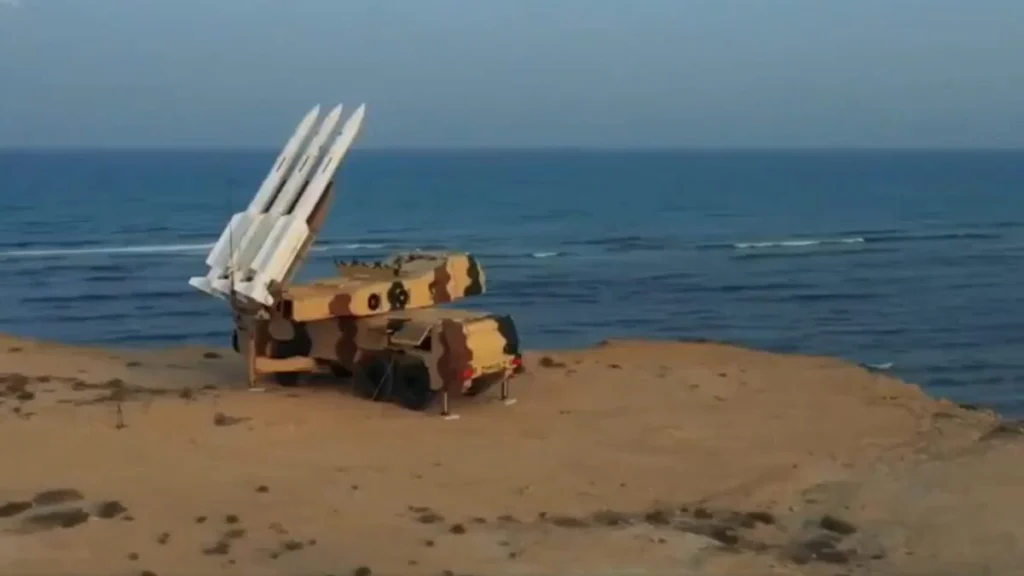
Ayatollah Mojtaba Khamenei renews the Persian nation’s military leadership.
On Tuesday, Iranian Foreign Affairs Minister Abbas Araghchi stressed that the strength of the Islamic Republic has forced U.S. President Donald Trump to seek negotiations with Tehran despite his bellicose rhetoric.
RELATED:
Iran Reinforces Military Command Amid Foreign Aggression
“The U.S. president wrote two words at the beginning of the war: ‘Unconditional surrender.’ Twenty days later, the same enemy was begging for negotiations,” he said.
“Iran showed the world that it is a tough and invincible power. No one thought that Iran could resist America like this,” Araghchi added, highlighting the resilience of the Persian nation in the face of the U.S.-Israeli war on Iran.
His statements came after Ayatollah Mojtaba Khamenei renewed the Iranian military leadership amid the possibility that the external aggression could continue for a long time.
After nearly six months of war and more than 13,000 bombings, Iran remains standing and in a position to determine the future of the Strait of Hormuz, a maritime route through which 20% of the world’s crude oil passed before the U.S.-Israeli offensive began on Feb. 28.
Iran is demanding that the United States lift the naval blockade of its ports and ships, eliminate the ban on oil sales, release blocked assets, compensate for the damage caused, end military operations against the country and its allies, and withdraw U.S. forces deployed around Iran.
I will support a bad deal to end this war. Because we need to cut Trump’s hemorrhaging losses now.
But the supposed deal on the table pays Iran $100 billion to open the Strait. And no concessions on their nuclear program.
What an unmitigated disaster. pic.twitter.com/YVawYTRIM7
— Chris Murphy
(@ChrisMurphyCT) August 9, 2026
Meanwhile, the U.S. president’s war strategy has failed to weaken the Iranian position, despite the continued attacks on Persian territory and the economic blockade.
After 13 consecutive days of bombings in July along Iran’s coast, Trump indicated that he was halting the attacks and opting for economic pressure. “We’re simply watching Iran, with its huge inflation and the fact that they have no money,” he said in an interview with Axios.
On Monday, Ayatollah Khamenei has renewed the military and security leadership of the Persian country by appointing seven senior officials in a centralization of military command.
Among them is Mohsen Rezaei, who led the Revolutionary Guard during the Iran-Iraq war in the 1980s and will head the Supreme National Security Council, the institution responsible for defining defense and nuclear policies.
Ali Abdolahi will be the new chief of staff of the Armed Forces, and Ahmad Vahidi will assume leadership of the powerful Revolutionary Guard.
Khamenei explained that the appointments seek to integrate the different branches of the Armed Forces and increase the country’s defense capabilities in the face of threats against Iran. He also ordered the Revolutionary Guard to prepare for the launch of “powerful offensive operations against the enemy.”
teleSUR/ JF
Sources: The Diplomatic Insight – EFE
From teleSUR English via This RSS Feed.