

This article by Sugeyry Gándara originally appeared in the August 9, 2026 edition of SinEmbargo, an independent Mexican digital news outlet.
Mexico City, August 9 (SinEmbargo).— For a few days, two far-right organizations arising from political traditions that seemed confined to the margins of Mexican history tried to return to the public arena. The Unión Nacional Sinarquista (National Sinarquist Union), heir to the counterrevolutionary Catholicism that reorganized after the Cristero War, and the Círculo Tradicionalista Celedonio de Jarauta, identified with Spanish monarchist Carlism, joined the call to recreate the Paseo del Pendón in Mexico City.
Their appearance drew attention not for the political force they represent, but for what it revealed about a traditionalist far right that survives in small nuclei, yet remains distant from the new expressions of the right and far right that in Mexico and other countries have gained public presence in recent years.
The two groups have different origins and projects. The Unión Nacional Sinarquista was born in 1937, after the Cristero War, as a counterrevolutionary Catholic organization opposed to various policies of the government of Lázaro Cárdenas, and which today claims to be an expression of the “popular right.” The Círculo Tradicionalista Celedonio de Jarauta, by contrast, identifies with Carlism, a Spanish traditionalist, Catholic, and monarchist current that defends a monarchy headed by a member of the Bourbon family.
The call to recreate the Paseo del Pendón, scheduled for August 14, had circulated practically unnoticed on social media until both organizations began promoting it through their own channels. Their joining sparked questions over their conservative profile and, particularly, over the positions of the Círculo Tradicionalista, which openly claims Carlism and uses expressions such as “Viceroyalty of New Spain” to refer to Mexico City.
But for the writer Pedro Miguel, the presence of these organizations is far from signaling the emergence of a new force capable of politically articulating the Mexican far right. “They are not a very political expression, let’s say; they are so out of touch that they don’t manage to become a political expression,” he explained in an interview with SinEmbargo.
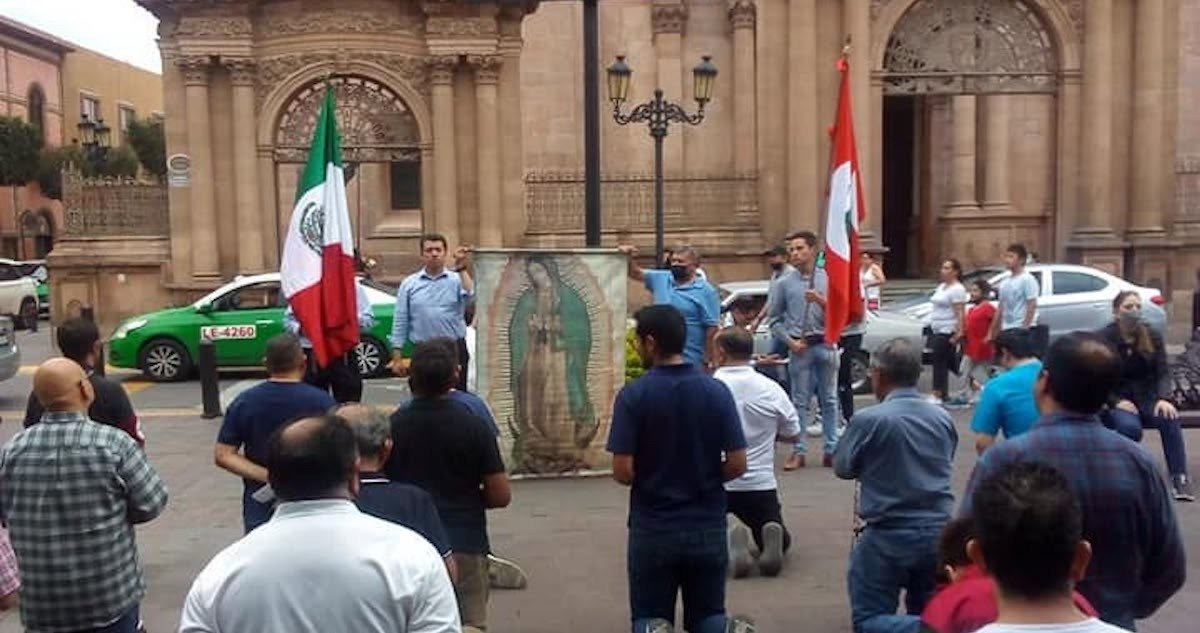
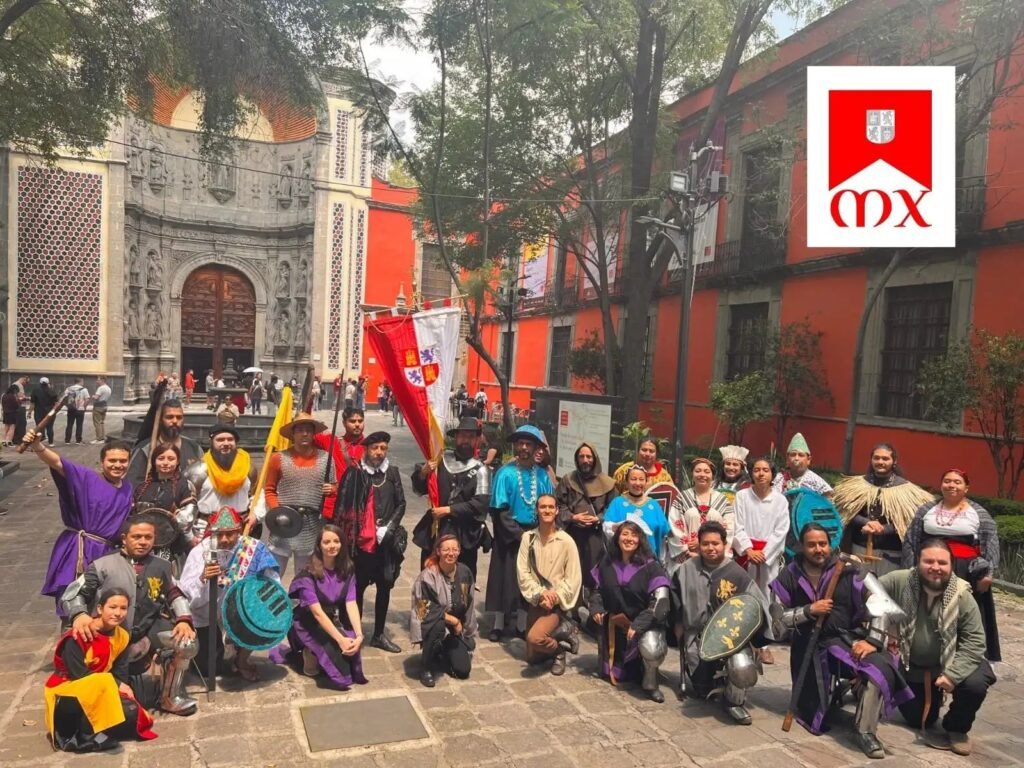
Two far-right organizations sought to return to the public arena around the Paseo del Pendón. Photo: SinEmbargo
In recent days, a call began to circulate on social media that had gone practically unnoticed until both groups started spreading, through their own channels, the invitation to the recreation of the Paseo del Pendón, scheduled for August 14.
Their joining generated questions due to their conservative profile and to the fact that the Círculo Tradicionalista Celedonio de Jarauta claims the political ideology of Carlism and uses expressions such as “Viceroyalty of New Spain” to name Mexico City.
The event was organized by a group identified as the Comité Festival Paseo del Pendón. The initial call included organizations devoted to history and to pre-Hispanic Indigenous reenactments, among them México Hispañon, Ehécatl, Somos Nómadas, and Cuauhocelocalli.
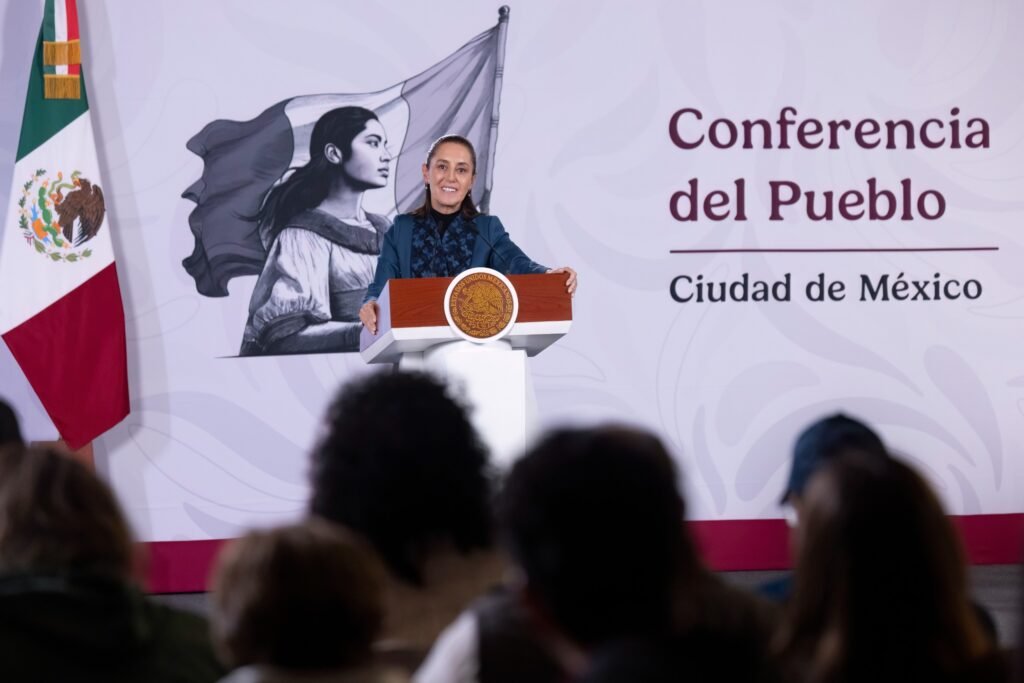
The controversy reached the morning press conference of President Claudia Sheinbaum Pardo. On July 24 she questioned the intention to recover this celebration and stated:
“It is the commemoration of the Conquest, in a few words; a part of the Mexican right already tried it by bringing Díaz Ayuso from Spain to vindicate Hernán Cortés, it did not go very well for them and I do not think it will go well for them now.”
Claudia sheinbaum
The event was ultimately canceled. The organizing group, identified on social media as the Festival Cultural Paseo del Pendón, but with no visible faces, sent a letter to the newspaper La Jornada, which had reported that far-right organizations had joined the call, and later spread the same statement on its social media.
In the document, the organizers claimed that the festival arose in 2021 with cultural aims and that its objective was to publicize the participation of the original peoples in what they described as Mexico City’s main civic viceregal celebration.
They also rejected any link to political groups and claimed that from the outset they established rules to prevent their participation.
“From the beginning it was decided that the festival would be citizen-led, self-managed, self-financed, participatory, and free of admission,” they stated.
According to their communiqué, the participation rules “strictly” prohibited the incorporation of political groups, as well as the use of symbols, slogans, or media of a proselytizing and ideological nature. They also claimed that, when they detected attempts to do so, they took measures to prevent it.
The organizers attributed the cancellation to intolerance and polarization.
“Intolerance has reached the point of forcing the definitive cancellation of the program of public activities planned for this year because the conditions to carry them out do not exist,” they stated.
SinEmbargo sought out the Organizing Committee by email and through its social media to learn more details about its membership, its representatives, and the reasons for organizing the festival, but as of this edition’s closing it had received no response.
Read the organizers’ full response (PDF)
After the cancellation, the Unión Nacional Sinarquista lamented that the reenactment was suspended and accused others of seeking to distort its meaning.
“We regret the cancellation of the Festival Cultural Paseo del Pendón CDMX,” the organization said, asserting that the historical and cultural reenactment commemorated “the victory of the Mesoamerican peoples alongside the Spanish against the Triple Alliance that oppressed them.”
The UNS also rejected classifying the movement in terms of left or right and maintained that since its founding it has fought for social justice.
Nonetheless, the organization maintains a conservative profile. Among its positions are the defense of private property, an anti-abortion stance, and the vindication of the Cristero War, a conflict whose start marks its hundredth anniversary in 2026.
Its foremost historical leader was the writer and politician Salvador Abascal Infante, father of Carlos Abascal Carranza, who was Secretary of the Interior during the government of Vicente Fox, and of Salvador Abascal Carranza, a former deputy and pre-candidate for Head of Government of the Federal District in 2000.
The relationship between sinarquismo and the Cristiada is not limited to its current commemoration. After the 1929 agreements that ended the main phase of the Cristero rebellion, sectors of militant Catholicism that had taken part in the confrontation with the post-revolutionary State remained organized.
Part of those networks regrouped first in the so-called Legiones and later in La Base, a clandestine Catholic organization from whose section number 11 the Unión Nacional Sinarquista formally emerged in León, Guanajuato, in 1937. Thus, sinarquismo took up part of the political and religious tradition of the Cristiada, although it replaced armed rebellion with a strategy of organization and mass social mobilization.
That continuity also had a territorial and social dimension. The UNS found some of its main strongholds in Guanajuato and other areas of the Bajío and the West, regions where the Cristero rebellion had had a strong presence. But the movement broadened its program: in addition to defending Catholic values, it opposed various policies of Cardenismo and sought to promote a social order inspired by Catholicism.
The writer Pedro Miguel placed sinarquismo precisely within a right historically linked to popular sectors.
The sinarquistas were the right of the poor, or the poor of the right.
Pedro Miguel, writer
According to the writer, the sinarquistas shared with some sectors that later promoted left-wing candidacies traits such as their origin among poor peasants and a deep nationalism. However, he explained that their nationalism had a Catholic and anti-imperialist character, since it was opposed to the Anglo-Saxon Protestantism of the United States.
Pedro Miguel considered that sinarquismo lost relevance during the following decades and maintained that, if this group was the most important among those who joined the call, “the others are really insignificant.”
The Unión Nacional Sinarquista was the organization with the greater historical weight of the two. Pedro Miguel recalled that until the 1980s it came to gather tens of thousands of people. In 1987, during the 60th anniversary of its founding, it filled an event in León, Guanajuato, one of its main strongholds.
But that strength dissolved during the following decades, among other reasons, after sinarquismo ventured into electoral politics through the Partido Demócrata Mexicano (PDM).
The writer recalled that projects derived from this current even ended up supporting the candidacy of Cuauhtémoc Cárdenas and joining a coalition of the left. For Pedro Miguel, the turn was less paradoxical if one took into account the social origin of sinarquismo.
In line with what the writer explained, the Unión Nacional Sinarquista also sought to take its project into electoral politics with the Partido Demócrata Mexicano, known for the emblem of the “Gallo Colorado” (Red Rooster), which presented itself as an expression of the “right of the poor” and drew on part of the social-Christian tradition linked to sinarquismo and the Cristiada, according to what the sinarquistas themselves explain in their publications.
The PDM was founded in 1971 in Irapuato, Guanajuato, after the Cristero War, with an ideology of extreme and counterrevolutionary Catholicism.
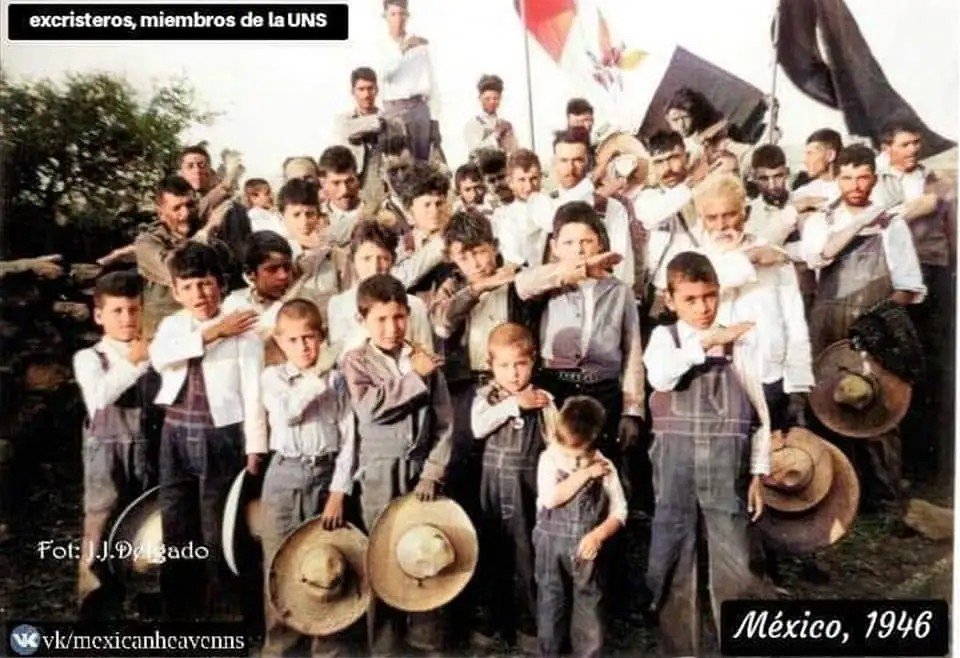
Former Cristeros. Photo: Special
“The PDM adopted the Social Doctrine of the Church and the principles of social Christianity (often confused with Christian democracy) as its backbone,” as the sinarquistas describe themselves.
The party had presidential candidates and gained a presence in Congress and in municipal governments, mainly in the Bajío and the West of the country. In 1982 it nominated Ignacio González Gollaz, who obtained around 433,000 votes, equivalent to 1.8 percent of the vote. In 1988, Gumersindo Magaña Negrete won close to 190,000 ballots, a result with which the party lost its registration.
After recovering it, the PDM nominated Pablo Emilio Madero in 1994 and formed the Unión Nacional Opositora (UNO) coalition, but obtained its lowest vote and again lost its registration. The party disappeared after the 1997 elections.
During its trajectory, the sinarquista party also won municipalities such as San Julián, Lagos de Moreno, San Juan de los Lagos, Guanajuato city, and Santa Ana Chiautempan, in addition to coming to hold as many as 12 plurinominal federal deputies.
The electoral journey ended with a political turn: projects arising from this current ended up linked in the year 2000 with the left of Cuauhtémoc Cárdenas, an alliance that sectors of traditional sinarquismo considered a break with their roots. Afterward, these expressions gradually lost strength.
For this reason, Pedro Miguel considered that if the Unión Nacional Sinarquista was the group with the greatest weight among those who joined the Paseo del Pendón call, the others had even less relevance.
The Círculo Tradicionalista Celedonio de Jarauta has a profile different from that of sinarquismo. The organization identifies with Carlism, a traditionalist, monarchist, and antiliberal political movement that emerged in Spain in the 19th century.
Carlism defended Catholicism, the traditional laws of the regions, and a king belonging to the Bourbon family. The Círculo declares itself loyal to H.R.H. Don Sixto Enrique de Borbón and disseminates content linked to that current.
Pedro Miguel explained that the group maintains an international articulation with spaces linked to Carlism, mainly with the newspaper La Esperanza.
The writer also distinguished this current from contemporary rights and far rights, which hold other international positions. According to his explanation, the Círculo retains a traditionalist and monarchist vision that places it in a different position even from other expressions of today’s far right.
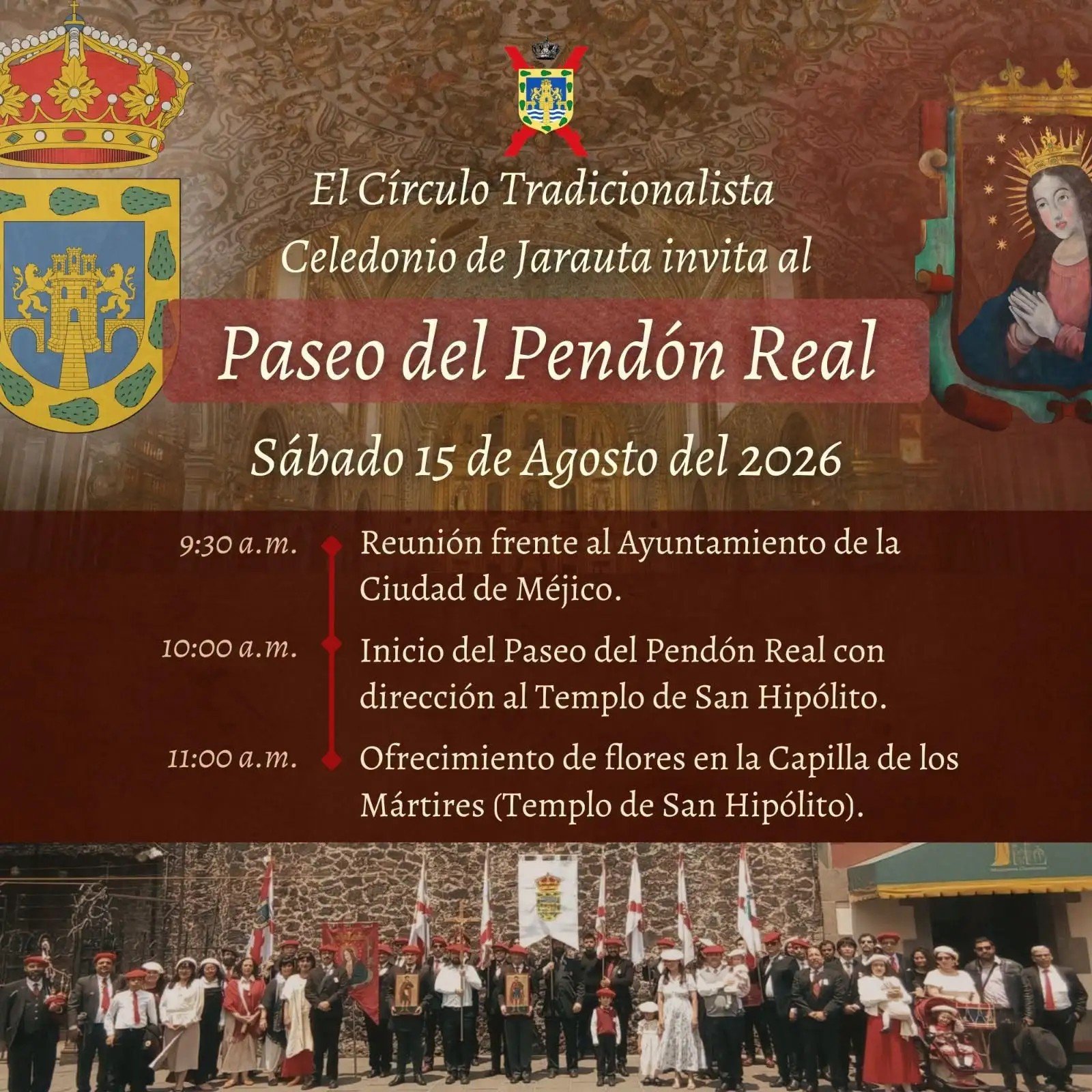
Photo: Círculo Tradicionalista Celedonio de Jarauta
The writer Pedro Miguel stressed that these ultra-conservative groups are associations that have remained isolated and have not connected with the expressions of the far right that in recent years have achieved a greater public presence and that have sought to establish links with sectors of the Mexican right.
“They did not manage to articulate with the far-right expressions that have resonated most in recent times, which are these currents of Panismo, Salinas Pliego, Eduardo Verástegui, Gilberto Lozano,” said Pedro Miguel.
The writer placed this attempt within a broader context of the transnational rights approaching Mexican actors. He also recalled the presence in Mexico of Isabel Díaz Ayuso and Cayetana Álvarez de Toledo, as well as Donald Trump’s overtures to figures of the Mexican right. He also mentioned attempts from Argentina to find a Mexican counterpart with political weight.
But in the case of the groups that joined the Paseo del Pendón call, that articulation did not happen.
“I believe these ones were left loose, they were left alone,” Pedro Miguel concluded.
-
Two Far-Right Organizations Seek to Revive in Mexico… but End Up Alone
August 10, 2026
A century after the Cristero War, sinarquistas and a Carlist circle rallied to the Paseo del Pendón, but failed to gather support, even among the right.
-
People’s Mañanera August 10
August 10, 2026August 10, 2026
President Sheinbaum’s daily press conference, with comments on children online, solidarity with Colombia, reforestation, renaming Paso de Cortés, avocado plants, water for the eastern Valley, and the Central American Games.
-
Indigenous and Afro-Mexican Peoples
August 10, 2026August 10, 2026
For Indigenous Peoples Day, Elena Poniatowska talks with Senator Susana Harp on recognizing Afro-Mexican peoples, halting textile plagiarism, and Mexico’s racism.
The post Two Far-Right Organizations Seek to Revive in Mexico… but End Up Alone appeared first on Mexico Solidarity Media.
From Mexico Solidarity Media via This RSS Feed.