

Effective public safety policy is founded on preventing crime and repairing harm, but these are not the foundations of America’s reactionary criminal justice establishment. This week on Rattling the Bars, we host a roundtable discussion about the DC Justice Lab’s 2026 Public Safety Policy Agenda, which has been endorsed by 30 progressive organizations working directly with system-impacted individuals, and about criminal justice reforms that would ensure safer communities through restorative justice, not draconian punishment.
Additional links/info:
- DC Justice Lab website, Facebook page, X page, and Instagram
- DC Justice Lab, 2026 DC Public Safety Policy Agenda
Credits:
- Producer / Videographer / Editor: Cameron Granadino
Transcript
The following is a rushed transcript and may contain errors. It will be updated.
Mansa Musa:
Welcome to this edition of Rattling the Bars, I’m your host, Mansa Musa.
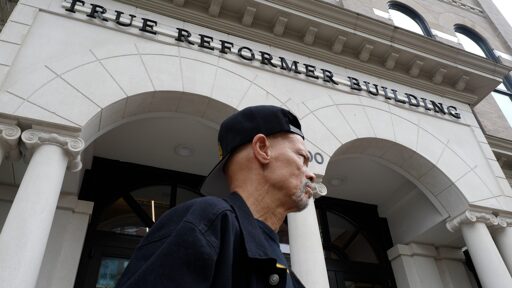
Today we are at the True Reformer Building talking to representatives from DC Justice Lab. I’m talking to Clinique Chapman, CEO, Bethany Young, the policy director. We’re here to discuss a roadmap for a safer and more equitable District of Columbia through the lens of the public safety policy agenda that DC Justice Lab has developed. Welcome to Rattling the Bars.
Clinique Chapman:
Thank you. We’re happy to be here.
Mansa Musa:
OK. Let’s start with transparency and technology. Clinique and Bethany, your agenda highlights surveillance oversight and the need for virtual testimony from the jail. Why are these two so critical for ensuring the justice system remains accountable to public safety and accessible to those inside? And when we talk about the virtual, for the benefit of our audience, DC Code Defenders can vote. And because DC Code Defenders can vote, they also should have the right. I think this is the attitude that we have in the city. They should have the right to be able to testify before City Hall around issues relative to whatever’s going on in the city and whatever’s going on with the jail. So it’s that landscape that we’re talking about virtual testimony.
Clinique Chapman:
Thank you for having us. I think to start, I’d love to just introduce the 2026 DC Public Safety Policy Agenda, which was co-created by DC Justice. We convened nearly 30 organizations to come and talk to us about what are the solutions that we want to see as we know that the landscape is shifting, a new mayor is coming, new city council members, new congressional representative. And so we knew that it was a very important time to really pull together all of those organizations who are working on the ground, in policy, different spaces to really put together what those solutions should look like and that roadmap for the next administration, whoever that is in the city. And so that was the impetus to creating this document. And there are many priority areas for each organization, whether it be the youth orgs or our organization kind of spanning different policing, punishment, prosecution, prevention.
And so for us and your question related to the virtual testimony, that’s something that DC Justice Lab has been working on through the EASE Act. It is something that we recognize is a civic requirement, a civic necessity. Just because someone is incarcerated at the DC jail doesn’t remove their. It shouldn’t remove. We’ve already removed their liberty, right? So the punishment is that they’re being held at the jail while they await sentencing or kind of their case, but that doesn’t remove their responsibility as community members. They are still community members. They should still have the same rights as it relates to, as you mentioned, voting, as it relates to them being able to express and talk to their council members. Those are still their representatives. And so we recognize that and have been in coalition with individuals and organizations to really push forward this act. And nearly 10 council members agree that it was something that should at least come to the table for conversation.
And so we have a hearing, we’ve held a hearing. And so now we’re really just waiting for them to pass that to move it forward. But we’ll love Bethany to also chime in on that as well.
Bethany Young:
The specific recommendations you named around surveillance oversight and expanding advocacy opportunities to people in the DC jail are a part of one of the agenda’s primary focus areas, which is oversight and kind of resident led policymaking.
And so surveillance oversight is one piece of work we’re doing around, first of all, we don’t even really know the expanse of their surveillance program in DC. We know it is expansive and growing. The mayor’s budget included additional money to further expand the use of surveillance in DC. What we also know is that that information gets shared with federal agencies. It gets shared with some private corporations. There is informal and formal surveillance. There’s a gang database as one form of surveillance where we’ve heard from journalistic reports that infants have been listed on the gang database because of where they live or who their name is associated with in their household. We know that there are drones operating in DC, CCTV cameras, shot spotter. One of those shot spotter is one of the things that does not have a strong evidence base. In fact, in the last six to nine months, many cities have kind of eliminated that program because of the issues that have been uncovered around its reliability and accuracy.
So our push around surveillance is we want these residents deserve to know what’s being used, what of their information is being collected without their knowledge and who has access to it and what are the implications of that. Another piece of that is an oversight piece. DC residents should be at the table, an integral part of the conversation to understand, first of all, the extent of the use of this technology and to weigh in on whether it is a viable use of taxpayer dollars and whether it is actually contributing to improving public safety. And so advocating from the DC jail is related to that in that it’s about people who are impacted by policies, being able to understand what the policies are, having the tools and access to do that, but also to offer their insight. The council often is dealing with issues related to what happens in the jail.
So without having people in the room who are experiencing it, it’s a question how sound decision making can happen
Mansa Musa:
Without
Bethany Young:
The people who are most directly impacted being a part of the process. I mean, in recent examples, the use of solitary confinement in the DC jail has been not contested by anybody outside of government, but there have been years and years of denials from the DOC that it does not happen. It does not take place. They don’t use it. That conflicts with evidence from DC government about the use of solitary confinement in the DC jail. But they continue as recently as a few weeks ago to say, we don’t do that. Easy way to get a good answer about that question. Ask somebody who’s in there who’s experienced it. We need a more meaningful tool to allow people to do that. So all of it is about giving people who are impacted by the policies, the tools, the access, and requiring the decision makers who are charged with taking care of all of
Mansa Musa:
Us
Bethany Young:
To listen, to hear them out and to engage with them about how their government is serving them.
Mansa Musa:
And speaking of solitary confinement, your organization has been intentional in waging this campaign. So where are y’all at with this camp? I know that we getting some leeway in it, but where are y’all at in terms of in the solitary confinement, in DC jail more specifically? And what is the transition from that in y’all policy? You have a controlled environment where the jail is saying we have a need for certain people to be confined in certain areas. What’s our policy? Okay, eradication, but then what?
Clinique Chapman:
Well, I’d love to even expand on what youre saying the jail said. The jail is saying it doesn’t exist. So we have to start there. They’re saying it doesn’t exist. Although they’re just being very simplistic with it in terms of saying solitary confinement doesn’t exist. They’re using that title versus there is restrictive housing, there’s segregated housing, you can go in protective custody, voluntary, you have safe cells. Safe cells are functioning as solitary confinement based on the definition. And so that is the issue right there with the jail, just even common language. We’re not even having shared language with the jail in terms of how they’re defining solitary confinement. But yes, you are right. DC Justice Lab has been honestly one of the most vocal voices as it relates to the building the coalition around Unlock the Box in DC for years now as it relates to the Race Act.
We have advocated, we’ve pushed for it with council. We spoke to the jail before over the years. We spoke to council before over the years. And the commonality between both is that they’re saying, well, the jail is saying it doesn’t exist. And so we really do need council to really take a more active approach and saying, well, they’re saying it doesn’t exist. Let’s go in there and see it for ourselves. And so that is really, in my opinion, what the next step should be as it relates to what council should do. They should be doing two things. They should go to see it for themselves and they should be holding a hearing so that those who are experiencing it, those who have experienced it, the family members who know when their loved ones are in solitary confinement and they can’t talk on the phone, they can’t visit, they know that it’s still happening.
Let those folks come in and actually be able to testify for themselves. And so we haven’t even had an opportunity to have a hearing where people can share their experiences, their current experiences with solitary confinement in DC. And so that really is the next step of moving toward a hearing for erase. And so once solitary confinement is erased, that is the goal. The ultimate goal is that solitary confinement in DC jail will no longer exist. We will move toward measures. I’m saying we’ll move toward the goal will be for the jail. For the jail, for the government to see ways to implement. It’s happening across the country. There are many states who are doing this currently, and it’s working for them in terms of how you treat people when acts do happen, where harm has happened to someone. They’re using restorative justice in jails. They are using more preventative measures so that those issues that arose in the first place won’t even be necessary.
And so I think there are various ways that the jail can put things in place to eliminate the use of solitary confinement and move toward a more humane way of holding people accountable when they think there are issues that need to be addressed. And currently that is not
Mansa Musa:
Happening. And I think from, like I said, full disclosure, I did four and a half years in what they call supermax. And I think the problem that we see when you say solitary confinement, you have a misnomer that a person is in a cell getting bread and water, never nobody come and seeing them, open the door a year later, let them out. But the reality is that you’re being isolated for inordinate amount of times. You’re not allowed to. Everything is regulated. You got an hour out. Within an hour, you got to take a shower. That’s your rec. The next day you might get an hour out or you might not. So I think that to y’all credit, it’s important that what y’all are doing in terms of educating people about understanding what isolation is.
If you want to play word play, oh, we don’t have solitary confinement. Exactly. But you got what they call 24 on one. I’m locked in 24 hours a day. But let’s talk about y’all’s solutions. Y’all got when they deal with solutions. Y’all have on y’all agenda of record relief and earn compliance credits. Talk about what this is and how is this playing into the. Well, how do y’all look at this in terms of reentry? Willamina Rolock, which would be one of the city council persons, they passed a Good Time Credit Act. And when they closed Lorton, that didn’t follow them. And so they had the hassle and haggle with the VOP to get that. Now they’re getting the benefit of that in y’all policy agenda and then enforcement.
Bethany Young:
Reentry is one of the smartest investments a city can make into public safety. Prevent crime by giving people a path when they come home to not wind up back in jail or prison. So as a framing, reentry is a significant and meaningful and impactful investment in improving public safety. The two
Policies you mentioned, earned compliance and record relief. Earned compliance credits and record relief are policies that have implemented would improve people’s chances at successful reentry. So earned compliance credits, you mentioned good time credits. It’s like a good time credit on supervision. So for every 30 days of compliance with supervision requirements, someone could earn 30 days off their supervision sentence. Because what the evidence shows is that incentives work better than penalties. And if people have something to work towards, they’re going to be more likely to follow the rules that are part of someone’s kind of supervision setup. We also know why this is important is that parole, probation, community supervision are also drivers of mass incarceration. And so if you want to think about decarceration, people think about probation or parole as forms of decarceration, but it ends up being an expansion of incarceration because people can end up back in prison for violations that aren’t crimes on their own, but that are violations of their supervision.
So things like being late for an appointment,
Missing a phone call, things like that. Things that someone may not really have any real control over, especially when you think about all the challenges someone is up against when they’re coming home. So to kind of ding them and potentially re-incarcerate them for traffic or missing a bus or not having a ride or hanging out with people that they’ve known since childhood who they may be prohibited from hanging out with because of the terms of their supervision. So that’s earned compliance. Record relief would allow people who, for certain crimes after certain waiting periods, depending on the crime, to have their record either sealed or expunged. And so we know that employment is an important part of somebody returning home and being successful. We also know that a criminal record can have a devastating impact on someone’s employment opportunities. So by removing that as a barrier pursuant to certain parameters that are in the Second Chance Amendment Act, which is a law DC passed to simplify and
Mansa Musa:
Expand
Bethany Young:
That process, those are all investments in public safety is making sure that people can live free, can not be on papers their whole life, can be free members of society and that they have access and are not blocked from supporting themselves and their families.
Mansa Musa:
I know from being in that space, being on parole and probation, if you give a person the incentive saying like, “Well, in five years, if you stay this course, your parole and probation is up in 20 years, but you stay this course, you’ll be off paper. That’s the terminology that we use. You’ll be off paper in five years because compliance with this and it’s being recognized.” And don’t cost the city nothing. That’s the other part of it. But let’s talk about y’all public safety policy agenda and the core principles in it and briefly go over what those principles are and how y’all envision this taking shape. Because right now, y’all saying that to y’all credit, we have a solution, public safety solution. All right. So how do we see this public safety agenda and the core principles playing out? So a person, the lay person can say, “Oh, I can see it.
That’s why I support that. I can see these principles because I see the conditions in my neighborhood and I see that these principles are directly related to addressing the conditions in my neighborhood.”
Clinique Chapman:
I think Bethany used the word doable. Was that you that used that word? It’s doable. It’s a doable set of recommendations that any elected official. And so we’ve moved this toward the new administration coming in, but any, even the current administration could pick up this document and use it as a tool to implement solutions that they know work. It’s rooted in evidence. It’s rooted in things that we know work, whether it be here or in other places. It’s rooted in things that we’ve seen work before and the investment be taken from. And so it’s nothing just kind of remarkable. I think what’s remarkable is that all of the organizations that came together saw now was the time to really put this forward. But it’s something that the average resident, the average, even the youth can pick up and say, “Hey, hey city councilman, hey ANC member, hey, anyone that matters to them that they’re trying to move and advocate for with something, they can pick this document up and say, this is this right here, this is the pathway forward.”
It gives you the steps. It gives you the resource inside. And so it’s really just rooted in evidence. It’s rooted in a community. Community voices were a part of building this document and the support is there for it. And so it is not something that a resident shouldn’t be able to get behind. If a resident in DC, whoever that may be, is ready for change, for a sustainable change. It is something that the city can definitely get behind in terms of investing in. Like we talked about before, all you have to do is move the money around and make sure that it reflects humanity, community, and not punishment and policing. If we put so much money in policing, where has that
Mansa Musa:
Gotten us? We’ve
Clinique Chapman:
Put so much money in a jail and in sending people to prison. Where has that gotten us? It just gotten us more people incarcerated and more people on paper. And so why don’t we actually try something that we know works, try something that allows people to heal from harms? We have alternatives. We have a big section in there talking about prevention and youth before they ever even touch the system.
Mansa Musa:
How
Clinique Chapman:
About focusing on those youth and focusing on investing in youth that just want somewhere to go every night? Instead of placing them inside of a YSC or DYRS, why will we do that when we know that we can actually invest in the youth that are currently trying to do something positive?
Bethany Young:
So we talk about prevention, investments in communities, behavioral health, and making sure that survivors and victim services organizations have what they need to really help people get from harm, being impacted by harm to being whole. We talked about it with reentry. I think it’s the same with victim services. People that find themselves victims of crime. It can be a bad, hard thing away from being a perpetrator of harm or being caught up with police or the criminal legal system in some form or fashion if they are not met with the services they need to get to a better position after harm has occurred. So we have victim services, recommendations, behavioral health, things like we know DC has made the investment in alternative crisis response conducted by behavioral health professionals rather than police, but it’s not working. It’s not being used. It’s not been effective. And so recommendations around a way to get that in order so that it’s working in the way that other cities have seen progress with alternative first response.
Clinique mentioned the youth investment. So really upstream, making sure that kids are a part of the legislative process, that they have a voice before the council, a voice that carries some weight to it, giving them opportunities to be leaders in the city, but amongst their other peers. It also addresses what happens to kids once they are caught up in the system. How do we ensure that they are still treated as children even if they are in the system? That the facilities where they’re held have the resources and also oversight. We know that there are some major challenges happening in DYRS. I mean, there has been legislation passed that would create independent external oversight that has not been funded continuously. So making sure that kids don’t get to the system, that we are doing things to prevent that from happening. But also if they wind up there, that we’re protecting them and that the adults that are charged with their care are being held accountable
For their care. We also talk about ways to limit our reliance, reduce our reliance on policing. Where police are not the best responders, what can we replace them with to minimize unnecessary contacts people are having with police, but also where contact does happen, where it does arise, making sure that we have accountability and oversight mechanisms in place to deal with that. The district passed the Comprehensive Policing and Justice Reform Amendment Act in 2022. Several of the measures in there related to accountability and oversight remain unfunded. Things like having a public database related to officers accused of misconduct, of giving the office of police complaints what they need to really thoroughly and meaningfully address bad actors in the department. And then the last section, we talk about what’s happening in the jails, what’s needed around reentry? How do we make sure that people who are incarcerated who are from DC have what they need while they’re away and when they come back and how to get them closer to home?
Clinique Chapman:
The policy agenda is something that starts off and is always rooted in community first. Investing in the prevention and the community. And then if people get wrapped up in this terrible system that we have, making sure that the system doesn’t do more harm, making sure that the system still sees people as people in this people centered. So I think for me, it’s both. It’s both and. Yes and yes, we want people to be home, not be contacted by the police, not interact with the jail, not go to court. But if they do, then what? Then how do we treat them while they’re there? And what should that system look like?
Mansa Musa:
Thank y’all for enlightening us on this. Y’all taking a bold step. Y’all saying y’all got a DC public safety agenda that y’all offering as an alternative to what the city is offering, that y’all inserting y’allselves in this and y’all have a comprehensive program because y’all definitely rattled the bars today. And we want to make sure that everybody understand that when we talk about public safety, it’s all our responsibility. And we ask that you continue to look at these things, vet them, ask yourself, what would you do if you was given the responsibility to put a public safety agenda together? What would you do?
From The Real News Network via This RSS Feed.