


Israel’s initial expectation of rapidly concluding a formal peace treaty with its northern neighbour in the immediate aftermath of the 1948 Arab-Israeli War proved entirely illusory.
The Failed Diplomacy of Lausanne
In April 1949, the United Nations established the Conciliation Commission for Palestine (UNCCP), sponsoring multilateral Arab-Israeli peace negotiations in Lausanne, Switzerland. It was at Lausanne that Israeli diplomats discovered a sobering strategic reality: Tel Aviv had yielded its military toehold on the Litani River during the armistice negotiations in return for virtually nothing.
The Israeli proposal submitted to the Lebanese delegation at Lausanne was stark in its simplicity, yet exceptionally rich in its geopolitical implications. Tel Aviv suggested that the Armistice Demarcation Line (ADL) agreed upon between the two countries be transformed via a bilateral peace treaty into an official, internationally recognised permanent boundary.
The newly established Jewish state was fully prepared to formally renounce the traditional Zionist territorial claim to southern Lebanon. In exchange, Israel demanded a simple, binding declaration of peace – an act that would carry profound regional ramifications.
Firstly, it would signify Lebanon’s formal defection from the broader Arab coalition hostile to Israel. Secondly, it would establish a de facto strategic alliance between the Jewish and Catholic Christian minorities within the predominantly Muslim eastern Mediterranean coastal zone. Finally, it would pave the way for a cooperative, bilateral framework for the joint exploitation of southern Lebanon’s vital water resources. However, the allure of an official Israeli acknowledgment of Beirut’s territorial sovereignty over southern Lebanon proved to be an insufficient inducement for the Lebanese government.
Beirut’s counterproposals
Constrained by regional political dynamics and internal demographic realities, Lebanon submitted two uncompromising counterproposals.
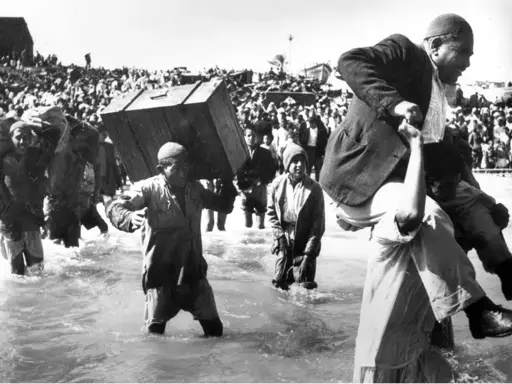
First, Beirut demanded that the approximately 125,000 Palestinian Arab refugees who had fled from Palestine to Lebanon during the hostilities of 1948 be repatriated by Israel. Second, it insisted that the portion of Western Galilee set aside by the United Nations Partition Plan of 1947 for the proposed Arab state be ceded directly to Lebanon. The strategic logic behind the second condition was demographically driven: the vast majority of the refugees – roughly 90% of whom were Muslims – would be permanently settled within that annexed Palestinian territory. This would ensure that the narrow, fragile Christian political majority within Lebanon proper remained entirely preserved and unthreatened.
Predictably, Israel flatly rejected the Lebanese counterproposals, which, if accepted, would have expanded the borders of ‘southern Lebanon’ southward to incorporate the coastal city of Acre and the inland city of Nazareth. Consequently, the diplomatic proceedings at Lausanne dissolved without an agreement, and Lebanon settled into an official state policy of non-recognition towards Israel.
The Dual Strategy of Beirut
Although obliged by sister Arab states and a significant segment of its own citizenry to maintain a rigid, uncompromising diplomatic stance towards Tel Aviv, the Lebanese government remained acutely sensitive to the harsh military realities of the frontier zone.
As had been the case during the 1948 war, Beirut sought from 1949 onwards to enjoy the best of both worlds. By forfeiting the opportunity to obtain official Israeli recognition of its jurisdiction over southern Lebanon, Beirut reaped a lucrative financial harvest from the broader Arab economic boycott of the Jewish state, positioning itself as a primary financial transit hub. Simultaneously, the Lebanese state took substantive, rigorous measures to ensure that Israel would be deprived of any legitimate pretext or justification for seizing Lebanese territory. Diplomatic obduracy on the international stage was systematically offset by a pragmatic policy of local cooperation along the frontier – a policy that, at times, bordered on complete submission to Israeli security demands.
Article VII of the General Armistice Agreement (GAA), signed by Israel and Lebanon in March 1949, had established the Israeli-Lebanese Mixed Armistice Commission (ILMAC) under United Nations supervision. ILMAC was authorised to maintain two operational headquarters: one at the Israeli frontier post just north of Metulla, and the other at the Lebanese border facility at Ras an-Naqurah. The explicit mandate of ILMAC was to enforce the provisions of the GAA on the basis of unanimous consent between both parties.
Initially, both sides shared compelling incentives to ensure ILMAC functioned efficiently. Lebanon wished to suppress all forms of border provocation that might trigger a reintroduction of Israeli armed forces into southern Lebanon. Israel, on the other hand, sought Lebanese assistance in preventing the clandestine return of displaced Arab refugees while it consolidated a dense chain of fortified Jewish settlements directly along the demarcation line.
Redemarcation and Economic Disruption
In November 1949, ILMAC encountered its first severe operational test. The Lebanese government, alleging that armed cross-border raids were being launched from Israel against its southern villages, formally requested that ILMAC clearly demarcate the ADL on the ground. The explicit objective of this boundary-marking initiative was to put an end to recurring frontier incidents, thereby reducing the likelihood of a major Israeli military intervention.
Prior to the Lebanese request, the UNCCP at Lausanne had recommended that, where no competing territorial claims existed, Israel and its Arab neighbouring countries should move towards creating clearly defined boundaries. This suggestion focused immediate attention on the Lebanese-Israeli ADL because, notwithstanding historic Zionist interests in the Litani water basin, there were no active territorial disputes of a magnitude comparable to those existing between Israel and Syria, or Israel and Jordan. Nevertheless, Lebanon firmly rejected the concept of a formal, permanent boundary settlement, arguing that such an accord would imply legal recognition of the Zionist Jewish state.
Yet, Beirut desperately required the physical redemarcation of the ADL. Every time a Lebanese villager inadvertently strayed across the poorly marked boundary, the authorities in Beirut panicked, fearing a heavy-handed Israeli military retaliation. Lebanon had no intention of providing Israel with a casus belli to occupy southern territory, nor did it wish to grant the line permanent international legal status through a formal peace treaty. Disturbed by the border-crossing habits of its own rural populace, Lebanese officials essentially manufactured the narrative of Israeli raids to seize the diplomatic initiative and demand a clearer physical definition of the frontier.
Given that the original Anglo-French Boundary Commission of 1923 had published a detailed survey report, ILMAC’s technical task appeared straightforward: mark the line and erect warning notices for the local population. However, the 1923 boundary line had bisected land parcels belonging to single villages or individual families – a defect that had been successfully mitigated by the 1926 Good Neighbourly Relations Agreement. That earlier accord had institutionalised fluid cross-border movement, validating human interactions that predated the creation of modern Lebanon and Palestine.
In stark contrast, the 1949 GAA was a military instrument enacted between hostile states, authorising both governments to prohibit civilians from crossing the ADL entirely. While Jewish settlers occupying abandoned Arab villages along the border had neither the desire nor the incentive to cross into Lebanon, Arab villagers in southern Lebanon operated under the assumption that they could continue grazing cattle or cultivating tobacco on their ancestral lands, even if those lands now sat on the ‘wrong’ side of an invisible line. Because Israel took extreme exception to these civilian incursions, Beirut concluded that the requirement for absolute quiet along the frontier far outweighed the property rights and economic livelihoods of its own border populace.
The Price of Local Appeasement
ILMAC established a technical subcommittee on 16 November 1949 to study the 1923 agreement and post physical warning markers along the ADL. The subcommittee concluded its work on 27 January 1951, leaving the boundary unfenced but clearly defined, save for a six-kilometre stretch where both sides maintained conflicting interpretations of the original Franco-British survey.
Although some Jewish-owned land plots in southern Lebanon were lost in the process, the primary victims were the Arab farmers of southern Lebanon. They were not only permanently cut off from their agricultural lands, but were also deprived of access to traditional labor markets and trade hubs on the Israeli side of the line. A vital economic safety valve was permanently destroyed – ironically facilitated by Beirut’s own diplomatic initiative.
This boundary-marking exercise was supplemented by joint Israeli-Lebanese police investigations designed to eliminate cross-border smuggling and theft. Minor disputes involving stray livestock or straying fishing vessels were expeditiously resolved by joint police patrols operating under ILMAC auspices. Crucially, Lebanese police actively assisted Israeli security forces in capturing and expelling back into Lebanon several hundred Palestinian refugees who had infiltrated Israel attempting to return to their former homes.
According to Lieutenant-General E.L.M. Burns, Chief of Staff of the United Nations Truce Supervision Organization (UNTSO) from August 1954 to November 1956, UNTSO experienced remarkably few operational difficulties regarding the Israel-Lebanon GAA. Burns noted that ILMAC functioned precisely as armistice commissions were intended to operate, meeting periodically and rarely dealing with major violations, with most complaints restricted to cattle grazing across the ADL.
However, Burns explicitly highlighted that the Lebanese authorities were obliged to go to extraordinary lengths to placate Israeli sensitivities. In 1955, following an incident in which several Israelis were killed by Arab infiltrators originating from Lebanese territory, alarmed Lebanese authorities acted swiftly. They forcibly removed all refugees and non-established residents from a zone extending ten kilometres deep into Lebanese territory along the border.
By rigorously accommodating Israeli security demands, Lebanon purchased nearly two decades of relative stability. Yet, this policy of localized appeasement would ultimately prove futile when regional geopolitical shifts dismantled the armistice framework entirely in 1967.
Featured image via Wikimedia

From Canary via This RSS Feed.