

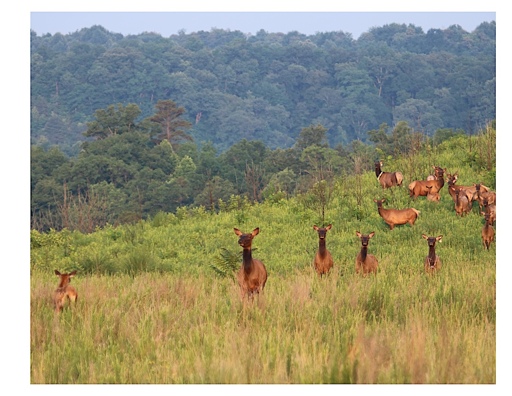
Founder’s Briefs: An occasional series where Mongabay founder Rhett Ayers Butler shares analysis, perspectives and story summaries. The best-known wildlife recoveries in the U.S. are often associated with the West. Yet some important gains have occurred east of the Mississippi, among cities, roads, farms, and landscapes altered over several centuries. Andrew Moore’s new book, Beasts of the East: The Fall and Rise of America’s Eastern Wilderness, examines the decline and partial return of animals that once occupied the region in abundance. Before European settlement and large-scale land conversion, eastern habitats supported bison, elk, moose, woodland caribou, cranes, black bears, passenger pigeons, and Carolina parakeets. Many disappeared as forests were cleared, wetlands drained, and wildlife hunted. Some losses were permanent. Other species have returned through reintroductions, habitat restoration, hunting restrictions, and long-term management, reports Mongabay’s Erik Hoffner. The state of Kentucky now has roughly 10,000 elk (Cervus canadensis) across a 16-county restoration zone, the largest herd east of the Mississippi. At Nachusa Grasslands in the state of Illinois, conservationists have restored tallgrass prairie on former farmland and reintroduced bison (Bison bison). Forest regrowth across parts of New England has helped moose, bears, fishers, and otters expand their ranges. These recoveries have also brought some problems. An animal may find enough food and cover while still struggling to coexist with people. Elk damage crops, browse vegetation, and get hit by vehicles. Pumas (Puma concolor) could survive in much of the East, where forests and deer are plentiful, although proposals to restore them…This article was originally published on Mongabay
From Conservation news via This RSS Feed.