

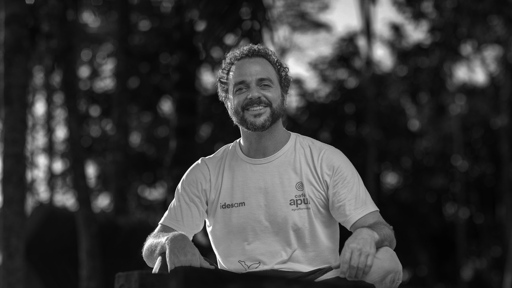
For people trying to protect the Amazon, one problem has persisted for decades. A hectare of intact forest stores carbon, regulates water, supports wildlife, and provides food and materials for the people who live there. Much of that value does not appear in an economic ledger. Cattle, timber, soy, and gold do. For a farmer, a company, or a local government, clearing forest can therefore produce income more readily than keeping it standing. The Amazon bioeconomy grew from efforts to change that calculation. It includes forest products, agroforestry, biotechnology, carbon markets, and other businesses that depend on maintaining living forests. The aim is to make such activities commercially viable at a scale that matters. Mariano Cenamo spent most of his career working on that problem. He was 23 when he moved from São Paulo to Manaus in 2003. Trained as a forestry engineer at the University of São Paulo, he had first come to the Amazon for an internship. He stayed at the encouragement of Virgílio Viana, a former professor who was then Amazonas state’s environment secretary. Cenamo was struck by the gap between conservation work and the economic realities of people living in the forest. Environmental groups were doing important work, he later recalled, but local livelihoods often sat outside the conservation discussion. In 2004 he helped establish what became Idesam, the Institute for the Conservation and Sustainable Development of the Amazon. At first there was barely an institution. Cenamo later described himself as an “ING”, an indivíduo não…This article was originally published on Mongabay
From Conservation news via This RSS Feed.