

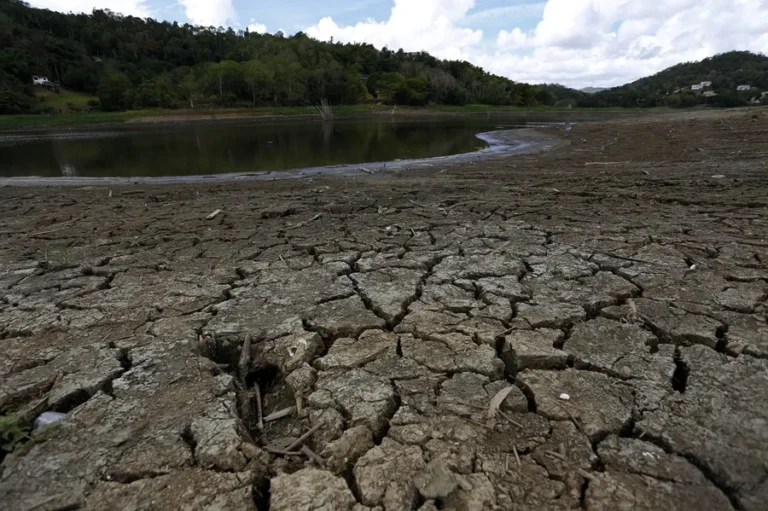
Danube drought sends river levels to historic lows as 40°C heat disrupts shipping, energy production and water supplies across Europe.
Related: European Leagues Block New FIFA Tournaments Pending Structural Reforms
Danube Drought Sends European Rivers to Historic Lows
The Danube drought has intensified as temperatures above 40°C pushed water levels in the Danube and Rhine rivers to historically low levels, disrupting commercial shipping and putting pressure on energy production across Europe.
The extreme heat has affected Central and Western Europe after months of below-average rainfall and persistently dry conditions. Authorities in several countries have introduced energy-saving measures and restrictions on water use as the drought continues to reduce river flows.
The Danube is Europe’s second-longest river and crosses or borders 10 countries, including Germany, Austria, Slovakia, Hungary, Croatia, Serbia, Romania, Bulgaria, Moldova and Ukraine.
Its basin supports agriculture, industry, hydropower, drinking-water supplies and one of the continent’s most important inland transport corridors.
The decline in water levels has forced shipping companies to reduce the amount of cargo carried by each vessel. Barges need sufficient depth to move safely, and even small reductions can make navigation difficult along shallow sections of the river.
Some vessels have been forced to delay departures or seek alternative routes. The restrictions are affecting the transportation of grain, fuel, coal, construction materials and industrial goods.
The economic impact extends beyond ports and shipping companies. Lower river levels increase delivery times and transport costs, while producers may need to shift cargo to railways or roads.
Those alternatives are more expensive and often lack enough capacity to immediately replace inland waterways. The disruption can therefore affect supply chains in several countries at the same time.
The Rhine, which carries large volumes of industrial cargo through Germany and the Netherlands, is facing a similar problem. Falling water levels are limiting the transportation of raw materials for the chemical, steel and manufacturing industries.
The situation has alarmed industrial operators in northern and western Europe. If low water levels persist, companies may face delays in receiving energy products and other materials needed for production.
The drought is also placing pressure on electricity generation. In Hungary, reduced water availability has complicated the cooling of reactors at the country’s sole nuclear power plant.
Nuclear facilities require reliable cooling systems to remove heat from reactors and other equipment. Although plants are designed to operate under different conditions, prolonged heat and low river flows can force operators to reduce output or introduce additional safeguards.
The energy impact is occurring as electricity demand rises because households and businesses use more air conditioning during the heat wave.
The combination of higher demand and tighter water constraints may increase pressure on national power systems. Governments are therefore encouraging conservation while monitoring river temperatures and reservoir levels.
The water shortage has also exposed historical remains that had been hidden beneath the Danube for decades.
Near the Serbian-Romanian border, close to the port of Prahovo, the retreating river revealed the rusting hulls of several German warships sunk during World War II. The vessels were reportedly carrying military equipment when they went down.
The wrecks are dangerous as well as historically significant. Some may still contain unexploded ammunition or hazardous materials, requiring specialists to assess the site before visitors or workers can approach the remains.
In Bulgaria, the reduced flow exposed the foundations of the ancient Bridge of Constantine. The structure is believed to have been built during the Roman period and is one of several archaeological sites affected by the unusually low water level.
The discoveries have attracted public attention, but archaeologists warn that exposure to air, heat and sudden changes in humidity can damage artifacts and structures that have been preserved underwater.
Danube Drought Driven by Heat and Evapotranspiration
Copernicus Climate Change Service | European Drought Observatory
The Danube drought is part of a broader European climate emergency characterized by both extreme heat and unusually dry conditions.
The Copernicus Earth observation program described the summer of 2026 as “exceptionally warm” and “exceptionally dry” in Central and Western Europe.
Data for the period from April to June showed below-average rainfall across large areas extending from southwestern Portugal to southern Finland. However, scientists emphasized that the causes of the drought differ from one region to another.
In Western Europe, observations and climate models do not clearly show a long-term climate change trend in the low rainfall recorded between April and June. Researchers therefore say that the lack of rain in that period cannot by itself be directly attributed to climate change.
The role of climate change becomes clearer when extreme heat is examined. Warmer air can hold more moisture, increasing the atmosphere’s capacity to draw water from soil, plants, reservoirs and rivers.
This process is known as evapotranspiration. It combines the evaporation of water from the land and the release of moisture by plants.
When evapotranspiration rises sharply, soil and vegetation lose water faster than rainfall can replace it. A moderate dry period can consequently develop into a severe agricultural and ecological drought.
A World Weather Attribution study found that extreme evaporation conditions observed across Europe between April and June were approximately 80 times more likely in Western Europe and 40 times more likely in Eastern Europe because of human-caused climate change. worldweatherattribution
The researchers said climate change was not necessarily the direct cause of the rainfall deficit in Western Europe. Instead, it intensified the consequences of dry conditions by making heat waves more likely and increasing atmospheric demand for moisture.
That distinction is important for understanding the current crisis. Drought does not depend only on how much rain falls. It also depends on how quickly water is removed from the environment by heat, wind and plant activity.
In practical terms, the same amount of rainfall can produce more severe drought conditions in a warmer climate.
The European Drought Observatory reported that drought conditions worsened across much of the continent in mid-June, particularly in Central and Western Europe. joint-research-centre.ec.europa
The low river levels are also increasing the risk of forest fires. Dry soils and vegetation can ignite more easily, while strong winds can allow fires to spread quickly.
Firefighters in several European countries have already faced difficult conditions during the 2026 summer. Water shortages can limit firefighting operations and complicate the evacuation of communities in high-risk areas.
Agriculture is another major concern. Farmers depend on rivers, reservoirs and groundwater for irrigation, especially during prolonged heat waves. Lower water availability can reduce crop yields and increase competition among agriculture, households, industry and ecosystems.
The crisis is also affecting freshwater ecosystems. Fish and other aquatic species face higher water temperatures, lower oxygen levels and reduced habitat.
Some sections of the Danube and its tributaries have become too shallow for normal movement by aquatic species. Wetlands connected to the river are also losing water, threatening birds, amphibians and other wildlife.
The long-term consequences may persist even if rainfall returns. Dry soils can take months to recover, while damaged ecosystems and depleted groundwater reserves may require several seasons to return to normal levels.
Geopolitical Context
The Danube drought has implications beyond environmental management because the river connects 10 countries with different economic needs and water policies.
A prolonged shortage could create tensions over navigation, irrigation, hydropower and industrial use. Countries upstream may face pressure to manage reservoirs in ways that protect downstream communities and transportation routes.
The Danube is also an important corridor for agricultural exports and regional trade. Disruptions could raise food prices and complicate supply routes in Eastern Europe, particularly if road and rail networks cannot absorb the additional cargo.
The Rhine’s problems could affect Germany’s industrial economy and the wider European market. Low water levels have historically disrupted deliveries of chemicals, coal, oil products and other materials used by major industries.
The energy impact is equally significant. Rivers are used for hydropower, cooling thermal and nuclear facilities and transporting fuel. A prolonged drought could reduce electricity output at the same time that demand increases during periods of extreme heat.
The crisis also adds pressure to the European Union’s climate and water policies. Governments must balance immediate emergency measures with long-term investment in water efficiency, renewable energy, drought-resistant agriculture and improved river management.
Scientists say the current conditions show how climate change can magnify ordinary weather variability. A period of low rainfall becomes more damaging when extreme heat accelerates the loss of water from soils and rivers.
The exposure of ancient wrecks and Roman structures provides a visible symbol of the crisis. What appears to be an archaeological discovery is also evidence of a river system under severe stress.
The immediate priorities are to protect drinking-water supplies, maintain essential energy operations, preserve navigation where possible and safeguard communities from fires.
Without substantial rainfall and a sustained reduction in temperatures, the Danube drought could continue affecting trade, agriculture and ecosystems across the region.
From teleSUR English via This RSS Feed.