

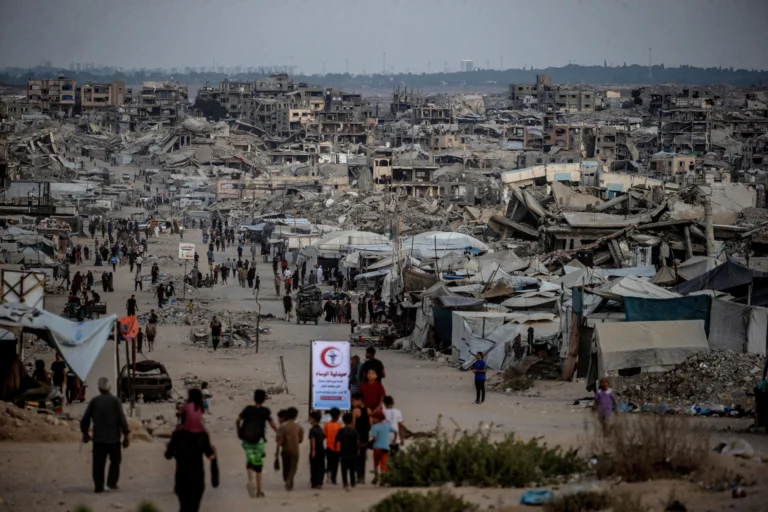
Gaza death toll surpasses 73,000 as Israeli attacks continue, rescue teams remain blocked and hospitals face shortages of medicine and supplies.
Related: Iran Rules Out U.S. Negotiations as Long as Washington Violates Memorandum
Gaza Death Toll Surpasses 73,000 Amid Continuing Attacks
The Gaza death toll has surpassed 73,000 Palestinians since Israel launched its military offensive in October 2023, according to figures reported by Gaza’s Ministry of Health.
The latest 24-hour period left at least one Palestinian dead, another body recovered and eight people injured, as Israeli forces continued attacks across several areas of the besieged Gaza Strip.
The Health Ministry said that many people remain trapped beneath the rubble of homes and public infrastructure destroyed by Israeli bombardment. Rescue teams and ambulances have been unable to reach some of the hardest-hit areas because of continued military restrictions and aerial attacks.
The ministry has repeatedly warned that the number of victims could rise as rescue crews gain access to destroyed neighborhoods and recover bodies buried beneath collapsed buildings.
The destruction of roads, hospitals, communications systems and emergency facilities has made rescue operations increasingly difficult. In some areas, teams must work with limited fuel, damaged machinery and inadequate protective equipment.
Since the ceasefire agreement announced in October 2025, Palestinian health authorities have recorded more than 1,250 additional deaths, the recovery of approximately 800 bodies and more than 4,000 injuries.
The figures indicate that the ceasefire has not stopped the violence or ended the humanitarian emergency in the enclave. Palestinian officials continue to report attacks, restrictions on movement and limited access to medical care.
The accumulated figures from the Israeli military campaign now exceed 73,000 deaths and 174,000 injuries, according to the Palestinian Health Ministry. UNRWA reporting previously cited ministry figures of 73,035 Palestinians killed and 173,368 injured by June 21, 2026. un
The totals include civilians killed in airstrikes, artillery attacks and other military operations. Children, women and older people have made up a substantial proportion of the victims, while thousands of families have been displaced several times.
The Gaza Health Ministry’s figures are widely used by international organizations and media outlets, although access restrictions make independent verification of every individual case difficult.
The number of fatalities could also increase because many people remain missing under the rubble. In addition, some victims die from untreated injuries, infections, malnutrition or chronic illnesses after hospitals are unable to provide adequate care.
Gaza Death Toll Rises as Rescues Remain Blocked
UNRWA situation reports | United Nations Office for the Coordination of Humanitarian Affairs
The continuing increase in the Gaza death toll reflects not only the direct impact of military attacks but also the destruction of the infrastructure needed to rescue and treat survivors.
The Palestinian Health Ministry said rescue crews have been unable to reach multiple sites where people are believed to remain trapped. Military restrictions, damaged roads and ongoing air operations have prevented emergency teams from reaching some of the areas most affected by the bombardment.
Ambulances have also faced shortages of fuel and spare parts. Without functioning vehicles, rescuers cannot transport victims to hospitals or move teams and equipment into heavily damaged neighborhoods.
Buildings that once served as homes, schools, clinics and community centers have been reduced to piles of concrete and twisted metal. The destruction has made it difficult to determine how many people remain beneath the ruins.
In several areas, rescue teams have relied on basic tools because heavy machinery has been destroyed or is unavailable. Searching by hand slows operations and exposes workers to unstable structures and unexploded ordnance.
The blocked rescues have created a second, largely unseen death toll. People who might otherwise have survived their injuries can die before emergency teams reach them.
Humanitarian organizations have also warned that bodies left beneath rubble can create public health risks, particularly in densely populated neighborhoods where sanitation systems have collapsed.
The destruction of medical facilities has further weakened the response. A recent Israeli airstrike reportedly destroyed medical warehouses near Al-Aqsa Martyrs Hospital in Deir al-Balah, damaging supplies and nearby tents used by displaced Palestinians. aa.com
The attack occurred while Gaza’s health system was already facing critical shortages of medicines, surgical equipment and other basic materials. Health officials said approximately half of the territory’s health-sector operating capacity had been put out of service.
Hospitals are treating large numbers of patients with limited resources. Doctors and nurses must often prioritize emergency cases while postponing treatment for chronic illnesses, cancer, kidney disease and other conditions.
The lack of medicine is especially dangerous for patients who require insulin, antibiotics, blood-pressure medication or respiratory treatment. A shortage of surgical supplies also complicates the care of people injured by airstrikes and collapsing buildings.
The World Health Organization and other international organizations have repeatedly called for unrestricted humanitarian access. Relief agencies say that aid deliveries remain insufficient in relation to the scale of the needs.
Fuel shortages affect every part of the humanitarian response. Hospitals require diesel for generators, ambulances need fuel to transport patients, and water systems depend on electricity to operate pumps and desalination facilities.
The shortage of clean water increases the risk of infectious diseases. Families living in overcrowded shelters have limited access to sanitation, while damaged sewage systems create additional hazards.
Gaza Health System Faces Humanitarian Collapse
World Health Organization—occupied Palestinian territory | Médecins Sans Frontières in Gaza
The rise in the Gaza death toll is taking place alongside a broader humanitarian crisis that threatens the survival of millions of Palestinians.
International rights organizations have condemned the military siege and border restrictions that limit the entry of medicines, medical equipment, food and other essential supplies.
Médecins Sans Frontières has reported that medical stocks in Gaza remain critically low. The organization has warned that restrictions on the entry of medicines and equipment are undermining treatment in hospitals and field clinics. doctorswithoutborders
Humanitarian workers say that the blockade has affected nearly every aspect of daily life. Families face shortages of drinking water, cooking fuel, food, shelter materials and hygiene products.
Displaced people are living in tents, damaged homes and overcrowded public buildings. Many have been forced to move repeatedly because of military operations and evacuation orders.
The destruction of housing has also increased pressure on schools, hospitals and aid centers that have become shelters. These facilities lack adequate space and supplies to accommodate the displaced population.
Children are among the most vulnerable groups. UNICEF has reported that more than 58,000 children have lost one or both parents during the war, while more than one million children require protection and psychosocial support. aljazeera
The psychological consequences are profound. Children have experienced repeated displacement, the deaths of relatives, the destruction of their homes and the constant fear of additional attacks.
Many have lost access to education for years. Schools have been damaged or converted into shelters, while teachers and students have also been among the victims.
The loss of family members has created a large number of unaccompanied and separated children. Humanitarian agencies face difficulties locating relatives and providing long-term protection.
The crisis is also affecting older people and people with disabilities, who often struggle to move during evacuation orders or reach functioning medical facilities.
The international community has continued to call for an end to attacks on civilians, the protection of medical workers and the immediate delivery of humanitarian assistance.
Geopolitical Context
The Gaza death toll has become a central issue in international debates over accountability, humanitarian law and the future of the Israeli-Palestinian conflict.
The scale of civilian casualties has increased pressure on governments to demand an end to military operations and support investigations into alleged violations of international law. It has also deepened divisions among countries that differ over how to describe the conflict and how to respond to Israel.
For Arab and Muslim-majority countries, the continued deaths and displacement of Palestinians remain a major political and diplomatic issue. Public protests across the region have called for an immediate end to the offensive and greater pressure on Israel to allow humanitarian aid into Gaza.
The crisis also affects wider regional stability. Continued attacks can increase tensions involving Lebanon, Syria, Yemen and other actors connected to the conflict, while threatening to undermine diplomatic efforts aimed at securing a lasting ceasefire.
At the global level, the destruction of Gaza’s health system has raised questions about the protection of hospitals and rescue workers during armed conflict. International humanitarian law requires the protection of civilians and medical personnel, but enforcement remains a major challenge.
The immediate priorities are clear: stop attacks on civilians, allow rescue teams to reach those trapped under the rubble and guarantee sustained humanitarian access.
Palestinian civil society groups and international organizations continue to demand an end to the military offensive, the opening of border crossings and the delivery of medical supplies.
Despite the devastation, Palestinians in Gaza continue to organize community assistance, care for the wounded and support displaced families. Their survival efforts reflect both the scale of the crisis and the persistence of the population under conditions of extreme hardship.
The rising number of deaths and injuries demonstrates that the humanitarian emergency has not ended. Without a durable ceasefire, unrestricted aid and the reconstruction of essential infrastructure, the Gaza death toll is likely to continue rising.
From teleSUR English via This RSS Feed.