

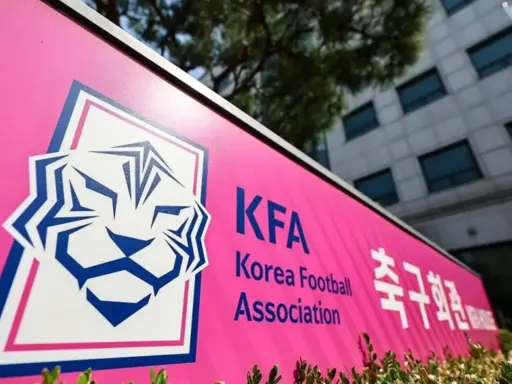

New allegations have reopened a dark chapter for the South Korean Football Association following a report by the South Korean network JTBC, which revealed that the organisation provided services, including “sexual entertainment,” to foreign referees during their visits to South Korea for international matches between 2011 and 2012.
According to the report, JTBC based its findings on investigation documents from the South Korean Ministry of Culture, Sports, and Tourism, dating back to 2016, as well as the association’s credit card records. These records reportedly showed payments linked to visits by referees to massage parlors and adult entertainment venues.
The report details at least seven such incidents occurring between March 2011 and March 2012 — a period when South Korea was hosting foreign referees for matches related to the 2014 World Cup qualifiers and the 2012 London Olympics qualifiers.
Seven incidents raise red flags
The documents cited by JTBC indicate that the association’s credit cards were used to cover expenses at massage parlors, with some invoices explicitly including costs for sexual services, according to Korean media reports referencing the government investigation.
The reports note that the referees involved in these matches hailed from several countries, including Japan, the UAE, Iran, Bahrain, and Uzbekistan, with some visits coinciding with World Cup and Olympic qualifying matches.
These revelations have brought renewed scrutiny to practices within the association from over a decade ago. While the findings of the government investigation have been public since 2016, the recent JTBC report has forced the file back into the media spotlight.
A dangerous accusation, lacking proof of manipulation
The JTBC report quotes a former association official stating that the purpose of hosting referees in this manner was to ensure their decisions would be “in favor” of the South Korean national team.
This testimony adds a troubling dimension to the case, raising suspicions of attempts to influence referees before kickoff. However, it is important to note that the reports published thus far do not prove that any referee altered their decisions or the outcome of a match as a result of these services.
The significance of these allegations is amplified by the fact that some of these incidents were linked to official World Cup and Olympic qualifiers. This elevates the matter beyond a potential administrative violation to broader questions regarding the integrity of the competitions—even without concrete evidence to date proving the manipulation of match results.
The Korean Football Association apologises
Following the release of the report, the Korean Football Association issued an apology, expressing regret over the concern and criticism ignited by these incidents.
The association emphasised that these events took place over a decade ago, noting that many current staff members were unaware of the situation at the time, and asserted that the use of association credit cards for such services does not occur today.
This scandal arrives at a particularly sensitive time for the association, which is already under pressure and facing investigations regarding the appointment process for coach Hong Myung-bo. This comes after police raided the association’s headquarters in 2024 as part of an investigation into his hiring procedures.
Ultimately, the JTBC report has reopened a file from 2011 and 2012, forcing the Korean Football Association to answer new questions about the conduct of its officials during that era — specifically, whether the services provided were merely examples of inappropriate “hospitality” or a deliberate attempt to influence officiating. This remains a critical question that still requires further evidence to resolve.
Featured image via Korea JoongAng Daily
By Alaa Shamali
From Canary via This RSS Feed.