

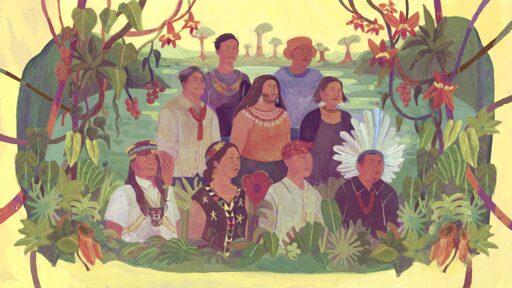
Eriberto throws his head back with a laugh and shakes it as he tills his plot of land in the Peruvian Amazon, near the Cordillera Azul National Park in central Peru. “That does not work here,” he says with a chuckle, responding to a question about why he doesn’t call his diverse forest garden “agroforestry”. In the past, government officials promoted planting coffee or cacao in agroforestry systems near his community. But Eriberto Guerra and other Indigenous farmers in the town of Lamas say it hasn’t been effective enough and some have rejected the sustainable farming label. “They promoted growing just one or two other food crops with some trees,” Guerra tells Mongabay. “But you need to plant dozens of species along with traditional plants. When one crop fails or doesn’t perform well in the local market, you need to have others to make up for it. And those others need to be the right crops, planted the right way, near the right plants.” His forest garden attracts endemic bird species and wildlife researchers, and has sustained his family for a decade, he says. “This is what is working,” Eriberto says. To mark the International Day of the World’s Indigenous Peoples and better understand the subtleties in biodiversity conservation and climate solutions implemented by people living at the frontlines, Mongabay interviewed nine Indigenous representatives from around the world. Dami Tateburuk, Frengky Sabbattilat, Ismael Saumanuk and Vincent Tateburuk (left to right), part of Malinggai Uma Tradisional Mentawai, a grassroots, Indigenous-led organization…This article was originally published on Mongabay
From Conservation news via This RSS Feed.