

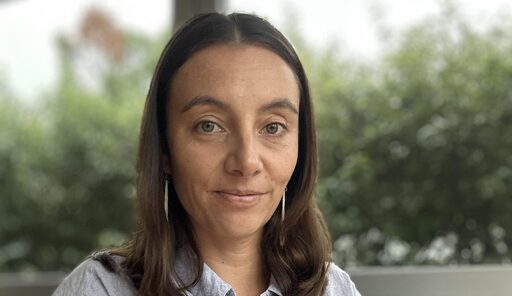

Like many Māori, Lizzie Dunn has been carrying an ache to “go home” since she was a kid — long before she understood where that home was.
Many Māori yearn to go “home”, to the whenua where their whakapapa resides, but haven’t been there yet.
Whatever the reason for disconnection, writes Lizzie Dunn, setting foot on the marae of your tūpuna, the place you’re supposed to belong, can be daunting.
“You may not know your maunga (mountain), but your maunga knows you.”
In the lead-up to the 2023 election, Māori Party co-leader Rawiri Waititi used this phrase in multiple speeches — and it hit home. For months, the phrase echoed throughout social media, accompanied by reels of picturesque landscapes and cute kids in kapa haka gears. It even featured in the hip-hop song “Māori” by Tipene.
It resonated because so many Māori on the reconnection journey hope to one day “go home” to the marae and villages our great-grandparents or even grandparents knew so well.
We dream of knowing the marae back gates, of being called up to work the kīhini (kitchen) or mow the urupā (cemetery), of being able to move confidently on the turf we’re familiar naming in our pepeha but not (yet) walking on.
Waititi offered us hope with that quote. The problem for many is that our whānau have been away so long that, although our maunga may remember us, often, the people don’t — and that can make for an awkward homecoming. I reckon that tangata Tiriti can relate to similar wero in their own quest to be more connected with local iwi.
We’re told to connect kanohi-ki-te-kanohi, face-to-face. But how the hika do we actually do that without looking like city-slicker blow-ins? It’s complicated, nē?
I’ve heard beautiful stories of people being invited into their marae and accepted as one of the cuzzies straight away.
A friend decided one weekend to take on the five-hour drive to see his marae for the first time. He planned to just have a nosey from the outside, but a local saw him and asked what he was up to.
The mate explained and asked if it would be okay to take a few photos. The local waved him in, saying: “Of course it is, bro. This is YOUR marae.” He even gave him a quick tour. It was just the beginning of a proper relationship, but what a good start!
Another friend had an uncle start a series of whakapapa camps at her marae. As a kid, she’d only returned for tangihanga, and suddenly she was back there one weekend a month with her own tamariki. It didn’t take long for her to join the marae committee, and she and her family are now completely and happily entangled in the scene.
The risks of rejection
I’ve also heard stories of people not being accepted straight away.
One mother told me she deeply regretted taking her two daughters to a wānanga at her marae. In her eyes, they were ignored — rejected in exactly the way she’d feared.
Another friend, answering the call for a planting day at her marae, was asked: “Are you SURE you’re from here?” She persisted and got there in the end, but the memory lasts for a reason.
Another person told me that after months of emails to her ukaipō/home people and sharing her whakapapa research, they simply refused to let her on. She cried the whole (long) way home.
I don’t agree with cold shoulders in any context, anywhere, but I do get how it happens. The ahi kā (home-fire keepers) have been doing all the mahi — and there’s a LOT of it — for a long time.
Seeing someone new strolling in and laying claim to a place, particularly if done insensitively, and particularly if done with expectations that create burdens for others, is a recipe for hōhā (annoyance).
Factor in long-standing whānau drama, collective land ownership, heightened emotions and big personalities, and the results can be less than romantic.
In my case, the marae I grew up going to isn’t the one to which we truly “belong”, so that feeling of being part of the gang but not really part of the gang isn’t just imposter syndrome.
Working out where home is
My great-grandparents, Tiweka and Pare Anaru, lie at the foot of St Faith’s Church in Rotorua in the heart of Ohinemutu village, just across the road from the famous Tamatekapua wharenui and a stone’s throw from the marae we know best, Para te Hoata.

Lizzie’s great-grandparents, Pare and Tiweka Anaru.
My koro and then my mum grew up in the area. She remembers the aunties making the tukutuku panels for the church and the open baths up at Aunty Katie’s behind the marae. Many of the streets near her house were once fields where the family would go mushrooming.
Now her parents, sister, and brother are buried in our whānau lines at Kauae, the local cemetery.
And yet, we’re not technically of Ngāti Whakaue or Te Arawa.
In retrospect, I should have cottoned on to this sooner. The fact that we had to be welcomed back every time we visited, while the rest of the whānau sat on the mana whenua side, was a fairly hefty clue.
A letter we found from my great-grandad for his descendants helped me piece it all together. Although he guessed our family would believe we’re Te Arawa, he wanted to make sure we knew we’re actually from the coast.

Lizzie Dunn’s great-grandfather, Tiweka, lies at the foot of St Faith’s Church in Rotorua in the heart of Ōhinemutu village, just across the road from Tamatekapua wharenui. They weren’t from Ngāti Whakaue or Te Arawa, writes Lizzie, but were “adopted” by the locals.
He was born in Te Kaha, my great-grandmother in Raukokore. They moved to Rotorua for mahi and became highly involved with the local iwi who “adopted” them. Their offspring then married into the Rotorua iwi, all except our line.
Heartbreakingly, the copy in that letter fades out at page three of 10, so we still have a lot of gaps in our story. I could be projecting my own desires here, but the text that we can make out reads to me like an instruction — to love and respect our links with Ngāti Whakaue, but also to take our whānau home.
The hot kūmara
We did half-organise a kawe mate, a mourning ceremony, at one point. An uncle said he’d always wanted to take the wairua of some of our whānau who had died in Rotorua back to the coast. My cousins and I planned to stand quietly behind our kaumātua and hoped it might reignite some hononga (relationships). Sadly, that uncle passed before we could carry it out, and as he was the main leader, it all ended up on the back burner.
The trip home still hasn’t eventuated — in fact, it’s become a bit of a hot kūmara. Every now and then, we dig it up, but, probably unfairly, we feel reliant on the more knowledgeable whānau members to drive it home, and they’re already busy enough with Te Arawa stuff.
For that same reason, I don’t think they long for the coastal reconnection in quite the same way we do — they’re already very involved with the Rotorua whakapapa.
Our whānau motto is “to be of service”, and I suspect the answer to this māniania/conundrum lies within that.
In my experience, it’s fairly easy to focus on what WE want when we’re planning our trips home — information, belonging, connection for us and our bubbas — but my mum (who is better than me at living up to that service motto) has, thankfully, always reminded me to think of it the other way around: “What can I offer THEM?”
Well . . . I’m not bad at physical labour and cleaning, can do admin, research, write funding proposals, and run drinks at housie nights. I’m willing to try anything in the kitchen, but previous witnesses will advise that I should probably be confined to dishes and veggie peeling. Mum says just showing up to be there quietly and respectfully also counts.
The thing is, even to serve, you’ve got to be let in first.
Perhaps I’m making this more complicated than it needs to be, which brings up another point. The mataku, or fear, of being rejected from the one place you’re told and feel you truly belong is real and somewhat paralysing.
Like many, I’ve been carrying an ache to “go home” since I was a kid — long before I understood where that home was. It just comes with so much weight that sometimes I’m almost too scared to take action.
If I try — I mean really try — and it doesn’t go well, the door closes. If I stay in my comfort zone, taking reo classes and being a kapa haka fan and reading about local maramataka from afar, at least the potential remains.
Tell me your stories
As you can tell, e te whānau, I certainly don’t have the answers to this one, which is why I’m outsourcing to YOU. What are your reconnection stories? I’d love to hear from all sides — those who grew up on their tūrangawaewae, those who have made attempts to reconnect, and tangata Tiriti connecting with local mana whenua too.
What has worked for you? What hasn’t? How do you think we should all go about this?
Reply to kiaora@tearawhataaotearoa.com if you’re keen. You don’t need to use real names or places if it’s sensitive.
Lizzie Dunn (Te Whānau a Apanui, Rarotonga, Austria, England, and Scotland) has always been fascinated by cultural identity. After working in just about every corner of Aotearoa New Zealand media, she launched Te Arawhata, an email newsletter highlighting opportunities for everyone to connect with te ao Māori.
The post How to go home to your marae appeared first on E-Tangata.
From E-Tangata via This RSS Feed.