

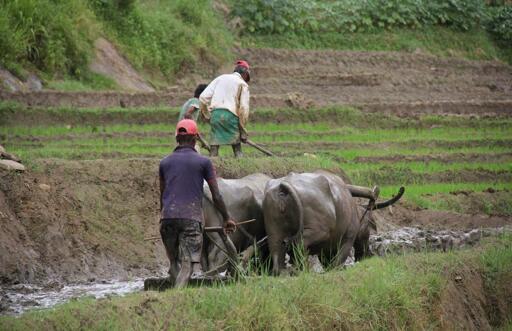
WASGAMUWA, Sri Lanka – Prior to the 1940s and the Green Revolution, Sri Lankan paddy farmers cultivated traditional rice, locally known as purana haal. These rice cultivars were resilient and known to possess various nutritional and medicinal properties yet were soon replaced by new improved rice varieties to obtain better quality and bigger yields. Karu Herath, an heirloom paddy farmer in the village of Dunuwila, bordering the Wasgamuwa National Park located within the Matale and Polonnaruwa districts, has cultivated heirloom paddy varieties for the past 27 years. He told Mongabay that fewer than 30 varieties remain out of the estimated 2,500 varieties of heirloom rice that once existed, a claim supported by rice researchers. According to researchers, many of these rice varieties are long-aged, tall and low-yielding. Therefore, traditional farmers would only cultivate them during one harvesting cycle, known as the Maha season, which runs from September through March. With the introduction of new, improved rice varieties and fertilizers after the 1940s, Sri Lanka lost much of its Indigenous rice varieties and traditional knowledge of Indigenous farming practices. Image courtesy of Pethum Bandara. Herath follows this practice and cultivates only during the monsoon season. “During the Yala season [May to August], when it’s dry, we let the soil recover and grow heirloom cereals and vegetables such as kurakkan [finger millet] and mung [mung bean],” he said. “This draws different nutrients and requires less water than rice. This was the traditional land use system, which was changed by British colonialists who…This article was originally published on Mongabay
From Conservation news via This RSS Feed.