

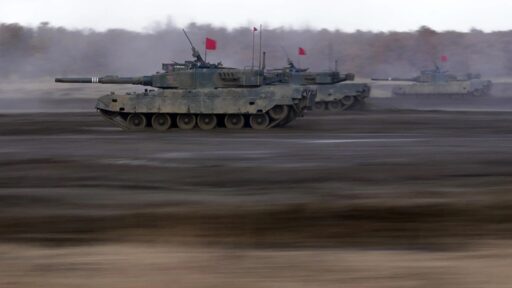

China officially objected to references of Taiwan and invocations of alleged “China threats” in this year’s Japanese defense white paper. China also claims the document is proof of the growing re-militarization of Japan, which threatens peace and stability in the region.
“The Defense of Japan 2026 White Paper once again targeted China with groundless accusations, rehashing the so-called ‘China threat’ and grossly interfering in China’s internal affairs with brazen comments on China’s Taiwan region,” Lin Jian, official spokesperson of China’s Ministry of Foreign Affairs, said in a regular press conference on Wednesday, August 5.
This years’ white paper was released on Tuesday. The document underlines the alleged growing threats to Japan and the global order from China and North Korea in “the Indo-Pacific” region along with their alleged growing military collaborations with Russia.
It highlights “increased Chinese defense expenditure” and its growing “military activities” around Taiwan and the South China Sea. Points out the supposed military imbalance between Taiwan and China and repeats the allegations of how China is responsible for threatening maritime traffic.
“China’s external posture, military activities, and other activities are a matter of serious concern for Japan and the international community and present an unprecedented and greatest strategic challenge,” the white paper said, while underlining the need for Japan to be ready to respond to any possible threat.
It focuses on “new ways of warfare” in the contexts of use of drones in particular in the Ukraine war and war on Iran and talks about developing capabilities, nationally or in collaboration with the allies such as the US and South Korea to face similar situations.
Revision in Japan’s strategic approach
The white paper says the government of Sanae Takaichi is aiming to revise the country’s three strategic documents; National Security Strategy, National Defense Strategy, and the Defence Buildup Program within the current year to respond to the “rapidly changing in the international security environment.”
The Japanese military must have a “stronger sense of urgency and crisis than ever before” to further reinforce and transform its defense capabilities,” the country’s defense minister Shinjiro Koizumi said in the preface of the document.
Japan has maintained a pacifist approach to the country’s defenses in the region, created under the post-Second World War order. However, in the last few years, encouraged by the US, Japanese governments, including the present Takaichi administration, have pushed for aggressive re-militarization of the country.
Takaichi and several ministers in her government have given statements declaring China as a threat and emphasizing the need to build a stronger defense mechanism in the country, involving both production and the transfer of weapons, including the nuclear bomb.
Last month Koizumi had invited strong objections from the Chinese government over similar remarks about the need for the change in the country’s three non-nuclear principles.
The white paper underlines the Takaichi government’s aim to increase the national defense budget to 2% of Japan’s GDP and build a “robust and sustainable defense industry” in the country and justifies the transfer of weapons and defense technologies to allies in the region for “mutual help.”
The document also states that the country’s total defense expenditure exceeded 9 trillion Yen (around USD 58 billion) for the first time in this financial year.
Japan already has US military bases and participates in several regional military exercises annually. The White Paper talks about further strengthening such relationships with the US and other NATO members and countries in the region, explicitly targeting China and North Korea.
The re-militarization of Japan is a threat to regional peace
On Wednesday, China rejected Japanese attempts to project its activities in the region as a threat, claiming all its “military activities that were conducted were just and valid,” reiterating it is “committed to peaceful development.”
Read more: China urges Japan to abandon nuclear ambitions and respect international law
Lin Jian reiterated the Chinese position that “Japan has not only failed to reflect on” its militarist history, which inflicted immense suffering on Asia and the world during the interwar period, but also “kept speeding up re-militarization” in breach of its own constitution and international laws.
The white paper and other actions expose “the truth behind Japan’s claims of being a peaceful nation,” Lin said, asking the international community to “stay on high alert” and push back the attempts to revive Japan’s militarist past.
From BT News via This RSS Feed.