

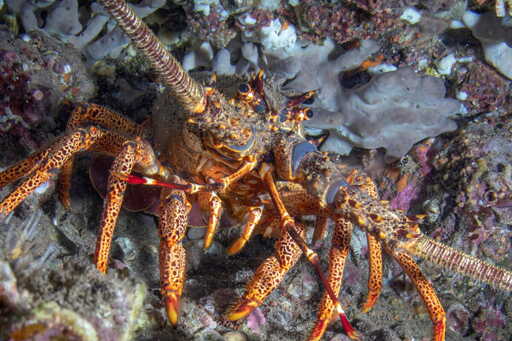
The scars of bottom trawling are still visible on seamounts in Chile’s Juan Fernández Archipelago, even 25 years after the fishing practice took place in the area, according to a new study. In 2024, scientists from Chile and the U.S. used remotely operated vehicles aboard the Schmidt Ocean Institute’s research vessel R/V Falkor to survey four seamounts, underwater mountains that rise up from the seafloor, off Chile’s coast. Three of the seamounts are located in the Juan Fernández Archipelago, a cluster of volcanic islands that has one of the highest known rates of marine endemism on the planet. An estimated 62% of the reef fish species of Juan Fernández and the neighboring Desventuradas Islands are found nowhere else in the world. Other unique endemic species include the Juan Fernández fur seal (Arctocephalus philippii) and the Juan Fernández rock lobster (Jasus frontalis). The fourth study site was the Solito Seamount, located north of the Juan Fernández Archipelago and known to harbor similar marine communities. In the late 1990s and early 2000s, fishers conducted bottom trawling on the Juan Fernández seamounts, dragging weighted nets across the seafloor to catch orange roughy (Hoplostethus atlanticus) and alfonsino (Beryx decadactylus), long-living, deep-sea fish. After catches dwindled, these fisheries collapsed and the trawling stopped. Later, in 2015, Chile permanently banned bottom trawling on all of its seamounts. At Solito, by contrast, the study, published in July in Deep Sea Research, found no evidence that bottom trawling had ever occurred. Twenty-five years after bottom trawling had taken…This article was originally published on Mongabay
From Conservation news via This RSS Feed.