

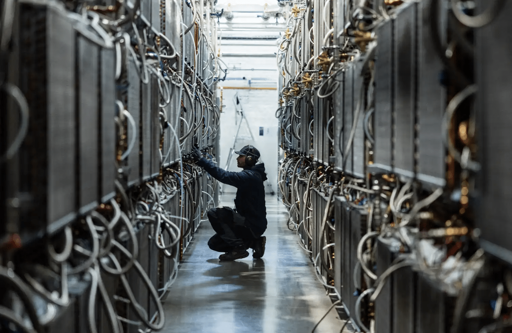
AI systems ingest vast amounts of data to identify underlying structures and correlations, effectively creating a functional map of what is known about a given domain of knowledge. Users interact with these models to simulate outcomes, generate output based on patterns in the model, or extract details. Although AI is capable of far more persistence and attention to detail than the average person, it does not actually “understand” anything in a human sense.
Some of AI’s more useful applications include medical imaging, gene therapy, pharmaceutical research, math proofs, identifying childhood pneumonia, and modeling complex weather patterns.
But under capitalism, too much of our experience with AI is negative: chatbots offer lethal advice to ill or depressed users, push conversion therapy on trans people, generate child sexual abuse material, and draft fake legal briefs. AI tools drive 83 percent of security breaches, impersonate God and Hitler, and select targets for assassination, bombing, and genocide. Capitalists deploy AI for mass surveillance, voter suppression, and censorship, putting hundreds of thousands of workers out of work after first humiliating them by training their own digital replacements. Meanwhile, reeking data centers drain water supplies, spike electricity costs, hoard computer chips, and spew greenhouse gases that are burning up the planet.
Marx, Machinery, and AI
Marx’s description of machinery is applicable to AI:
[Machinery] not only acts as a competitor who gets the better of the workman, and is constantly on the point of making him superfluous. It is also a power inimical to him. … It would be possible to write quite a history of the inventions, made since 1830, for the sole purpose of supplying capital with weapons against the revolts of the working class.
AI is now being rolled out on such a scale that society experiences what Marx described as the
constant revolutionising of production, uninterrupted disturbance of all social conditions, everlasting uncertainty and agitation. … All that is solid melts into air, all that is holy is profaned, and man is at last compelled to face with sober senses his real conditions of life, and his relations with his kind.
The undemocratic imposition of AI and the cruelties of imperialism have even the theologians worried. Pope Leo’s recent encyclical Magnifica Humanitas seems intended to remind capitalists and politicians alike of the sanctity of human life “in the Time of Artificial Intelligence” — amid their rampant abuses of “the widow, the orphan, the stranger, the wounded child, the exile and the fugitive.”
Under capitalism, the choice to inject AI into almost every aspect of human social relations is not society’s; it is instead the prerogative of a tiny group of obscenely wealthy technology companies, executives, and venture capitalists who treat the planet as their private gold mine.
Under capitalism, government and law exist not to balance social interests for the common good but to ensure that the world’s minerals, oil, water, air, space — even human labor itself — become or remain assets of an entitled ruling class. As they literally set fire to our world, it is unsurprising that today’s capitalists regard humanity’s entire historical, cultural, and scientific legacy as their own to plunder.
General Intellect and the Theft of Human Knowledge
In the Grundrisse, Marx argued that every human skill embedded in a machine originates not only from individual labor but from the sum total of human experience, which he termed the general intellect:
Nature builds no machines. … These are products of human industry; natural material transformed into organs of the human will over nature. … They are organs of the human brain, created by the human hand; the power of knowledge, objectified. The development of fixed capital indicates to what degree … the conditions of the process of social life itself have come under the control of the general intellect and been transformed in accordance with it.
For the first time in history, the raw material transformed by a machine is neither animal, mineral, nor vegetable but human knowledge itself — Marx’s general intellect. Large language models (LLMs) digest millions of human-years of intellectual property and social knowledge — from science, technology, and culture — into numeric models used to infer syntactic meaning through pattern matching and statistical prediction. But the results of all this pattern matching can be very useful, and very profitable.
Much of the data used to train AI models is harvested illegally and without consent. Generative AI models produce text, video, and music by mimicking patterns embedded in the models. Artists often discover, to their horror, just how widespread plagiarism and copyright infringement are in the training of such systems.
In 2024, in the case of Bartz et al. v. Anthropic, half a million authors sued Anthropic for copyright infringement. The court ruled that Anthropic’s use of 7 million books constituted “fair use,” but, unable to dismiss the blatant copyright infringement, fined Anthropic $1.5 billion for retaining copies of training data. This was quite the bargain for Anthropic. While copyright law allows damages up to $150,000 per infringement, the ruling awarded only $3,000 per author — before attorney fees. Had the courts fined Anthropic $150,000 for each of the 7 million books infringed, the damages could well have exceeded $3.5 trillion.
There is no apparent end to such robbery. Very early on, Google got away with digitizing many of the world’s copyrighted books. The Hasbro toy company forced child actors to sign over rights to their own voices so that AI could reproduce them for free in a television series. The New York Times sued Microsoft and OpenAI for stealing its articles. The AI music generator Suno stole millions of songs, including copyrighted music, to train their generative model. Meta trained its AI models on books from an infamous Russian piracy site. So extensive are these thefts that Wired magazine keeps a database of AI copyright lawsuits. Most of these cases result in either dismissals or insignificant fines that make the thefts worthwhile.
If court-sanctioned robbery were not enough for AI tech firms, they now demand changes to “fair use” of copyrighted material. In 2025, OpenAI joined Google in patriotically waving the flag while asking Trump to change copyright laws to protect the AI industry’s “freedom to learn.” Otherwise, OpenAI warned, China will digitize the same works, “forfeiting our AI lead to the PRC [People’s Republic of China].”
Humanity Is the Rightful Owner of AI
Theft is the very nature and logic of capitalism. In chapter 27 of Capital, titled “Expropriation of the Agricultural Population from the Land,” Marx notes that the “commons” — a place for communal grazing distinct from baronial estates — was a “Teutonic institution which lived on under cover of feudalism.” This institution remained unmolested until the 15th century when capitalists began grabbing communal land. By the 18th century, the British legal system was complicit in the thefts of vast tracts of communal farming land.
The capitalist patrimony of plunder lives on today. Trump’s policy of “Removing Barriers to American Leadership in Artificial Intelligence” now includes building AI data centers on public land — for private profit. Even private homes are not immune to pillage. The state of Georgia seized the homes of 300 citizens in order to expand a corporation’s ability to extend power to new AI data centers.
Everything that AI requires is public, and everything about its exploitation is private. AI would not exist without the wealth of human knowledge and culture it has distilled into its models. And AI would not exist without the complicity of the government in seizing public land, commandeering public energy and water, and subsidizing private investment.
Humanity is the rightful owner of AI, and it ought to be used for everyone’s benefit. But under capitalism, “getting the better of the workman” and making obscene profits for billionaires eclipse AI’s better uses. We must demand the nationalization of AI, along with the many industries it heavily depends on — finance, energy, and semiconductors — and its management by workers and users. Only when workers fully own and control the means of production will AI be used responsibly.
The post Nationalize AI Under Worker and Consumer Control appeared first on Left Voice.
From Left Voice via This RSS Feed.