

Bullets:
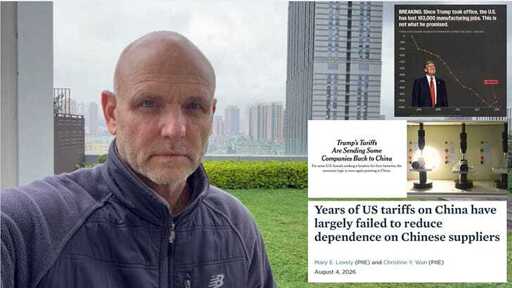
After a decade of high tariffs and trade curbs to move manufacturing out of China, firms are going back.
The Trump Administration is again hiking tariffs on countries and products from everywhere, instead of merely targeting Chinese industry.
The math that may have encouraged businesses to shift supply chains away from China, now works instead to reverse those moves.
Inside China / Business is a reader-supported publication. To receive new posts and support my work, consider becoming a free or paid subscriber.
Report:
Good morning.
The trade war between the United States and China is now over a decade old. High tariffs and trade restrictions in the first Trump Administration were actually intensified during the Biden years. Then came Trump II and even more of the same.
An entirely new industry sprang up, a consulting industry for American and European firms to shift production away from China, to new manufacturing hubs, mostly here in Southeast Asia.
The idea was “friendshoring”—moving production to friendlier countries, or at least where the tariff policies were friendlier. “China +1” became a thing, whereby companies would keep the bulk of their production in China, but build backup production capacity elsewhere, or do final assembly in another country and keep the overall tariffs lower on the products they bring into Western markets.
All those strategies are blowing up, and many of the companies that made big investments to shift their production out of China, are spending a lot of money again to bring the production back. There are several major reasons for companies to do that 180, and we’ll start here: the Administration is recently placing new tariffs on everybody everywhere, and so it radically changed their calculus, again, of setting up manufacturing in low-cost areas. Trump put new tariffs on 80 countries, ranging from 10 to 12.5 percent.
The Supreme Court struck down many of the duties that were put in place last year, mostly under Executive Orders issued by Trump. Section 301 of the Trade Act passed in 1974 has a far stronger legal basis for the president to put on new tariffs, so that’s what the administration did this time. That 1974 law has a provision that empowers the president to restrict imports of goods made with “forced labor” and so the dark orange countries here were hit with a 12.5% “forced labor” tariff.
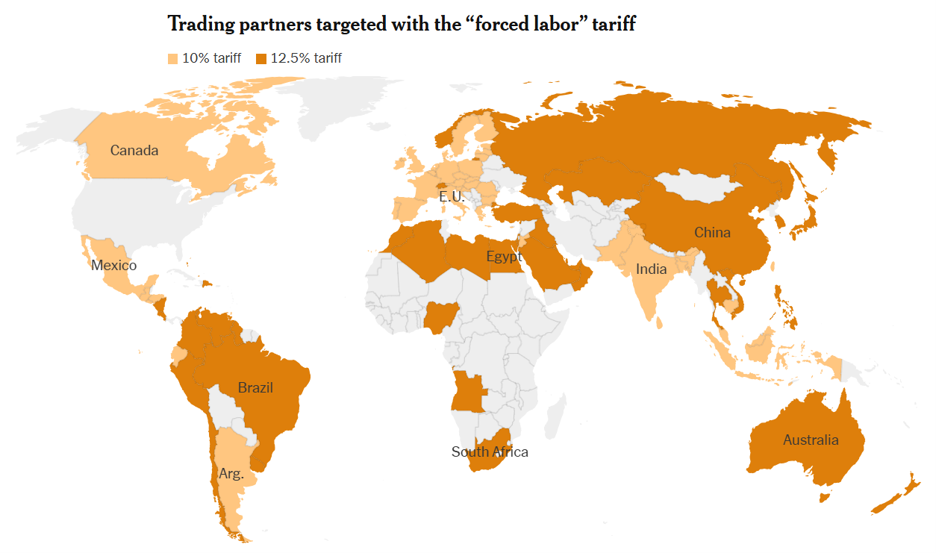
People living in Norway, Switzerland, Australia, New Zealand, Japan—woke up last week to learn that the US president is accusing them of running forced labor camps.
You should relax though—it’s not really about that at all. The Supreme Court told Trump that if he wants to raise tariffs, he needs to work with Congress to get new laws passed and signed, or otherwise use the authority that previous Congresses have already given him.
Behind the scenes, the Trump Administration is quietly telling governments that the tariff rates need to get back to what was agreed to last year. That’s the rationale for this part, too: the investigation into the trading practices of 16 major partners, there on this map:
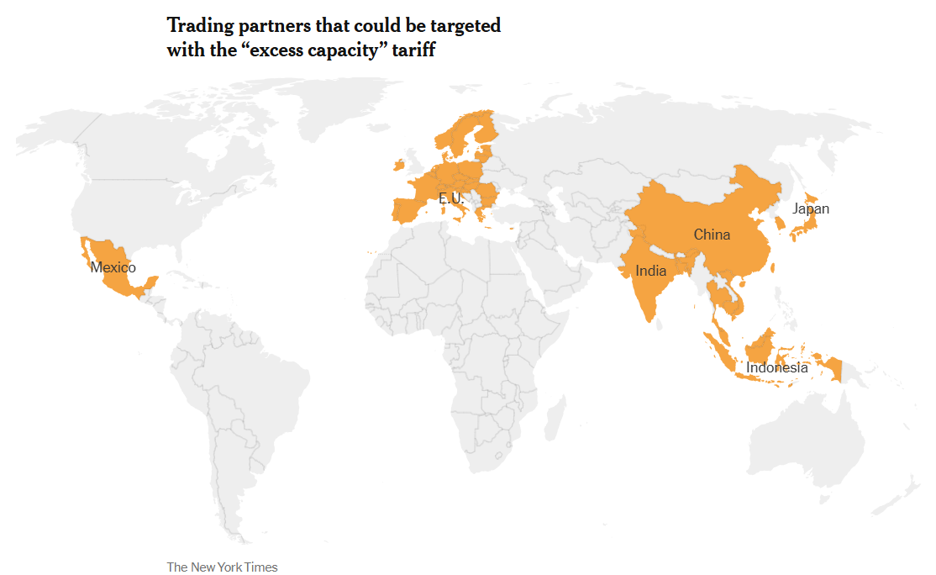
They’re supposedly looking at the “Excess Capacity” problem, and administration officials here, too, told those countries already what’s going on, and that the objective is just to reset the tariff rates to where they were before the Supreme Court said they’re not allowed.
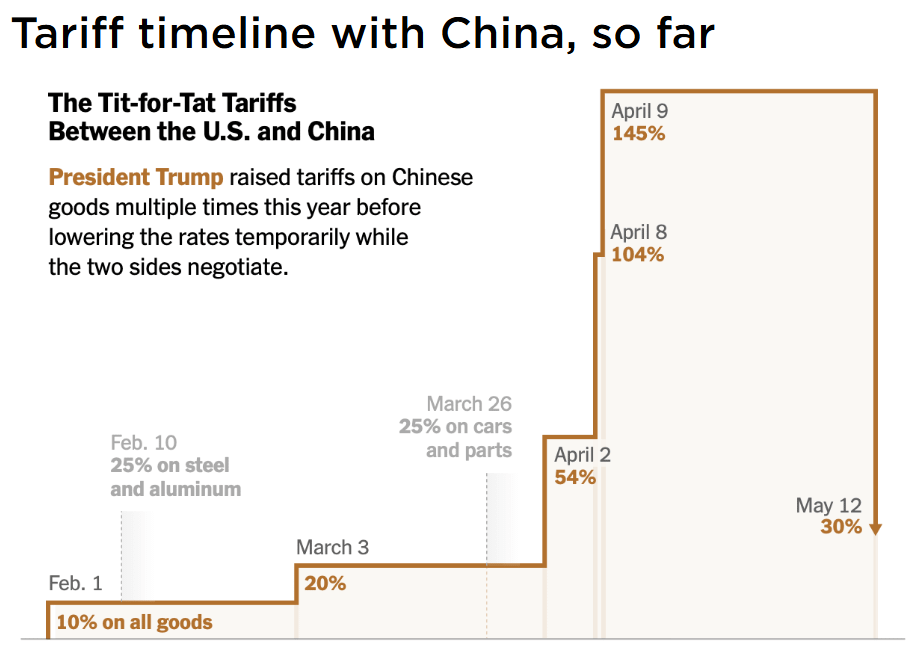
So if you’re a business executive or company owner, it’s just impossible to know what your tariff rates are going to be. Last year the US tariffs on China at one point hit 145%, and so the companies that had not already gone looking for factories in other places, suddenly were very motivated to do so. Vietnam is right next door and was already attractive, but industrial parks filled up there, suddenly, and costs shot up. Other countries with surplus capacity, like Thailand, did pick up some business.
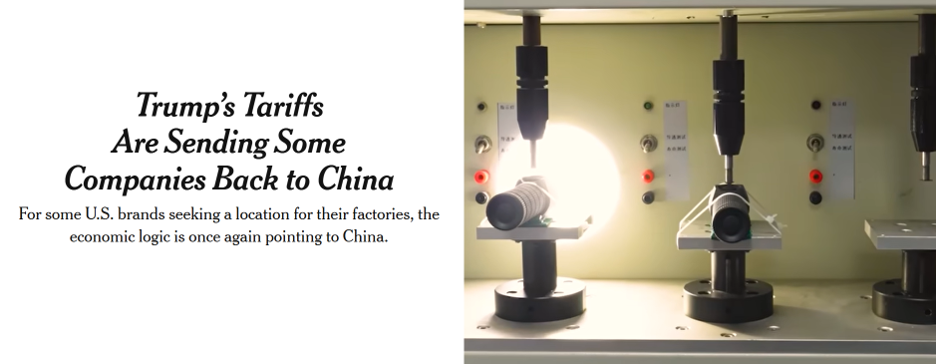
But then most of those tariffs on China went away, and along with them the reasons to move production out of China. American executives who pushed for their Chinese suppliers to open new facilities outside China are now saying that they want the production to move back. The tariffs on those countries now are the same as on China, and they’re likely to go even higher:
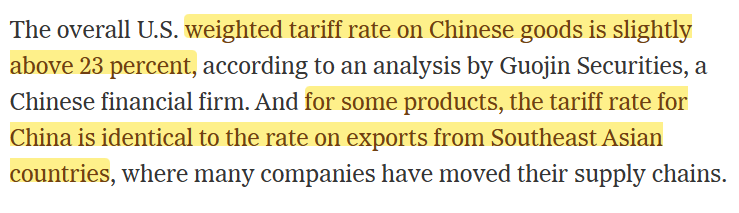
What’s more, countries need to have substantially lower tariffs, compared to China, to compete at all. Making flashlights in Thailand, for example, costs 15% more in Thailand than in China, because of higher logistics and materials costs. Flashlights outbound China had a 20% import duty, compared to 19% on those coming from Vietnam, Thailand, and Cambodia.
And those countries’ outbound logistics aren’t nearly as well developed as China’s so shipping costs are higher.
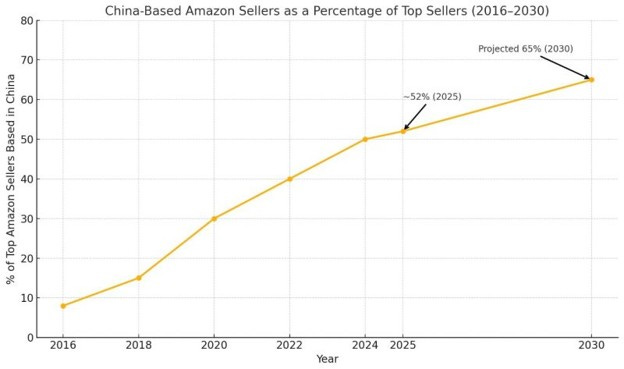
This is an important development, which ecommerce companies need to be very aware of. Amazon is partnering directly with Chinese manufacturers and putting stores already on the Amazon platform out of business. Chinese companies are selling flashlights on Amazon for less than it costs American companies to get them shipped over—that’s to say that Chinese companies running Chinese factories can sell flashlights profitably at a lower price than what it costs American companies just to ship their flashlights from factories outside China.
None of that was supposed to happen, and the reason we’re here is that China is a different economy today, compared to back in 2017 when the trade war first kicked off. Tariffs of 145% used to mean that an export-dependent economy, like China’s, would blow up. But China raised tariffs on American products coming in, and sharply restricted Chinese exports of rare earth metals and magnets. Also, by this time around, the Chinese had developed deep relationships with agricultural suppliers, like Brazil and Russia, and so the high Chinese tariffs on US farm products immediately became a serious political problem for Trump voters in the United States:
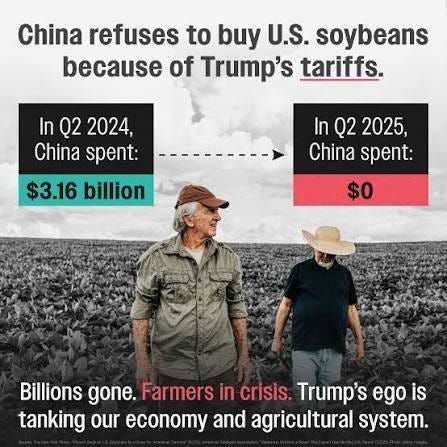
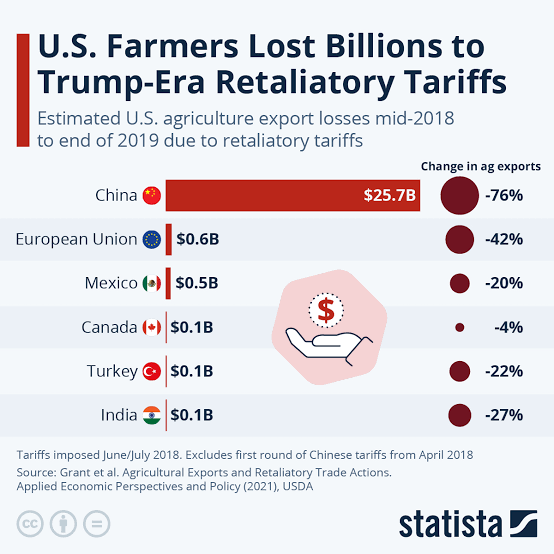
So the high tariffs on China were inevitably dialed back, while going higher for everyone else, and anyone with a calculator realized that most of the manufacturing business that left China would come back
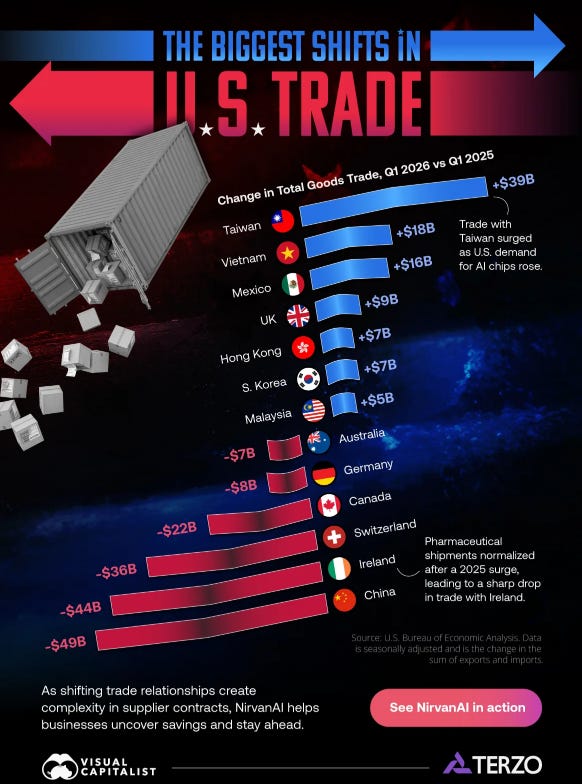
We’ve got strong data now, that show that the impact of all those tariffs was a lot less than anyone believed. On China anyway. The headline numbers for Chinese trade look like that—a sharp decline in US-Chinese trade activity, and China generally made up for their losses in the US markets with very large gains everywhere else:
But the analysts may have gotten the first part of that wrong. The tariffs on China haven’t reduced the final dependency on Chinese suppliers, much, if at all. Imagine a laptop computer put together in Vietnam and sold in the US for $1,000. But most of the components of the machine are sourced from China; it’s just in Vietnam where they’re put together and put in a box. If we do an honest accounting of what just happened, China just exported $600 worth of electronics to the United States, with Vietnam doing $400. Looking at trade that way, China’s share of value-added US imports dropped from just under 18%, to just under 16%. That’s the orange line. “Chinese content has found pathways around the tariffs.”
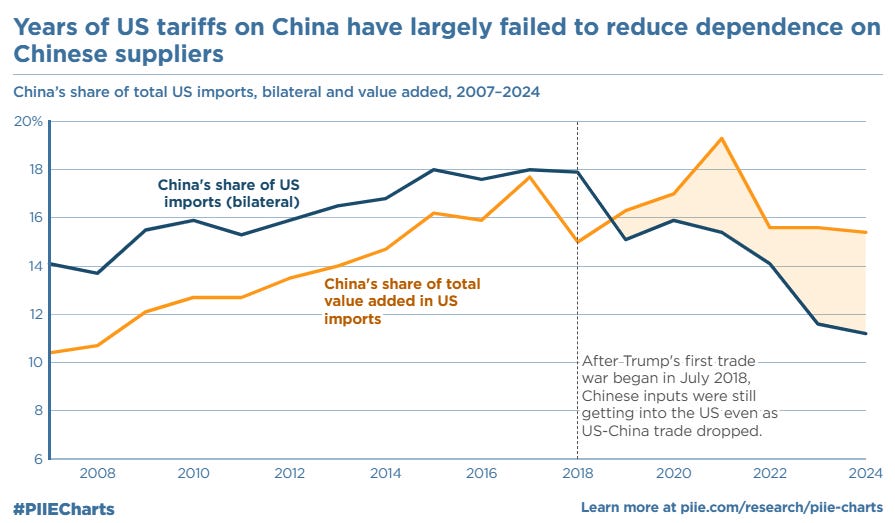
Let’s remember though what the objective of these tariffs and trade curbs were, in the first place. It was never to move factories from China to Vietnam, or to tell American companies to build final assembly plants in India for the parts they buy from China. The point was “reshoring” – to bring manufacturing back to the United States. Factories were supposed to open in the US, not in India or in Vietnam or in Thailand. But that never happened.
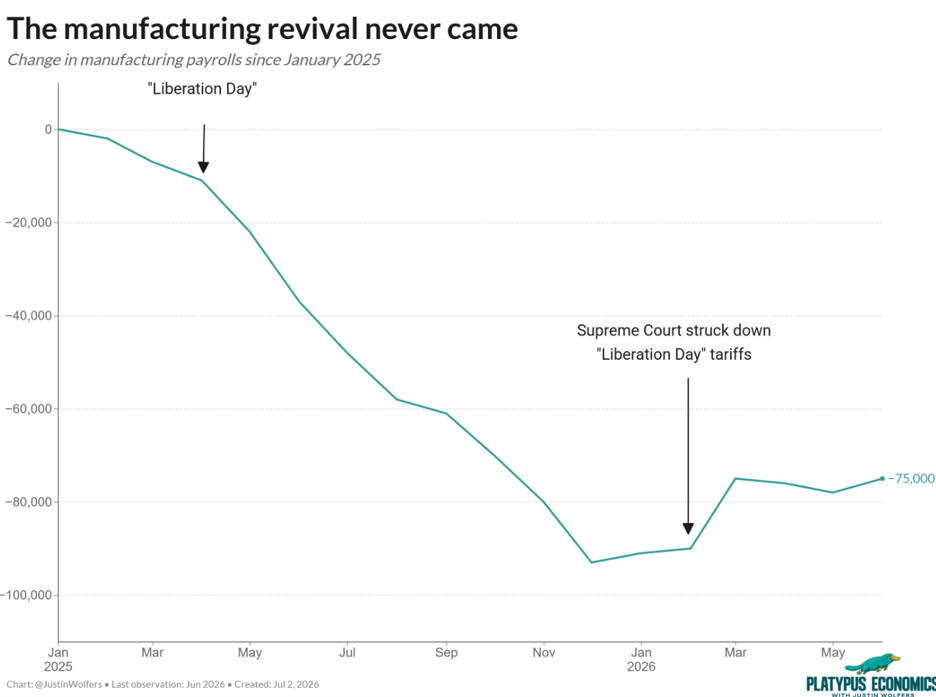
From 2023 to November of last year, 59,000 factory jobs had been lost in the United States. By January of this year, 103,000 manufacturing jobs were lost since the second Trump Administration began. And there’s a weird data point, above—hard to even know what to make of it—that American manufacturing payrolls have actually recovered, somewhat, beginning at the exact moment the Supreme Court struck down the tariffs. Now the tariffs are going back on, and I guess we’ll see. But we do already know that China is in a better spot than almost anyone else expected them to be.
While Trump Administration officials are calling around to their trading partners, and telling them that their tariffs are going up to where they were last year, they are also calling Beijing and telling them, don’t worry, the tariffs on China will not be going higher.
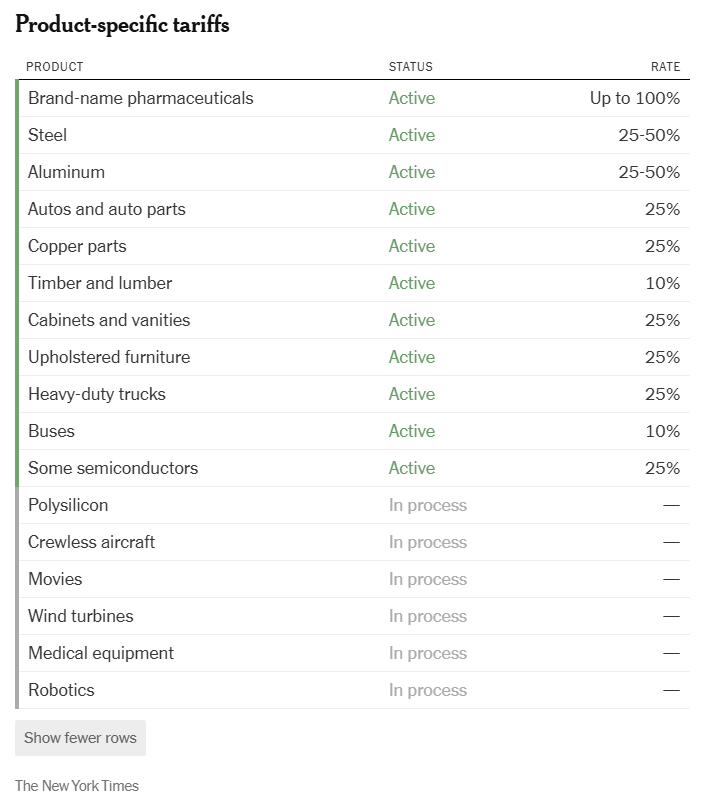
China isn’t any worse off then. But the new trade policies are scrambling relationships with other trading partners in surprising ways. The United States actually runs large trade surpluses with Brazil, so you might suppose that Trump officials would leave Brazil alone. And then there’s Canada: these product-specifc tariffs were never touched by the Supreme Court decision anyway, and these ironically happen to have a far greater impact on Canada, than on China:
Now comes news that higher tariffs are coming on a wide range of other products inbound the US from Canada, which will be far higher than the same products going in from China.
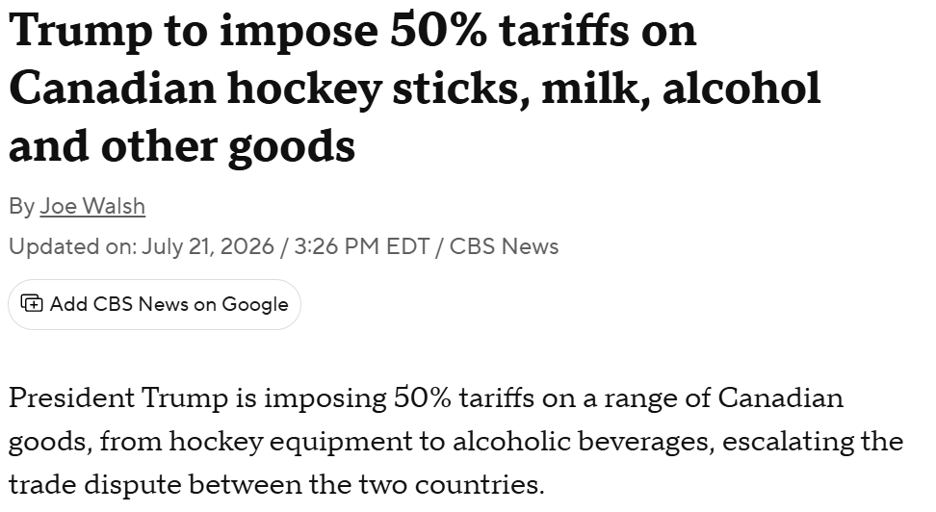
We’re saying here that the tariff policy of the United States is pushing manufacturing back to China, and what’s more, American retailers who buy, for example, hockey equipment from Canada have good reason now to look for hockey sticks made in China. And the Canadian companies who build them might be better off moving their factories to China too.
Be Good.
Resources and links:
New U.S. Tariffs Aimed at Over 80 Countries Go Into Effect
https://www.nytimes.com/2026/07/23/business/economy/trump-tariffs.html
Trump’s Tariffs Are Sending Some Companies Back to China
https://www.nytimes.com/2026/07/29/business/economy/trump-tariffs-china.html
Years of US tariffs on China have largely failed to reduce dependence on Chinese suppliers
https://www.piie.com/research/piie-charts/2026/years-us-tariffs-china-have-largely-failed-reduce-dependence-chinese
Made with China: Global supply chains and the limits of US decoupling
https://www.piie.com/publications/policy-briefs/2026/made-china-global-supply-chains-and-limits-us-decoupling
Trump’s tariffs were supposed to boost American manufacturing, but the new levies are actually pushing some companies back to China
https://fortune.com/2026/08/05/trump-tariffs-american-manufacturing-reshoring-china-imports/
Despite Trump’s best efforts to reshore manufacturing, blue-collar employment is plunging for the first time since the pandemic with 59,000 lost jobs
https://fortune.com/2025/11/25/jobs-report-manufacturing-reshoring-tariffs-factor-job-loss/
China Has Come Through Trump’s Trade War in a Good Position
https://www.nytimes.com/2026/07/24/business/china-tariffs-trump.html
US-China trade war tariffs: An up-to-date chart
https://www.piie.com/research/piie-charts/2019/us-china-trade-war-tariffs-date-chart
Vietnam Manufacturing Costs Are Rising — and Tariffs Aren’t the Reason | Asia Agent Pte Ltd
https://asia-agent.com/blog/vietnam-manufacturing-costs-rising
China Plus One in Practice
https://china.acclime.com/news-insights/china-plus-one-in-practice/
Tariff timeline with China, so far
https://flowingdata.com/2025/05/12/tariff-timeline-with-china-so-far/
Biden finalizes increases to some of Trump’s China tariffs
https://www.cnn.com/2024/09/13/politics/china-tariffs-biden-trump
Biden Administration Ratchets Up Tariffs on Chinese Goods
https://www.nytimes.com/2024/09/13/us/politics/biden-tariffs-chinese-goods-clothing.html
China Reaches Global Majority on Amazon
https://sellercentral.amazon.com/seller-forums/discussions/t/28d4c247-2b2b-43be-802a-cec93e737211
Inside China / Business is a reader-supported publication. To receive new posts and support my work, consider becoming a free or paid subscriber.
From Inside China / Business via This RSS Feed.