

“The AFP is keeping the dead hostage.”
CABUYAO CITY, Laguna — For more than two days, the bodies of three individuals killed in a military operation in Abra remained under state custody while their families waited outside a funeral home for permission to bring them home.
Human rights groups say the delay is not a mere bureaucratic lapse but a grave violation of international humanitarian law (IHL) and the dignity of the dead.
In separate statements issued on Aug. 6, Karapatan and the Cordillera Human Rights Alliance (CHRA) condemned the Armed Forces of the Philippines (AFP) and the Philippine National Police (PNP) for withholding the remains of Eugene Hilaus, Enrique Dayandante, and a still unidentified third fatality reportedly killed in an armed encounter in Abra.
“The AFP is keeping the dead hostage,” Karapatan Secretary General Cristina Palabay said, demanding the immediate release of the bodies to their families.
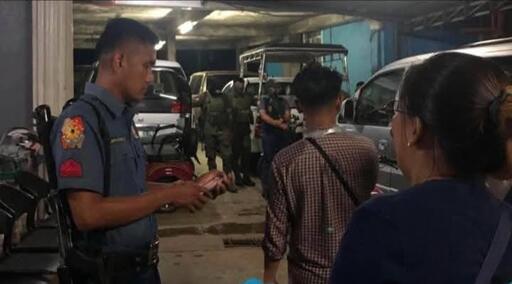
The families of Hilaus and Dayandante have authorized the Ilocos Human Rights Alliance (IHRA) and CHRA in retrieving the remains and arranging the burial. Yet despite repeated requests, the bodies were not turned over even after more than 48 hours.
According to CHRA, the remains were left at the alleged encounter site for over a day amid heavy storm rains before being transferred to a morgue. Reports from the ground indicate that the bodies were not being kept in refrigerated storage, raising concerns that proper preservation procedures were not being observed.
For rights advocates, the handling of the remains reflects a deeper disregard for humanitarian obligations.
“Every hour of delay exposes the remains to further deterioration and prevents the families from carrying out timely and dignified burial rites,” CHRA Spokesperson Casselle Ton said.
International humanitarian law requires all parties to an armed conflict to search for, recover, identify, and respectfully handle the dead. These obligations apply regardless of whether the deceased are civilians, combatants, or persons accused of belonging to an armed group.
Karapatan said photographs released by the AFP allegedly showed the bodies lying exposed in a barren mountain area, vulnerable to decomposition and desecration. The group warned that publicizing such images while withholding the bodies from their families treats the dead as objects of military propaganda rather than human beings entitled to dignity.
Families made to wait
On the morning of August 6, CHRA said Hilaus’s mother and members of a quick response team arrived at a funeral home expecting that autopsies would finally be conducted. Instead, they were told to continue waiting.
Police reportedly informed them that the medico-legal team from Baguio City had first made a courtesy call to the police director in Licuan-Baay before proceeding to the funeral home. For the family, the wait extended another day of uncertainty.
The CHRA also reported that a police investigator questioned Hilaus’s mother about her son’s background and schooling despite authorities already possessing his identification documents and birth certificate. Paralegals accompanying the family declined to answer further questions, saying the interrogation was unrelated to the medico-legal process.
Human rights workers who accompanied the family described the questioning as particularly distressing because it occurred while the mother was still trying to secure the release of her son’s body.
“The continued withholding of the bodies prolongs the suffering of grieving families,” Ton said. “The dead deserve dignity, and their families deserve the immediate return of their loved ones, not prolonged delays, a lack of basic preservation, or interrogation while they are in mourning.”
As of posting time, rights groups said the bodies had still not been released.
“The situation in Abra reflects a continuing human rights crisis confronting Indigenous and rural communities across the Cordillera,” Ton said. “Justice begins with respecting the dead, returning them to their families, and holding accountable those who violate humanitarian law.”
A pattern of abuse
Rights groups said the Abra incident cannot be viewed in isolation. They linked the withholding of the remains to a broader pattern of militarization and human rights violations in the province.
Community organizations have long documented military operations that disrupted farming, hunting, and small-scale mining in Indigenous villages. Residents reportedly have been unable to cultivate rain-fed rice fields during a crucial planting period after months of drought because of military blockades and troop deployments.
“Militarization is putting both lives and livelihoods at risk,” Palabay said.
Youth organization Anakbayan Metro Baguio also cited previous incidents in Abra in which civilians were allegedly targeted during military operations, arguing that intensified counterinsurgency campaigns have repeatedly endangered rural communities. (RVO)
The post Rights groups condemn military for hostaging the dead in Abra appeared first on Bulatlat.
From Bulatlat via This RSS Feed.