


Government drops the most controversial provisions as protests outside Congress end in clashes with security forces.
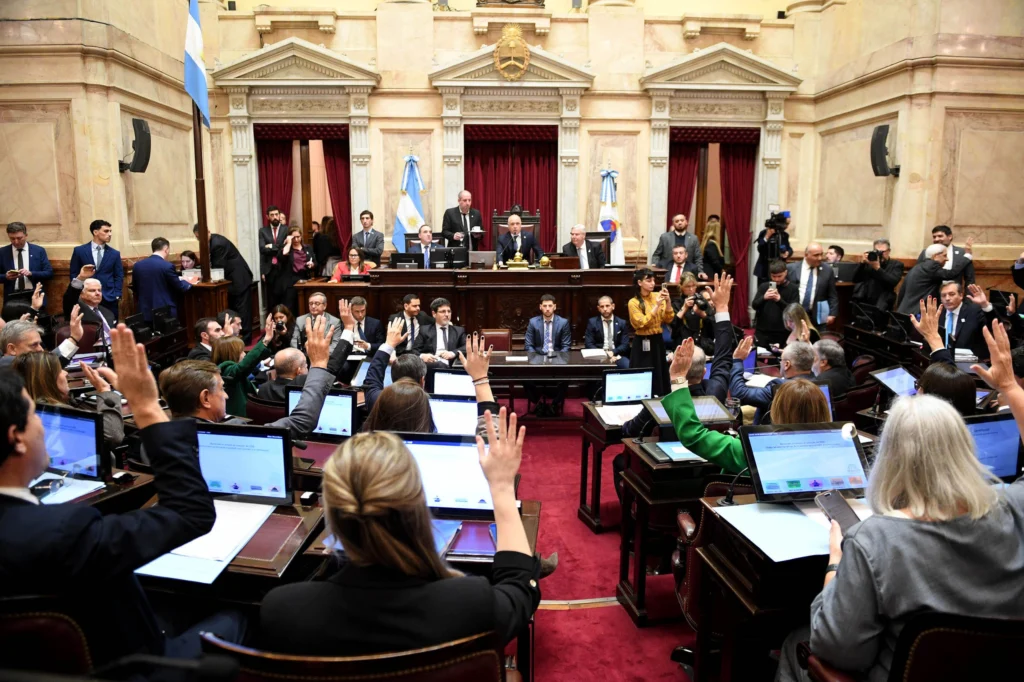
Argentina’s Senate approved the government’s Private Property Inviolability bill early Friday after removing two of its most controversial provisions to secure enough votes, while protests outside Congress escalated into clashes that left people injured and detained.
RELATED: Argentinean Protesters Face Police Repression As Senate Debates Land Reform
The bill, backed by President Javier Milei’s government, passed after more than 10 hours of debate with 37 votes in favor and 33 against. To win approval, the ruling party, La Libertad Avanza, withdrew chapters that would have amended legislation governing rural land ownership and land affected by wildfires.
During negotiations, the government revised its proposal on rural land ownership several times. It initially sought to eliminate the current 15% cap on foreign ownership of rural land, later proposed raising the limit to 25%, and ultimately removed the entire section from the bill. Lawmakers also abandoned proposed changes to the Fire Management Law that would have eased the existing 30- and 60-year restrictions on the use of land affected by wildfires.
Text Reads:  The Argentine Senate approved, with 37 votes in favor and 33 against, the Private Property Inviolability Bill promoted by the government of Javier Milei. The “Freedom Advances” movement withdrew two sections due to public resistance: the modification of the Rural Land Law, which restricts land purchases by foreigners, and the changes to the Fire Management Law, which sought to relax restrictions on burned properties.
 The approved text accelerates eviction processes with shorter deadlines, tightens the conditions for the State to expropriate private property, and creates a Federal Council for the digitization of the property registry. The Lower House will now have to debate the sections that have already passed the Senate. While the vote was taking place, thousands of protesters mobilized in Buenos Aires and were met with tear gas, water cannons, and rubber bullets.
With those provisions removed, the legislation now focuses on three core areas. It introduces measures designed to accelerate eviction proceedings while providing housing solutions in cases involving minors, people with disabilities and older adults in vulnerable situations.
The bill also revises the legal requirements governing state expropriations of private property by establishing new conditions that must be met before real estate can be acquired through that process. In addition, it creates a Federal Council to modernize Argentina’s property registry through the full digitalization of real estate administrative procedures.
The legislation will now move to the lower house, where lawmakers are expected to debate the approved provisions, particularly those affecting the state’s authority to carry out future expropriations.
As senators debated the bill, thousands of people demonstrated in Buenos Aires and other parts of the country to oppose the proposal. Protests outside the National Congress, which began peacefully, later erupted into clashes as security forces used tear gas, water cannon and rubber bullets to disperse demonstrators.
The security operation expanded from the area surrounding the legislative palace to Callao Avenue, Corrientes Avenue, Avenida de Mayo and Plaza de Mayo, leaving several people injured and detained.
The Senate vote marks another contentious episode in the Milei administration’s legislative agenda, which has been marked by repeated negotiations and concessions as it seeks to advance its reform program. Social organizations and government critics argue that proposals to ease restrictions on foreign ownership of rural land have not been abandoned entirely and could return in future legislative sessions.
From teleSUR English via This RSS Feed.