

This article by Anahí Del Ángel originally appeared in the August 6, 2026 edition of Contralínea, a Mexican investigative magazine.
The committee of experts charged with analyzing the viability of exploiting unconventional natural gas deposits in Mexico through fracking recommended prohibiting exploitation activities in the Tampico-Misantla basin, located between Veracruz and southern Tamaulipas, and continuing the evaluation only in the Sabinas-Burro-Picachos basins, in Coahuila and Nuevo León, and Burgos, in Tamaulipas.
As a first step to determine whether it is viable to develop hydraulic fracturing projects in those two regions, the government of Mexico will begin drilling research wells to confirm the existence and availability of salt water in the subsoil, President Claudia Sheinbaum reported.
During her morning press conference, the President explained that this work responds to the first recommendations of the scientific committee on energy sovereignty and unconventional natural gas deposits, and clarified that these are not wells to extract gas, but hydrogeological explorations.
“What we would do is begin, through the Mexican Institute of Water Technology, exploration wells to see whether there is salt water; because if there is no salt water, the possibility of carrying out any type of unconventional gas exploitation is closed off,” she stated.
For her part, the researcher from the Faculty of Engineering of the National Autonomous University of Mexico (UNAM), Ana Paulina Gómora Figueroa, explained that the committee evaluated the potential of the country’s unconventional deposits under social, environmental, and technical criteria.
She detailed that the prospective natural gas resource in this type of deposit is estimated at 141.5 trillion cubic feet, distributed mainly in the Burgos, Sabinas-Burro-Picachos, and Tampico-Misantla basins. However, she noted that this potential must still be evaluated to determine how much gas could actually be recovered.
Gómora Figueroa explained that, after the analysis, the commission concluded that “on grounds of environmental protection, society, biodiversity, and demographic density: prohibiting activities to exploit unconventional natural gas deposits in the Tampico-Misantla basin should be considered.”
Meanwhile, the director of UNAM’s Faculty of Engineering, José Antonio Hernández Espriú, explained that one of the main conditions for advancing in those two basins is to use exclusively salt water in an eventual hydraulic fracturing process, in order to avoid the use of fresh water intended for human consumption, agriculture, and livestock.
For that, he said, “it will be necessary to drill research wells that make it possible to confirm the existence of bodies of salt water located between 1,000 and 1,500 meters deep, as well as to verify that these geological formations are hydraulically disconnected from the fresh-water aquifers.”
“They are not wells to extract gas; they are wells for the purpose of hydrogeological research to determine that, indeed, the salt water exists, that it has sufficient volumes, and that it possesses the necessary characteristics for an eventual fracturing process,” he explained.
In addition to verifying the availability of the resource, the specialists recommended demonstrating that there is no communication between the deep formations with salt water and the surface aquifers, to avoid contamination risks.
Hernández Espriú detailed that to continue with the analysis it is necessary to “begin monitoring the quality of surface water and groundwater. A network of wells will have to be designed, a piezometric network, and rivers, streams, aquifers, shallow wells, water wheels, and springs will have to be sampled systematically, to determine something we call in hydrogeology the baseline water and ecosystem line.”
Likewise, the representatives of the committee of experts announced their first conclusions: first, “to incorporate, in a very accelerated manner, the new renewable sources of electricity generation”; second, “to implement energy-efficiency measures and programs at the national level”; third, “to increase national production of conventional natural gas—as has already been discussed—and eliminate the flaring of gas associated with oil production.”
Fourth, “to prohibit natural gas extraction activities and unconventional deposits in the region of the Tampico-Misantla basin”; fifth, “to carry out the drilling of wells from the standpoint of hydrogeological research to confirm the existence of bodies of salt water, and to determine that there is a hydraulic disconnection between the bodies of salt water and the shallow aquifers that today represent the main source of water in the region.”
In sixth place, “it is recommended to confirm the natural gas reserves in the unconventional deposits through studies and well drilling, which form part of a comprehensive program that specifically considers the sweet spots (optimal places), and that adopts the latest-generation technologies, both in exploration and in exploitation.”
As a seventh point they recommended “implementing the best practices regarding the handling of ‘byproducts,’ less harmful use, and environmental protection actions.”
Ninth, “local supply should be encouraged to promote regional employment, as well as national content”; and tenth, “it is recommended to establish external and independent scientific monitoring that supports verification of the integrity of the aquifers, the water balance of the producing regions, seismic activity, the protection of ecosystems, among others, and that provides permanent technical advice.”
As additional recommendations, they highlighted recycling at least 75 percent of the water used in the processes, avoiding the use of highly toxic substances in fracturing fluids, implementing risk prevention and mitigation plans, favoring closed circuits for the handling of return water, and transparently publishing information on the use of additives and the volumes of water employed.
President Claudia Sheinbaum Pardo announced that the work will be accompanied by the 54 members of the scientific committee, and that progress will be made known every two months through public reports on the platforms of the Secretariat of Energy and the Secretariat of Science, Technology, Humanities, and Innovation.
The President stressed that, if the explorations conclude that there is not enough salt water to supply an eventual hydraulic fracturing process, the possibility of developing unconventional natural gas projects in the basins that remain under evaluation will be ruled out.
-
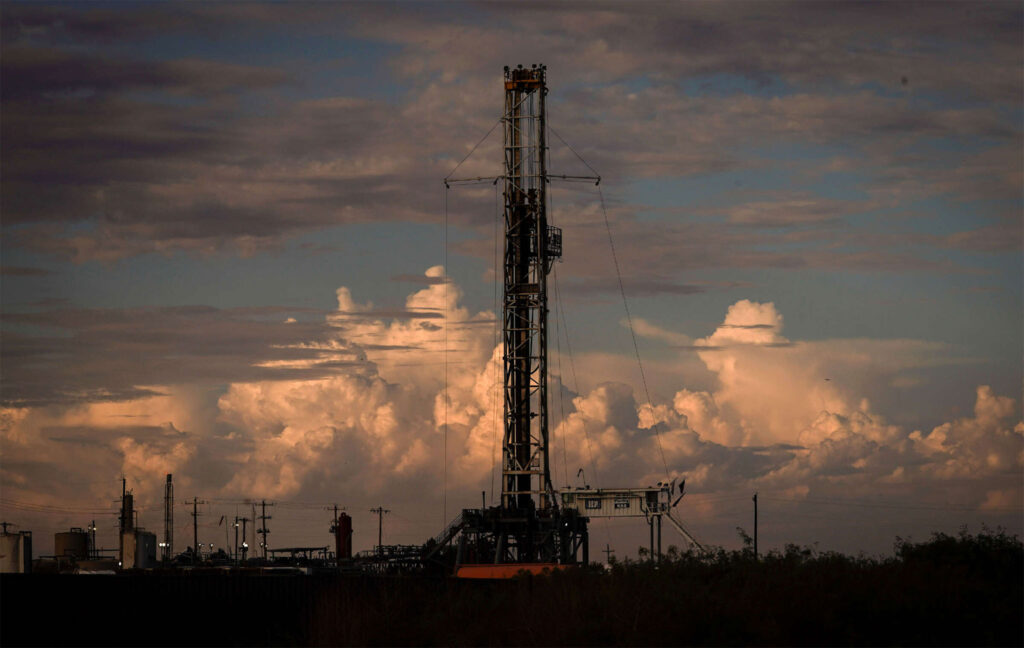
Experts Rule Out ‘Fracking’ in Mexico’s Tampico-Misantla; Water-Well Drilling to Assess Two Basins Will Begin
August 6, 2026
A science panel urged banning unconventional gas in the Tampico-Misantla basin; two others stay under study only if deep saltwater, not fresh, is found.
-
Mexico Requests to Meet with US Agriculture Authorities to Resume Avocado Exports
August 6, 2026August 6, 2026
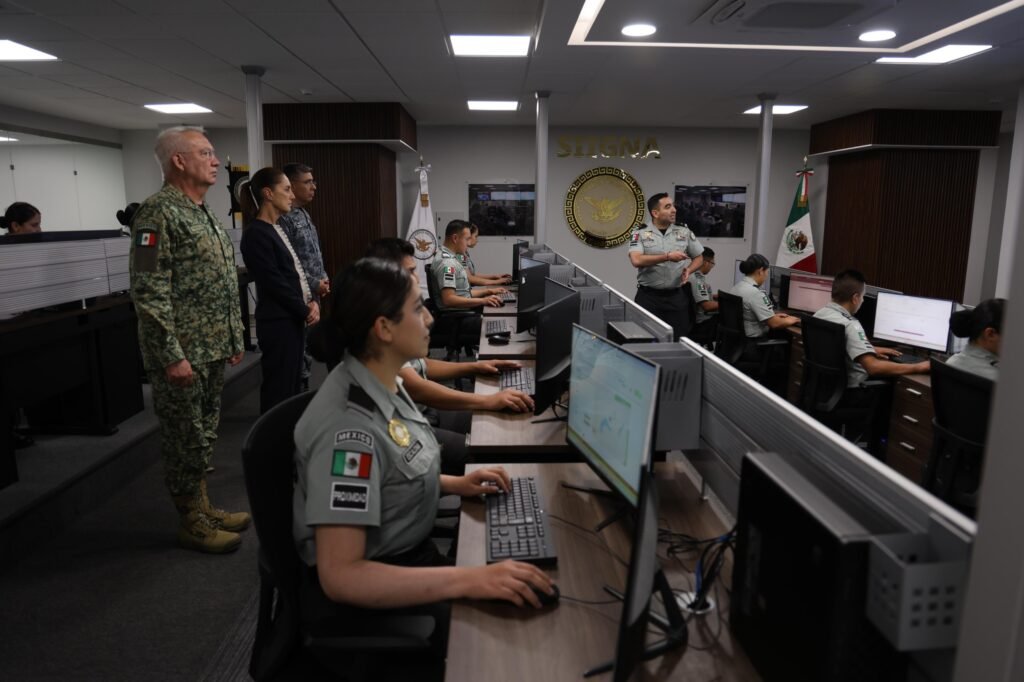
US inspectors were pulled from Michoacán over threats; Sheinbaum is sending more National Guard and pitching a work plan to restart avocado exports.
-
People’s Mañanera August 6
August 6, 2026August 6, 2026
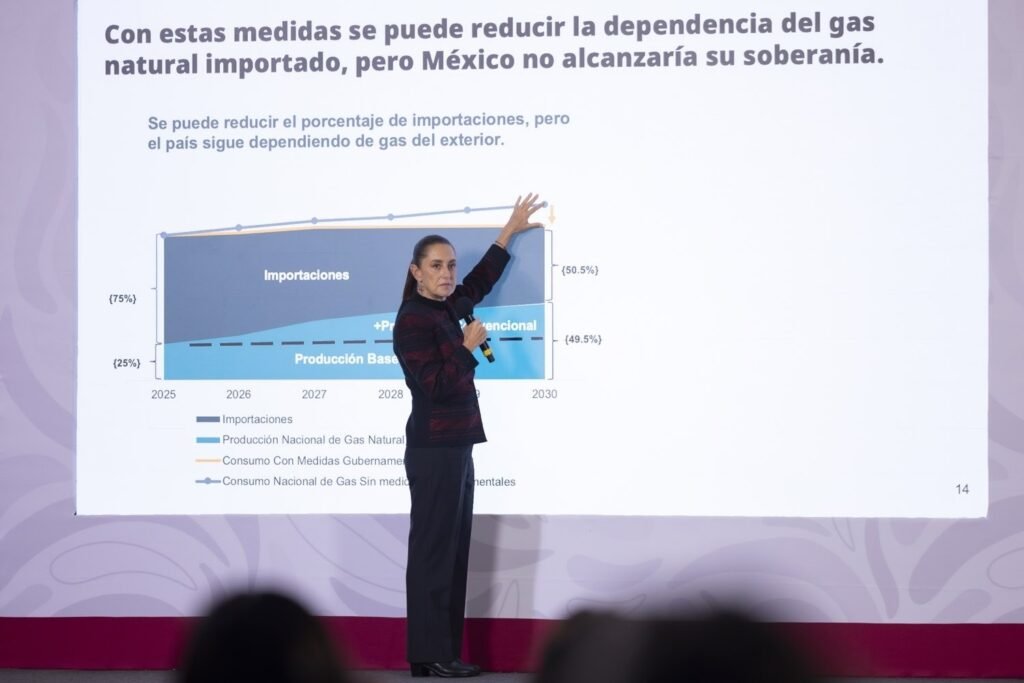
President Sheinbaum’s daily press conference, with comments on energy sovereignty, water, audience rights, avocado exports, and infrastructure.
The post Experts Rule Out ‘Fracking’ in Mexico’s Tampico-Misantla; Water-Well Drilling to Assess Two Basins Will Begin appeared first on Mexico Solidarity Media.
From Mexico Solidarity Media via This RSS Feed.