

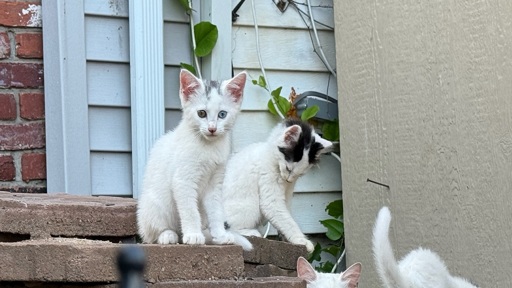
If you’ve ever strolled through New York City and felt like there were a lot of cats strutting the streets, you weren’t wrong. No one knows exactly how many felines wander New York, but it’s a lot. Bideawee, a regional animal shelter, says tens of thousands of stray and feral cats live in the city’s outdoor spaces. In 2023, The New York Times said there could be as many as half a million feral cats; the same year, CBS News reported the number could be double that. The health of these cats is a bit less of a mystery thanks to a recent study from researchers at Rowan and Long Island Universities. It’s well-known that free-roaming cats can carry parasites and “shed” the eggs in their feces, which can then infect humans, pets and wildlife via contact with animal waste or soil in public places. Unmanaged free-roaming cat populations, the authors write, “occupy a critical interface between animal health, human health, and environmental hygiene.” But studies on this problem in New York City are rare, according to the researchers. The team tested nearly 90 cats across every borough except Manhattan in the late spring and summer of 2023. They found that more than half were infected with at least one parasite; 22% harbored two or more. These results aren’t surprising, said Felicia Nutter, a wildlife veterinarian at Tufts University, in an email to Mongabay. The study establishes a baseline for cats in this area. Continuing to study this same population…This article was originally published on Mongabay
From Conservation news via This RSS Feed.