

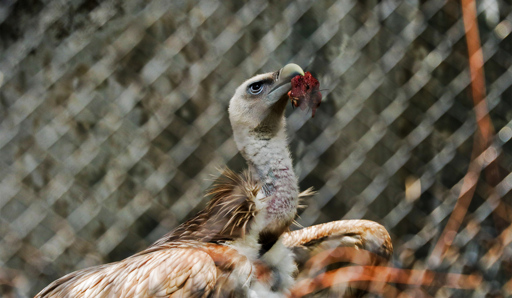
KATHMANDU — In the village of Pithauli, on the edge of Nepal’s Chitwan National Park, a safe feeding site for critically endangered vultures has long been hailed as a success story by conservationists. For visitors, the feeding site, also known as a “vulture restaurant”, provides a rare photo op for tourists: As white-rumped vultures (Gyps bengalensis) and slender-billed vultures (Gyps tenuirostris) feed on carcasses laid out by locals, greater one-horned rhinos, jackals, wild boars and crows watch and, sometimes, participate. For ornithologist Rajendra Suwal, however, this ensemble is an eyesore, he told Mongabay, “If an infected bird comes to the site, the disease could spread to other birds or even animals.”. Suwal’s concern stems from a recent outbreak of bird flu or avian influenza in the country’s capital. An outbreak that started in mid-June at Kathmandu’s Central Zoo is believed to have cost the lives of at least 65 animals and birds across more than 20 species. The dead included barn owls, Himalayan griffons, greylag geese, jungle cats, leopard cats, a sarus crane and two common leopards. An investigation by the National Trust for Nature Conservation (NTNC), which manages the zoo, says the origin of the outbreak could likely be traced to two sources: Among birds, it likely started through feral crows roosting in open-topped aviary enclosures, while for carnivores, it spread through chicken meat fed to them by the zoo. A sarus crane (Antigone antigone) at the Central Zoo in Kathmandu. Image by Shadow Ayush via Wikimedia Commons (CC…This article was originally published on Mongabay
From Conservation news via This RSS Feed.