

This story originally appeared in Professor Richard Wolff’s Substack on July 21, 2026. It is shared here with permission.
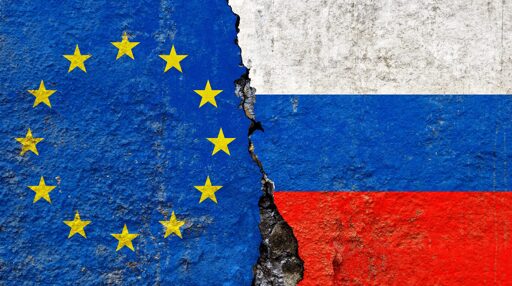
Deeply divided by nationalism and deprived of its vast colonies by the last century’s catastrophic two world wars, Western Europe has been in decline ever since. Recently, that decline has become drastic and desperate as Western Europe falls ever further behind — economically, militarily, and politically — today’s two superpowers: the US and China. Mediocre and unpopular leaders reflect Western European decline. They bet and built their careers on accepting junior partner positions vis-à-vis the United States. But Europe’s decline now threatens to split Europe apart. Inside each nation, rich and powerful minorities use their social positions to sustain their wealth and power while the masses bear most of the burdens of decline offloaded onto them by the rich and powerful. The problems flowing from these cumulative developments are approaching points of social explosion. Despite the lessons taught by the two world wars, many Western European leaders once again provoke and prepare for a war, this time against Russia, notwithstanding the awful risks of nuclear weapons. One key question to ask: why is this happening?
From 1945 to 1990, Cold War set Western European nations against the USSR and its Eastern European allies in many ways and on many levels. Yet that war remained cold. In 2026, after more than three decades of post-Cold War peace, a military war between a largely unified Europe (East and West) and post-Soviet Russia seems imminent. Such a war has been prepared by NATO’s growth, its moving eastward toward Russian borders since 1990; by Russia’s 2022 invasion of Ukraine; and by the escalations of their hostilities by both Russia and Ukraine since that invasion. War between much of Europe and Russia now looms.
US President Donald Trump used both his presidential terms to distance the United States from its European allies in NATO. Among his provocative, unilateral statements and actions were heavy tariffs on imports from European countries. In exchange for some reduction of those tariffs, Trump demanded and obtained tribute from European Commission President Ursula von der Leyen (over $1 trillion in committed purchases of liquified natural gas plus investments by Europe in the United States). He also reduced US support for the war against Russia in Ukraine. That war thus became a mostly European project.
As the US withdrew from its former close alliances with Europe, the latter’s leaders developed an increasing hostility toward Russia. They demonized the Russian leader, Vladimir Putin. Where Trump notably lessened hostility to Russia, his European counterparts intensified theirs. After Russia invaded Ukraine in 2022, Europe and the US rushed to bolster Ukraine’s defense beyond the huge assistance they had already provided to Ukraine since at least 2014. After February 2022, Europeans provided Ukraine with still more support in finance and weapons. By 2026, many observers in Europe and Russia and beyond predicted a Russo-European war as imminent. Our goal here is to explain why this dangerous situation arose.
World Wars I and II fatally weakened capitalist colonialism. The British, French, German, Dutch, Belgian, Russian and Japanese colonialisms had especially escalated competitive clashes into two catastrophically self-destructive wars. This allowed movements of the colonized people finally to defeat the weakened colonizers and win political independence. The different anticapitalist movements that had blossomed earlier in 19th century Europe allied themselves with anticolonialism especially in the Soviet revolution of 1917 and the Chinese revolution of 1949. A complex, shifting relationship between anticolonialism and anticapitalism continues to evolve in both the Global South and the former colonial powers.
As the sole heir of all other capitalist colonialisms, the US led and organized capitalism’s counteroffensive against the USSR, socialisms and communisms generally, and their alliances with anti-imperialism in particular. It did so by mobilizing Western Europe, Canada, and Japan as major subordinates in a globally hegemonic bloc.
The private capitalist classes atop each colonialist nation had understood the colonies’ importance for their profits and thus for their imperial economies. They went to war in large part to retain their colonies. After the two world wars, they faced, separately and together, momentous challenges to their existence. As their empires dissolved in wars of independence, capitalists’ profits and their national economies were threatened. Worse still was a potential alliance linking ex-colonies, the Comintern nations, and those capitalists’ own domestic socialist and communist parties and unions. Fearing such developments, nothing less than the survival of 20th century European capitalism seemed at stake for European capitalists and their supporters.
To undo this threat, Western Europe appealed to the post-World War II global hegemon: the United States. Within a few years of 1945, the US had scooped up much of what European and Japanese colonialisms had lost. US capitalists moved into newly independent ex-colonies to widen and deepen their economic dependence via the dollar as world currency, through both US trade and investment. European capitalists had to settle for positions as junior partners of their US counterparts, or else lost everything. Europe as a whole followed suit and became the junior partner of the US in most other dimensions (NATO, geopolitics, financial and cultural institutions, etc.).
Keynesian economics added a scientistic rationale — using monetary and fiscal policies to moderate business cycles — to the political necessity of welfare state expenditures.
As the sole heir of all other capitalist colonialisms, the US led and organized capitalism’s counteroffensive against the USSR, socialisms and communisms generally, and their alliances with anti-imperialism in particular. It did so by mobilizing Western Europe, Canada, and Japan as major subordinates in a globally hegemonic bloc. The US could do this because it had suffered far less than any of the other capitalist colonial nations from the two world wars. Indeed, World War II had extracted the US from capitalism’s worst ever crash. Its economy was stronger in 1945 than it had been for many years, whereas in all the former colonizing nations the reverse was the case. That economic strength contributed to its dominant military power.
US hegemony defined itself as a moral crusade against a great evil, the USSR (equated with communism). The US was “the leader of the free world” pitted against an unfree world — the USSR, Eastern Europe, and, after 1949, China. The latter were all demonized as anticapitalist dictatorships, which made them enemies of “democracy” as championed in and by the free world. On that basis, US hegemony followed as the necessary condition to “contain” the unfree world, to prevent its spread. The US-led “free world” could and would guarantee containment by means of global military bases, the world’s greatest military arsenal, ideological campaigns, political isolation, and economic discriminations. The world thus entered into a Cold War between 1945-1990 punctuated by military — hot — wars when the US deemed them necessary (for example, in Korea and Vietnam).
US hegemony also included domestic campaigns inside both Europe and the US aimed at containment. Those campaigns all featured two parts. One was a set of “welfare state” or social democratic benefits for working classes. Leading politicians in North America, Western Europe, and Japan installed those benefits. Many feared that not doing so would influence working classes toward socialism and communism. In the US, this meant perpetuating the 1930s New Deal into the 1970s. Successive leaders, Republican as well as Democratic, added Medicare to Social Security, regularly raised minimum wages, gave special attention to the non-white and non-male victims of systemic discrimination, subsidized higher education via massive public institutions, and subsidized home ownership loans. Such state interventions delivered a much less harsh life for working classes than any prior private capitalism had ever done. Keynesian economics added a scientistic rationale — using monetary and fiscal policies to moderate business cycles — to the political necessity of welfare state expenditures.
capitalists supported government social welfare spending because it came not from more taxes on them, but rather from national budgets’ defense savings. The latter were benefits from European subordination to NATO and its US leadership. That subordination included mostly endorsing US hostility toward the USSR, China and all things “communistic.”
The other part of these containment campaigns involved widespread purges of Communists, socialists, and their “fellow travelers.” In the US, a ferocious “anti-communism” project “cleansed” labor unions, schools, mass media, and government of leftist employees. Capitalist employers’ organizations and many individual capitalists collaborated with the state’s repressive campaigns. They mobilized behind Sen. Joseph McCarthy for a few years. His was a particularly extreme version of the old American political style of demonizing political opponents, foreign and domestic, as “of the devil.” The US House of Representatives established an “Un-American Activities Committee.” Such campaigns’ ostensible objective was to destroy the Communist Party. Mass media circuses, newspaper headlines, arrests, prison sentences, deportations, and getting witnesses to betray others — resulting in losing their jobs — were their means. Guilt by association targeted both socialists and independent left-leaning citizens. Purges identified many victims by citing their activities before 1945. It made little difference that at the time those activities (in unions, political parties, schools, churches, and civic associations) were both legal and often patriotically anti-fascist. The systematic repression of the US left after 1945 left deep political scars.
Western Europe dutifully undertook a similarly two-sided project. However, social conditions there imposed different qualities on it anti-Soviet and domestic anti-left campaigns. Europe’s pre-1945 history gave communist and socialist parties and their millions of members much greater social approval than existed in the US. Leftists’ roles in resisting fascism before and during World War II — often heroic — gave them genuine, widespread popularity. They could defend their political views, and themselves, in ways their US counterparts could not. European welfare states were more generous and lasted longer than their US counterparts.
While nothing quite like McCarthyism swept Europe, most Western European nations joined NATO and aligned their foreign policies to the US-led containment agenda. Their defense budgets and capabilities declined, and they relied instead on US military protection. What each European state saved by means of small defense budgets it could then use to provide public services for their working classes. The latter might otherwise have required higher taxes on corporations and the rich (and not only or chiefly on working people). European capitalists supported their welfare states partly because they endorsed containment. Equally important, capitalists supported government social welfare spending because it came not from more taxes on them, but rather from national budgets’ defense savings. The latter were benefits from European subordination to NATO and its US leadership. That subordination included mostly endorsing US hostility toward the USSR, China and all things “communistic.”
For the last 75 years, European politicians who hesitated to embrace the positions and tones consistent with the US-European “consensus” on foreign and domestic policies saw their career opportunities threatened or destroyed. The British sought and found a special role as the closest friend and imitator of the US in this consensus. The rest of Western Europe sometimes mocked Britain’s fawning subordination, but many jealously and secretly approximated it. European capitalists looked longingly at the US’s steadily shrinking welfare state programs that facilitated tax cuts on corporations and the rich. However, those non-Anglo Europeans accepted the political limits that rendered matching the US and UK impossible. They could only hold back the domestic power of their working classes by providing generous social welfare policies. The same was required to make Western Europe a consumerist bulwark against Russia, thereby to contain it and its Eastern European allies.
Breaking from those limits only became thinkable when it was made necessary. This happened when Trump ended the post-1945 US-Europe deal. His “friendliness” with Russia underscored his evident contempt for Western Europe as a junior partner/dependent that was too costly to carry anymore. His trade and tariff wars, pointedly, did not exempt Europe. The tariffs particularly shocked Western European capitalists who had concentrated during reconstruction (1945-1975) on producing goods and services that could compete in the rich US market. The tariffs also occurred just when Trump reduced support for Ukraine in its war with Russia and sharply criticized NATO. For shocked Western European leaders, Trump broke the US-European deals of the post-1945 world.
Chinese competition added strains to the European and US economies, which were already struggling to cope with the declines of their empires.
Ever since 1945, Western European capitalists had set themselves to rebuild their economies by producing goods and services of better quality and/or cheaper than the US output that dominated both the US and other markets. This included some investments in their former colonies, rendering them economically dependent notwithstanding their political independence. The latter became more performative than substantive. It remains that way in many areas. The crucially important exception was the spectacular economic growth of the People’s Republic of China. China’s growth changed everything, and continues to do so. It is transforming the world economy as it takes an ever more powerful place therein.
China’s still-export-driven manufacturing economy competes globally and ever more successfully with what remains of manufacturing in the US and in Europe. China competes, as well as an importer of energy and other inputs. Chinese competition added strains to the European and US economies, which were already struggling to cope with the declines of their empires. Europe already had had a century of decline, whereas the US was new to decline, with many of its citizens steadfastly committed to denial as their coping mechanism of choice.
Western European capitalism had partly offset its decline first by post-war reconstruction, then by explosions of consumer credit. Then, and especially after 1989, Europe welcomed waves of cheap immigrant labor while expanding eastward to re-absorb Eastern Europe into its economic operations, much as it was doing with its former colonies. Pushing NATO eastward and expanding EU membership were the chief mechanisms to accomplish Western Europe’s capitalist neocolonialism. Fantasies swirled about extending those mechanisms eastward to include Russia, perhaps dividing it up into smaller states as manageable as the Eastern European states were. If somehow achieved, that could give Western Europe an immense new geographic expanse to economically colonize. Trump, too, engaged parallel fantasies in his neocolonial gestures toward Panama, Canada, Greenland, Venezuela, Cuba, and Mexico.
Pushing NATO eastward and expanding EU membership were the chief mechanisms to accomplish Western Europe’s capitalist neocolonialism.
The great break in post-World War II US-European relations came with Trump’s combination trade and tariff war designed to “make the US economy great again.” Trump had effectively dedicated his second presidential term, begun in January 2025, to waging this economic war. Another part of that war was a broad turn away from neoliberal globalization and toward a systematic economic nationalism (“America first”). Trump’s blunt message was disengagement. Europe could no longer count on the US to provide it with military protection. Trump depicted Europe as an ally who had betrayed and cheated the US economically. He demanded payments as compensation. Those took the form of buying US liquified natural gas (LNG) for its energy needs plus committing to invest $700 billion or more in the US over a few coming years. Von der Leyen formally acceded to Trump’s demands. Such payments amounted to either tribute or reparations, depending on one’s viewpoint.
Europe’s required purchase of US LNG emerged from the Russia-Ukraine war. The economic sanctions of that war (since February 2022) plus the destruction of the Nord Stream pipelines (in September 2022) sharply reduced and then ended the flow of cheap energy from Russia into Germany and other parts of Western Europe. Desperate for access to energy, Europe turned increasingly to imports from elsewhere — and especially from the US — at a much higher cost. Meanwhile, steadily growing trade competition from China and more rapid technical innovations achieved in China and the US further squeezed the European economy.
The shock of Trump’s abandonment of Europe as the US economy’s junior partner accelerated Europe’s decline. Once it had been the dominating center of a planet it had colonized. Now it had fallen to a poor third place in a world economy increasingly dominated by what had once been the poor corners of that planet. On one side stood the declining but still strong US; on the other the rising People’s Republic of China. No wonder the Ukraine war drove Russia to declare its identity shifting from European to Asian.
Europe’s political leaders reflected and exemplified its decline. Burnham, Macron, Merz and Meloni especially — like most of their predecessors after 1945 — had built political lives around loyalty and subservience to the post-World War II deal with the US. They relied on the military, financial, and ideological support from the US, on NATO, on the IMF, the World Bank, and myriad NGO missionaries for US “democracy.” They championed their “close alliance” with the US as a key cause of Europe’s prosperity and peace after 1945. Betrayed by Trump, they were forced by Europe’s decline to pay tribute with monies therefore not available to offset that decline. Trump pointedly forced them to begin financing the huge costs of developing their own military defense (already far behind the military capabilities of the US, on one side, and the China-Russia alliance on the other).
European voters know their social democracy and their peace are fragile. Trump’s betrayal threatens both.
Given the deep personal opportunism cultivated in Western European leaders by their subordinate (to the US) situation, they grasped that Trump’s betrayal threatened their careers. Trump’s repeated insults of and disdain for Western Europe risked provoking European voters to turn against leaders seen as slavish toward Trump’s US. Those leaders’ alarm only deepened as much of the US employer class seemed quite supportive of Trump’s anti-Europeanism. Perhaps their greatest fear lay in the possible reactions of European voters once they understood that Trump’s betrayal posed serious economic dangers for them. Voters might ask where the money would come from to finance European rearmament when the US defense umbrella closed. If enhanced, would budget allocations for the military diminish outlays for mass public social services, raise their taxes, or both? Europeans began to wonder out loud whether the Ukraine-Russia war being fought to the last Ukrainian might prefigure a US war with Russia/China fought to the last European. European voters know their social democracy and their peace are fragile. Trump’s betrayal threatens both. How that plays out in European politics provides new opportunities for the left and the right and existential threats to the traditional centrist pro-US political leadership trying desperately to retain power.
Nationalist politicians on the European right see their opportunity. Office-holding conservative leaders (like Burnham, Macron, and Merz, for example) can be voted out via guilt by subordination. They perpetuated the post-World War II programs that made Europe vulnerable to its current economic decline because of their subservience to the US. Western European opportunism now incites the suspicion that maybe it bet on the wrong horse. A similar suspicion now arises in some of the Gulf States in the wake of the US-Israel war on Iran. Having “invited” US military bases to be constructed on their land for security, they now see that those bases actually achieved the opposite. The bases and their host nations have become endangered targets vulnerable to Iranian drones and missiles.
Anticapitalist politicians on the left also see an opportunity. The US was a partner who mostly pushed Europe to the right. The US undid its New Deal sooner and took that undoing further than the Europeans dared to even try to do to their welfare state.
Among the results of Europe’s left: it abolished the death penalty when the US pointedly did not. Military adventures, including Vietnam, Afghanistan, Iraq, and now Ukraine and Iran, were always started, led, and driven by the US with the Europeans marginally along as “coalitions of the [barely] willing.” Left politicians in Western Europe kept seeking to secure, if not advance, social democratic goals and policies. One way to do that was to limit the US connection as a context for more socialistic development in Europe. The European left positions itself as the way for the mass beneficiaries of the social democratic state to protect it from a US-connected old leadership that always seems to threaten social democracy. Europe’s left likewise rejects the nationalist right politicians because of their pro-capitalist, anti-worker and anti-immigrant tendencies.
Europe’s old US-linked political leaders have now found a way to arrest, or maybe even reverse, Europe’s frightening decline. It is the only way to do that they can see or imagine. That way can, they believe, both keep them in power in the short run and give them a new economic growth opportunity in the longer term. That way provides a convenient public justification for shifting state budget expenditures from public social services to big-business defense firms, from social democracy to pro-employer (pro-capitalist) austerity. By minimizing any extra taxes upon their employer classes, Western European leaders serve them very well. They will cover the costs of rearmament and tribute obligated to the US by diverting funds from the welfare state plus state-guaranteed borrowing plus heightened mass-based taxes, if needed, on working classes. Domestic austerity will be intensified across Western Europe while wages are brought downward toward southern and eastern European levels.
The same Western European leaders who criticize Trump lusting after Denmark’s Greenland indulge parallel lusts after Russia’s geographic expanse.
Europe’s leaders believe they can accomplish this by pumping up mass anxiety and fear around urgent preparations for a war against Russia. To that end, they demonize Russia beyond even the levels achieved against Stalin and Stalinism during the Cold War. Those leaders hope that an adequately terrified Europe will keep voting for them for a while. Longer-run hopes entail imagining Russia’s military defeat and consequent de jure or de facto dismemberment. The resulting subunits of old Russia would then offer Western Europe a new colonial opportunity, a vast expanse for profitable investment to obtain food, raw materials, and possibly workers to rejuvenate Western European capitalism. The same Western European leaders who criticize Trump lusting after Denmark’s Greenland indulge parallel lusts after Russia’s geographic expanse.
All wars are overdetermined by both domestic and international causes intertwined. Europe’s current drone and missile warfare against Russia escalated from the Russia’s “special military operation” against Ukraine that began in 2022. Its local overdeterminants began earlier. Local concerns woven into global shifts — NATO toward the east and China toward the west — shaped Russia’s changing international position, concerns, and “red lines.” The whole world watches as China, Russia, and their allies square off against the US and whatever allies it retains. The world sees the wars in Ukraine and Iran today as conflicts among proxies of the two great powers of our time.
The danger inherent in both wars is that Europe or the US or Russia or Israel might resort to nuclear weapons if “existentially” threatened. The question is whether global masses and leaders can recognize the danger. This essay is one effort toward that recognition. The solution is a serious commitment to international collaboration. What began as the League of Nations and was rebuilt as the United Nations needs still another incarnation with real powers and real global respect. Otherwise we risk World War III and its mad, mutual assured destruction.
From The Real News Network via This RSS Feed.