

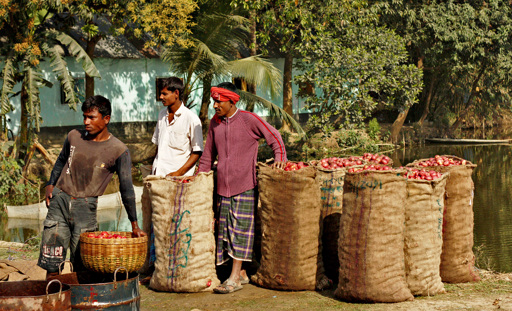
Bangladesh is the world’s second largest producer of the environmentally friendly fiber jute. However, the country has, for decades, grappled with the move to combat the escalating use of the cheaper and more popular, but harmful, plastic-based packaging and synthetic fibers. As a safeguard measure, the government, 16 years ago, enacted a law for the mandatory use of jute sacks and bags to contain and carry 19 essential commodities, including rice, wheat and fertilizer. The move has been largely unsuccessful, though, with plastic and synthetic fiber invasion as packaging ingredients continuing unabated. Synthetic and poly bags have caused environmental problems such as waste disposal. Nazmul Haque, the government-appointed jute officer in the northern Sherpur district, told Mongabay that a small semi-automatic rice mill — Sakhina Rice Mill — has exclusively been using jute sacks. Sakhina Rice Mill in Sherpur stands out from the crowd by exclusively using jute bags and sacks, debunking the narratives of fellow rice millers that jute sacks and bags reduce their profit margin. “A 50-kilogram [110-pound] capacity synthetic/plastic bag costs 20 takas [16 cents], while a jute sack costs 80 takas [65 cents]. A synthetic/poly bag cannot be reused; it is for one-time use. On the other hand, we can use the same jute sack at least three times for carrying paddy or rice and then mend it, if torn, and use it three more times for carrying rice bran,” Md. Hamez Uddin, a proprietor of Sakhina Rice Mill, told Mongabay. “Jute sacks are economically better,…This article was originally published on Mongabay
From Conservation news via This RSS Feed.