

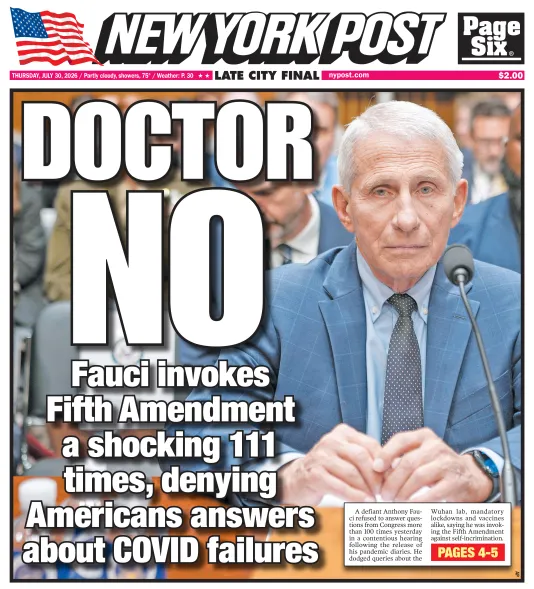
Somehow the New York Post (7/30/26) didn’t find it as shocking when Donald Trump took the Fifth Amendment more than 400 times during an investigation into fraudulent business practices.
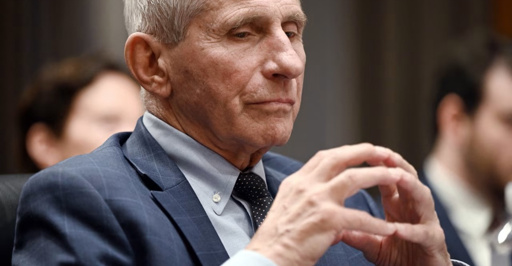
The congressional grilling of former White House Covid advisor Anthony Fauci, and the resulting editorial responses, weren’t good faith inquiries into the pandemic (CNN, 7/29/26). The entire spectacle was a Republican public relations campaign to promote two often contradictory conspiracy theories.
The first is that the virus that ravaged the globe was a human-altered super virus that escaped a Chinese laboratory, which for right-wingers spins a titillating narrative of scientistic hubris fused with Communist treachery.
The second is that the public health measures that discouraged public gatherings were extreme and unnecessary. The idea is that the virus was not as dangerous as it was made out to be—just some sniffles and coughs, really—and that these countermeasures were meant to tank the economy, helping the Democrats win the presidency in November 2020. For the tinfoil hat wing of American politics, safety measures were less about saving Americans and more about fomenting a color revolution against President Donald Trump.
The right manages to at the same time be feverishly obsessed with the supposedly artificial release of the virus and also outraged by public health measures to contain it.
The hearing was all show and no trial, but right-wing pundits and politicians are doing their damndest to keep the hearing in the news cycle (Fox News, 8/5/26; Wall Street Journal, 8/5/26; Breitbart, 8/5/26). And the Republicans do need a distraction: Gas prices remain high (AP, 7/20/26), support for Trump’s war against Iran remains low (Quinnipiac, 7/29/26) and, as Newsweek (8/2/26) noted, his
approval rating is underwater in at least 11 states that he carried by double digits in the 2024 election, a sign of growing dissatisfaction with the president’s performance ahead of November’s midterms.
Centrist media are also keeping the persecuting viewpoint of Republican Sen. Rand Paul—who led the hearing, and might better serve the public by telling whether the other Kentucky senator, Mitch McConnell, is alive or not—in the public eye.
‘Manufacturing a false narrative’
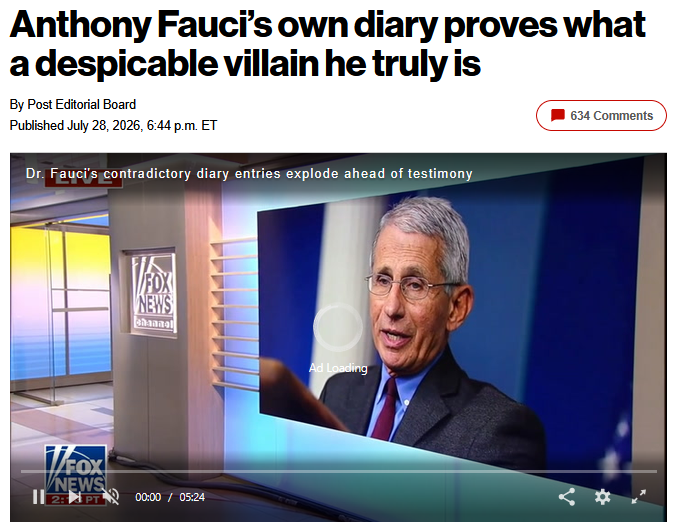
The New York Post (7/28/26) claimed that Fauci’s “private notes contradict what he was telling the world at the very same time.” Private notes (1/26/20): “Now we know the market was not the source, it was the amplifier. Having said that, somewhere the virus jumped from animals to humans.” What he was telling the world (USA Today, 2/17/20): “Almost certainly, somewhere, somehow a bat infected an intermediate host who infected a human. What epidemiologists feel is that the market was an amplifier of something that was already going on.” (Fauci was referring to the latest research at the time about the Wuhan outbreak—work that was later superseded.)
The New York Post editorial board (7/28/26) focused on the lab leak theory:
For starters, [Fauci] insisted time and again that the “lab leak hypothesis” was a wacky conspiracy theory, that the virus had jumped naturally from animals to humans, presumably at the “wet market” in Wuhan, China.
Yet the diaries reveal that he knew early on that it had not come from the wet market, and was confronted with scientists he’d selected who argued with strong evidence that “lab leak” was the truth—and that the bug was likely bio-engineered in the Wuhan Institute Virology.
Washington Post columnist Megan McArdle (8/2/26), who has long leaned into the lab leak conspiracy, highlighted that Fauci’s diary described “meetings where eminent experts deemed a lab-leak origin for Covid possible.” McArdle disputed the value of attacking Fauci as an individual as counterproductive, because it ignores the “systemic” problems with the pandemic response:
Many of the powerful and influential really did become dogmatic on all things pandemic, from the origins of the virus to the merits of public gatherings to the benefits of mandatory vaccination.
USA Today’s Nicole Russell (7/29/26) likewise merged the origin-coverup and unnecessary mandates storylines:
Fauci’s silence may be legally prudent, but his poor decision-making has already been proven: While millions of Americans suffered from Covid-19 or the lockdowns he advised the Trump administration to mandate, Fauci was manufacturing a false narrative about the disease’s origins and reveling in the media attention it brought him.
‘Preponderance of scientific evidence’
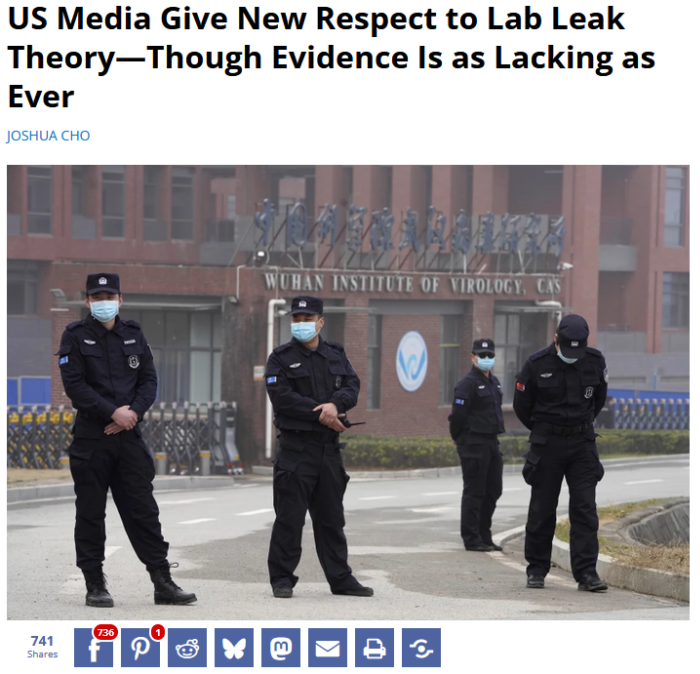
As FAIR (6/28/21) reported five years ago, “Most scientists currently think that Covid-19 has a natural origin, because there is a well-documented history of natural spillovers leading to most disease outbreaks.”
The lab leak fixation is one our readers know well. As editor Jim Naureckas (Facebook, 7/31/26) said, “FAIR has looked intensively at the evidence offered for the lab leak theory, and each time we’ve found that there’s no there there”—pointing to several in-depth investigations (FAIR.org, 10/6/20, 6/28/21, 8/5/21, 4/7/23, 7/3/24, 4/18/25).
Soon after the pathogen emerged, a Nature paper (3/17/20) observed that, based on the characteristics of the virus, “It is improbable that SARS-CoV-2 emerged through laboratory manipulation of a related SARS-CoV–like coronavirus.” Nothing has emerged in the years since to cast serious doubt on that conclusion.
The Journal of Virology (8/1/24) noted that the “preponderance of scientific evidence indicates a natural origin for SARS-CoV-2.” The World Health Organization’s Scientific Advisory Group for the Origins of Novel Pathogens (7/27/25) concluded that “the weight of available evidence…suggests zoonotic spillover…either directly from bats or through an intermediate host.”
NPR (7/29/26) reported that
a 2024 study in the peer-reviewed journal Cell found multiple lines of evidence showing the virus spilled over from wild animals to humans…. The analysis shows with unprecedented granularity that coronavirus-susceptible wildlife and the SARS-CoV-2 virus were mingling, along with human beings, in a very specific part of the wet market in Wuhan.
While there is substantial agreement among scientists about the likelihood of a natural origin for the pandemic (Science, 2/6/24), the lab leak hypothesis remains a classic zombie idea, persistently resistant to being debunked out of rational society. In part this is due to the interest in maintaining it from foreign state media (AP, 2/15/21), intelligence services (BBC, 1/25/25)—and right-wing politicians.
‘Removes critical context’
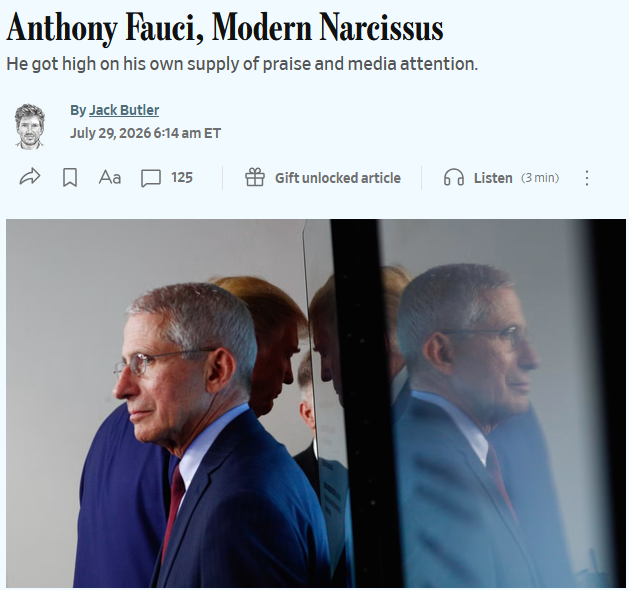
The Wall Street Journal‘s Jack Butler (7/29/26) described Fauci as “the man who became the face of elite overreaction to the pandemic.”
Senator Paul, ever the showman, portrayed Fauci’s unearthed diary entries as proof that his public statements dismissing a “lab leak” contradicted his own personal beliefs. The New York Post (7/28/26) and others repeat that line, but it isn’t accurate. FactCheck.org (7/31/26) noted that Paul’s performance
removes critical context for Fauci’s statements and falsely implies that if the pandemic didn’t originate in the one market, that it couldn’t have had a natural origin. It also treats Fauci’s diary statement as an immutable fact, when in reality, it was an interpretation of the information that was known at the time….
Fauci was clear in his diary that this did not change his opinion that the outbreak had a natural origin. “Having said that, somewhere the virus jumped from animals to humans,” he wrote.
And contrary to Paul’s insinuations—picked up by media like Wall Street Journal deputy editor Jack Butler (7/29/26), who said the revelations about Fauci “provide evidence of deliberate deception”—what Fauci said in his diary is pretty much what he was saying in real time. “Fauci publicly used almost the same wording a few weeks later in an interview with USA Today,” AP (7/29/26) noted.
‘Both onerous and performative’
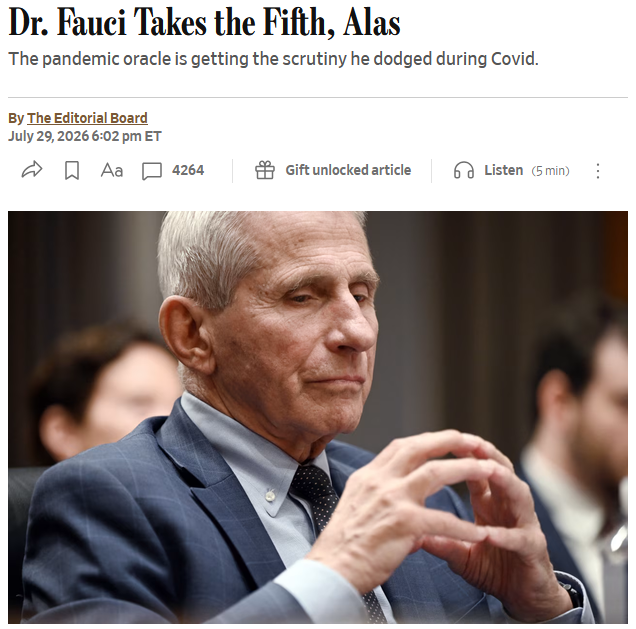
The Wall Street Journal (7/29/26) complained of “media censorship” of the Great Barrington Declaration, which encouraged “those who are at minimal risk of death to live their lives normally to build up immunity to the virus through natural infection.” Between 2020 and 2023, Covid killed nearly 278,000 Americans under the age of 65, according to the CDC.
The Wall Street Journal editorial board (7/29/26) focused on the notion that America’s Covid response was overkill and that Fauci tried to cover this up:
Sen. Paul deserves credit for digging into the truth about the government’s destructive Covid response—especially the effort by Dr. Fauci and others to stifle dissenting views and hide the record….
We know from previous disclosures that Drs. Fauci and [Francis] Collins tried to demean the authors of the 2020 Great Barrington Declaration that favored “focused protection” on the old and sick rather than wholesale lockdowns. The duo favored media censorship of those and other dissenting views.
New York Times columnist Bret Stephens (7/30/26) said:
I was prepared to cut Fauci and others in government a lot of slack in the first months of the pandemic, when the take-no-chances approach seemed like the safest course. But at some point many of the measures that he insisted were necessary—like the six-foot distance rule, or masking requirements that had no hope of consistent enforcement—felt both onerous and performative, and guaranteed to create a backlash.
The “Covid wasn’t that bad and we overreacted” line is something one can promote only with the help of revisionist thinking. Covid killed more than a million Americans. By the time the death toll hit the halfway mark in early 2021, more Americans had died “from Covid-19 than on the battlefields of World War I, World War II and the Vietnam War combined” (New York Times, 2/21/21).
Let’s emphasize: That was one year. In one country. According to WHO (5/13/26):
Globally, an estimated 22.1 million excess deaths associated with the COVID-19 pandemic occurred from 2020 to 2023, roughly three times the 7.0 million deaths officially reported.
As many 23 million Americans have shown the symptoms of long Covid. One scholarly account (JMIR Public Health and Surveillance, 6/2/22) “estimated that 3,583,100 [Covid] hospitalizations occurred in the United States from May 2020 through April 2021.”
‘Fear of polarization’
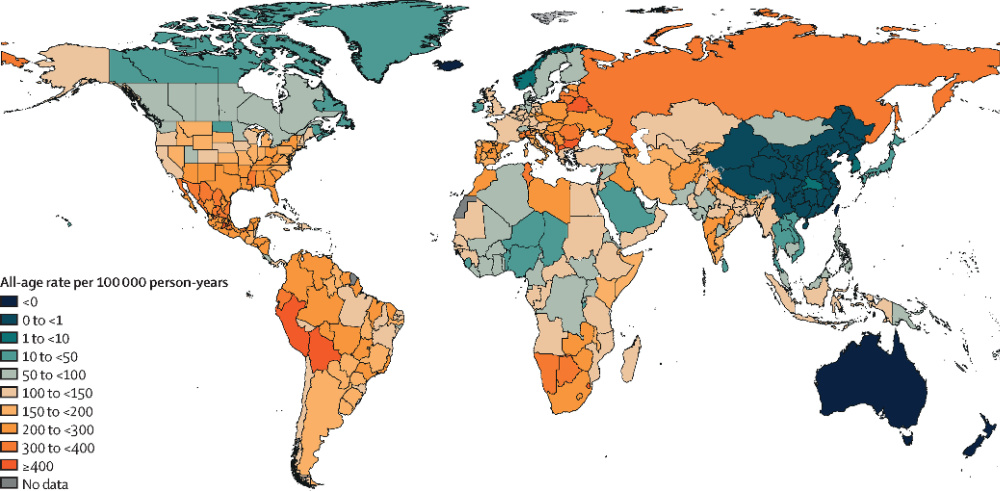
As this map from Lancet (4/16/22) shows, excess mortality in the first years of the pandemic varied by a factor of 100 or more from one country to another.
The United States didn’t have particularly onerous—or effective—quarantine policies, especially compared to countries like China (Democratization, 2/13/24) or New Zealand (Spinoff, 7/14/25). And while pundits love to mock masks, the best evidence we have suggests that those things worked. As Health Affairs (2/16/22) reported: “Masking mandates conferred benefit in reducing community case incidence during an early period of the Covid-19 pandemic.”
Lockdowns, if you can call them that, were popular in America when the pandemic started. Citing a Kaiser poll from April 2020, KQED (4/23/20) reported that “a majority of Americans—8 in 10—say strict shelter-in-place guidelines are worth it, to keep people safe from Covid-19 and control the spread of the virus.” And such measures didn’t stay in place long; while 40 states issued stay-at-home orders in April 2020, “all but one state lifted them by the end of June,” noted the New York Times (6/28/23).
“We didn’t lockdown during the Delta and Omicron waves, despite their severity and contribution to overall deaths from the pandemic,” Gregg Gonsalves, professor of epidemiology at Yale University, told FAIR:
Delta and Omicron together account for roughly half of all US Covid deaths, even though they came after the original 2020 wave. Many of these deaths could have been avoided.
“It appears that out of a fear of polarization, some media are treating the idea that ‘Covid measures went too far’ as an acceptable middle ground,” said Lucky Tran, a science communicator in New York City who has been active with the People’s CDC. “Reporters and commentators should be more wary of repeating mistakes seen in climate coverage in the past by giving false-balance to bad-faith arguments.”
Tran also told FAIR:
US Covid commentary has largely ignored the success of other countries, which helps fuel the “Covid measures went too far” narrative. For instance, Australia and New Zealand, which implemented stronger public health measures than the US, experienced far fewer deaths, and at the same time had better social and educational outcomes.
If anything, US officials weren’t cautious enough at the outset. Tran, again:
A claim we frequently see is that scientists and officials made some mistakes at the start of the pandemic, but this is understandable as science evolves. While this is true, it’s important to be more specific here, and explicitly state that this does not mean that “Covid measures went too far.”
The main mistakes made early on were not implementing Covid measures more effectively—such as not socially distancing quickly enough, not making tests widely available, and not acknowledging that Covid is airborne and ensuring there were enough high quality masks for everyone.
Public health interventions—like free Covid testing and vaccine sites and the use of a command economy to increase medical response (ABC News, 3/27/20)—as well as economic assistance to workers, businesses, tenants and the unemployed during economic upheaval gave Americans a small sample of a functioning social democratic state. Given the recent success of Democratic Socialists of America candidates, it’s clear many voters liked what they tasted.
No wonder Paul and the media are still so mad, more than six years after Covid nightmare came to America.
From FAIR via This RSS Feed.