

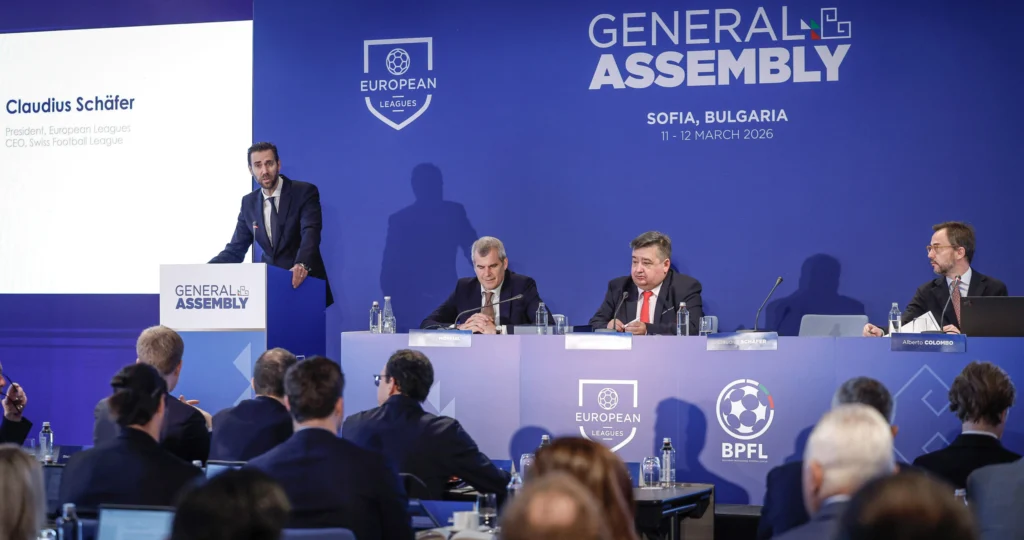
The European Leagues organization, representing 53 men’s and women’s football leagues, announced this Wednesday that they will reject any new or expanded FIFA competition until the world body implements structural governance reforms.
The European bloc demands legal guarantees that ensure all relevant stakeholders -clubs, players, national leagues and domestic competitions- participate in decision-making processes.
The position aims to prevent unilateral actions that alter football calendars and economic balances without prior consultation.
RELATED: FIFA Fails to Pay Million-dollar Pledge to U.S. World Cup Host Cities
European leagues also argue that the current governance model concentrates excessive power in FIFA’s executive bodies, leaving those who sustain the sport economically outside key negotiations.
The collective warned that any attempt to impose new tournaments under existing conditions will face coordinated opposition across the continent. According to the organization, the demand responds directly to a FIFA research summary that proposes expanding the 2030 World Cup to 64 national teams.
The proposal arrived with an evaluation window of only four weeks and without consulting clubs, players or local leagues, the actors most affected by the disruption of sporting and financial schedules.
European Leagues Statement on FIFA
https://t.co/MnHuHjWV2Q pic.twitter.com/4d07rVzGPC
— European Leagues (@EuropeanLeagues) July 29, 2026
Transparency Questions Persist
European leagues linked this episode to the failed FIFA Forward Enterprise project, promoted by president Gianni Infantino to transfer World Cup commercial assets to private investors. Although the initiative was discarded after widespread sector rejection, the organization said the process exposed systemic problems in FIFA’s internal culture and approval mechanisms. For the collective, the episode demonstrates that institutional reforms cannot be postponed and that opacity remains a structural feature of decision-making in Zurich.
The organization ratified that it maintains active communication with European Union authorities to address the situation. It recalled the formal complaint filed before the European Commission in October 2024 against FIFA for incurring a conflict of interest by acting simultaneously as normative regulator and commercial operator. The case, still open, could produce concrete measures to protect free competition in a sector whose global calendar has grown steadily in recent years amid rising demands on players and clubs.
The conflict places European leagues in a defensive position ahead of FIFA’s next congress, where governance and calendar decisions are expected to be discussed. With 53 leagues representing thousands of clubs and millions of supporters, the European block is one of the most influential voices in world football. Its decision to condition any collaboration on institutional change marks a turning point in the relationship between continental bodies and the global governing entity, and sets the stage for a decisive debate over the future of international competition.
The coming months will test whether FIFA is willing to open its decision-making structures or whether the gap separating the governing body from European leagues continues to widen. The outcome will determine not only the fate of a potential 64-team World Cup, but also the credibility of the global football governance model. For now, Europe has drawn a clear line: reform first, tournaments later.
From teleSUR English via This RSS Feed.