

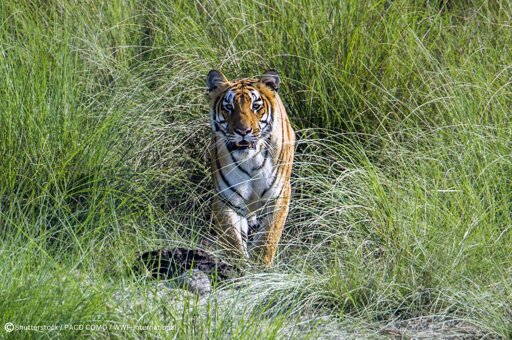
KATHMANDU — Nepal is now home to an estimated 429 wild tigers, up from 355 four years ago and nearly four-fold from 16 years ago, the country’s conservation officials reported on the occasion of World Tiger Day. As the country celebrates this historic achievement, a closer look at the latest numbers reveals an uneven recovery. Nepal’s youngest national parks are driving nearly all the growth, while Bardiya, the country’s second-oldest park, has fewer tigers. This could lead to more conflict between not just people and tigers, but people and leopards as well in and around the new national parks, according to recent studies. Three factors appear to be behind this split: water availability, animal movement both within and outside the country, and spread of invasive species. “The results from theflect the positive outcomes of ongoing efforts in the field of tiger conservation in Nepal, such as habitat conservation and management, poaching control, conservation of prey species, and biological corridor conservation,” said Bed Kumar Dhakal, spokesperson for the Department of National Parks and Wildlife Conservation. Chitwan, the country’s oldest national park, still leads by far in raw numbers. But the newer parks (Banke, Parsa and Shuklaphanta) are where growth is concentrated, while the country’s two oldest parks, Chitwan and Bardiya, are showing the slowest growth or an outright decline. This graph shows changes in tiger population in different national parks in Nepal. Image courtesy of DNPWC/Nepal. The numbers are rooted in a global pledge made in November 2010. With wild…This article was originally published on Mongabay
From Conservation news via This RSS Feed.