

Michigian is a state of contradictions with a complex political history: Home to Detroit, the “Motor City,” which was once the hub of the auto industry and still home to the “Big Three” auto companies. Detroit is one of the largest majority Black cities in the nation. It is a city that fought for civil rights.
This, however, is not all there is to Michigan. The state is home to the billionaire Devos family who played a key role in Trump’s first term. It is also home to dozens of rightwing militia groups, who stormed the Michigan state capitol with arms, and attempted to kidnap Governor Gretchen Whitmer.
These contradictions make Michigan a proving ground for both establishment political leaders, as shown in the state’s key role in Obama’s 2008 election. The state’s political relevance is also shown in newer figures in the political arena, such as Rashida Tlaib, one the most leftwing members of the Democratic Party.
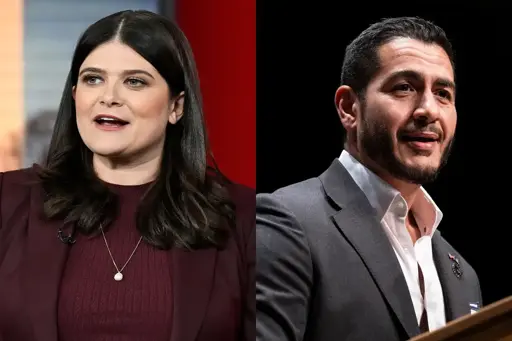
The trend continues in this Senate race where this year’s Democratic Party primary sees establishment Haley Stevens facing off against populist Abdul El-Sayed.
The Rise of Abdul El-Sayed
El-Sayed was once considered an outsider in Michigan politics. After a failed run for governor in 2018, many considered him “unelectable” when the current Senate race began. But with his populist platform which raised ideas like money out of politics, abolishing ICE, and Medicare For All, El-Sayed has risen to the top of the polls, even as AIPAC has spent $40 million on a smear campaign against him. He has become a darling among the progressive left, gaining the support of the United Auto Workers and progressives in office such as Alexandria Oscasio-Cortez and Bernie Sanders. Many in Michigan are hoping that El-Sayed will become the state’s version of New York mayor, Zohran Mamdani.
Much like Mamdani, whose campaign mobilized thousands of young people inspired by progressive ideas like the fights for immigrant rights, Palestinian liberation, and affordability, El-Sayed’s campaign has energized his base of supporters who see him as a reflection of their progressive aspirations.
There are, however, some political positions that should raise questions among the progressive left. On a recent podcast appearance El-Sayed was asked about his political positions surrounding socialism. In response he outright rejected socialism, saying he believes in capitalism as the most efficient economic system. This puts El-Sayed at odds with the 32 percent of Democrats who describe themselves as “socialist” as well as the much larger base of people who are becoming disillusioned with capitalism, beginning to understand it as an economic system that prioritizes the economic gain of a few over the needs of the majority, while exploiting the world’s resources.
The problems continue with El Sayed’s support for the police. Already he has back-tracked on his previous political position of defunding the police. He has even been endorsed by a Wayne County police union. This runs in contradiction to many among the Left who understand the role of police in society as the brutal fist of the state which keeps workers and oppressed communities in line.
El-Sayed’s backtracking is part of a strategy in which politicians like him move to the center in order to accommodate more right leaning views in an effort to win more votes. This is worrisome. If he’s willing to backtrack on a political position he deems unpopular electability-wise, many important positions can be sacrificed in the interest of maintaining “electability.”
Haley Stevens: The Establishment Candidate
Another reason behind El-Sayed’s popularity is that his opponent, Haley Stevens, represents the increasingly unpopular Democratic Party establishment. Stevens started her political career during the Obama administration where she was a part of the Presidential Task Force on the Auto Industry. In this position she helped facilitate the bailout of the auto companies to the tune of billions, while factory workers at those companies who suffered the most from the 2008 financial crisis received little to no support.
After working within the Obama administration, Stevens moved back to Michigan and ran for Congress, winning in 2018 by defeating her Republican opponent Lena Epstein. While in the House she supported many unpopular policies such maintaining U.S. support for the apartheid state of Israel… Stevens has also voted to fund ICE and has stated her support for data centers which have been shown to be tremendously damaging to the environment.
During her Senate campaign Stevens claimed that one of her main priorities is stopping Trump and fighting for the interests of Michigan’s working class families. But fighting to stop Trump means opposing his support for the genocide in Gaza and his use of ICE terror against immigrant communities. Stevens has shown herself to be on the same side as Trump in both of these fights.
Michigan: A Microcosm of American Politics
This Senate primary is not just about El-Sayed and Stevens. The race and the differences between the campaigns is an expression of the current political moment where many Americans are looking for a different type of politics after being disenfranchised by decades of neoliberalism, witnessing the U.S.-funded genocide in Gaza, and seeing how Minneapolis successfully pushed ICE out of the city.
Additionally this Senate race is a representation of the growing political tensions within the Democratic Party. There is a rising wave of democratic socialist candidates that are pro-Palestine, anti-ICE, and fighting for legislation that strengthens the welfare state. This wave backed by Democratic Socialists of America is attempting to dislodge establishment Democrats.
There is further tension, however, as El-Sayed does not identify as a democratic socialist. This puts his campaign closer to the campaign of populists like Graham Platner. For the Democratic establishment this distinction does not matter. They have organized an aggressive campaign against El-Sayed that encapsulates their fight against the rise of social democracy within the Democratic Party. The primary race between El-Sayed and Haley Stevens has shown how deep the internal division within the Democratic Party is.
While both candidates have vowed to oppose Trump, neither campaign has sought to strengthen the movements in the streets, which have been the only forces that have effectively limited Trump’s reactionary, authoritarian, and xenophobic agenda.
Rather than steering all the energy of our movements towards elections within an imperialist party, we need independent candidates that mobilize people to resist Trump by building opposition through organization in our streets, our communities, and our workplaces.It is time for the U.S. Left to raise its political horizon in Michigan and throughout the country.
The post The Michigan Senate Race is a Microcosm of National Politics appeared first on Left Voice.
From Left Voice via This RSS Feed.