

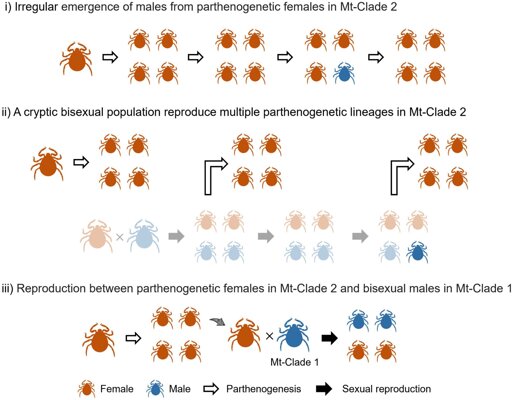
The Asian longhorned tick, Haemaphysalis longicornis, spreads serious pathogens, including severe fever with thrombocytopenia syndrome (SFTS) virus, Rickettsia and Theileria, and its bite can cause a meat allergy in humans. Once confined to Japan, South Korea, North Korea, China and Russia, the ticks have expanded across Oceania, and in 2017, they were detected in the United States. Perhaps contributing to this spread is the ability of some female ticks to produce offspring without fertilization by a male: a feat known as parthenogenesis. Only parthenogenetic ticks—the vast majority of which are female—have been found outside their previously known range.
From Biology News - Evolution, Cell theory, Gene theory, Microbiology, Biotechnology via This RSS Feed.