

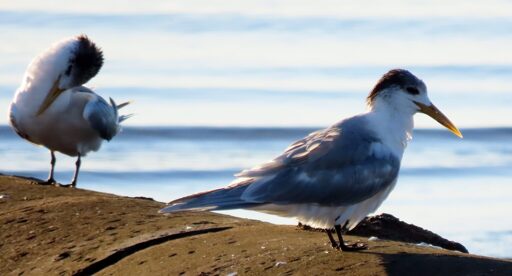
Australia has confirmed the country’s first mass mortality of native seabirds from the deadly strain of avian influenza, H5N1. On Aug. 1, authorities confirmed the positive cases among 49 dead and 35 sick greater crested terns (Thalasseus bergii) at Baudin Rocks, an island roughly 5 kilometers (3 miles) off South Australia’s southeast coast near Cape Jaffa. The H5 strain of avian influenza virus, which has killed millions of wild and domestic birds and mammals across the globe, was first detected on Australia’s shores in late June in two migratory seabirds, a brown skua (Stercorarius antarcticus) and a northern giant petrel (Macronectes halli). As of Aug. 3, 2026, the country has recorded 78 confirmed cases of the H5 strain in seabirds across five states, with 58 of those cases in South Australia alone and 10 in Western Australia. Apart from the greater crested terns, bird flu has also been confirmed in silver gulls (Chroicocephalus novaehollandiae), a common native Australian seabird. Federal Agriculture Minister Julie Collins confirmed the results, noting that the mass mortality was expected as the virus takes hold in the environment. “Sadly, we do know that once the H5 bird flu is spreading in wildlife and the natural environment, it is not possible to avoid significant losses, which is what we’re starting to see now,” Collins said in a press conference. According to ABC News, South Australian Chief Veterinary Officer Skye Fruean described the Baudin Rocks mass mortality as “unusual and significant.” “We’ve known that this is going…This article was originally published on Mongabay
From Conservation news via This RSS Feed.