

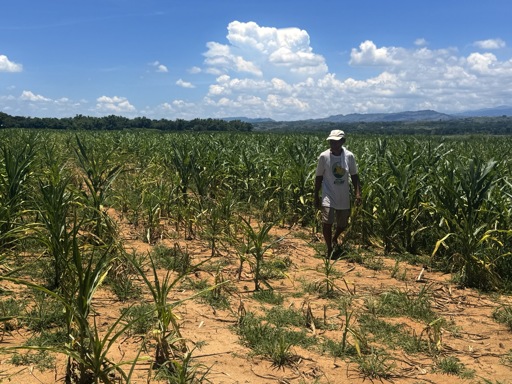
ISABELA – Parched lands. Crops are dying while some grow unevenly. Worms and pests swarming. Such are the farmlands beside the Cagayan river, and farmers worry about what little they could harvest.
“It’s frustrating to see the crops here,” said farmer Pablo Canseran in the vernacular, showing the damages of his crops. He is cultivating one hectare of corn this season, but his estimated loss has already reached 80 sacks of corn, significantly higher than what he could save: only 14 sacks. “We are losing more, barely enough to cover our debts,” he lamented.
Drought is not a new problem. However, the irrigation system remains insufficient. Farmers are forced to rent a water tractor machine for P300/day ($6), and additional P500 ($10) for gasoline expenses, just to get water from the river. But even that wouldn’t suffice, especially in this season of drought.
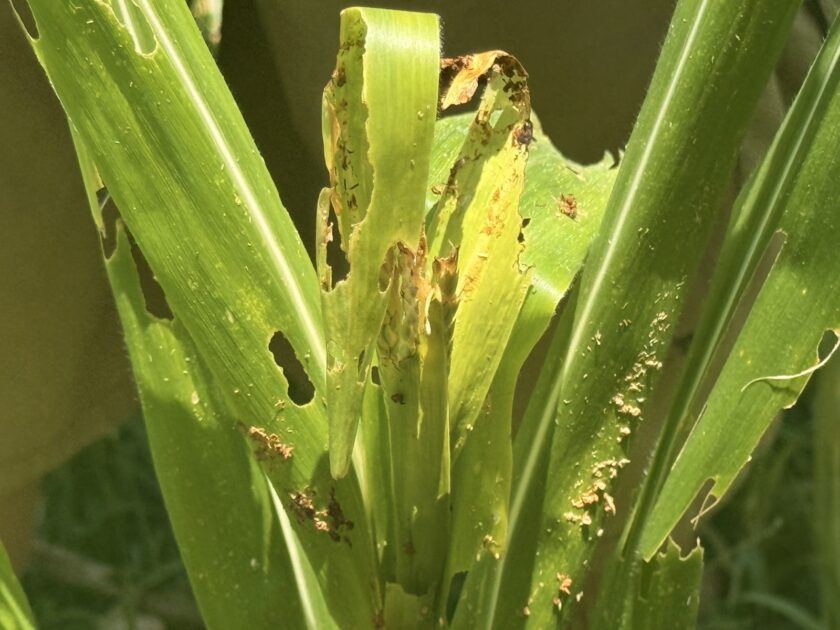
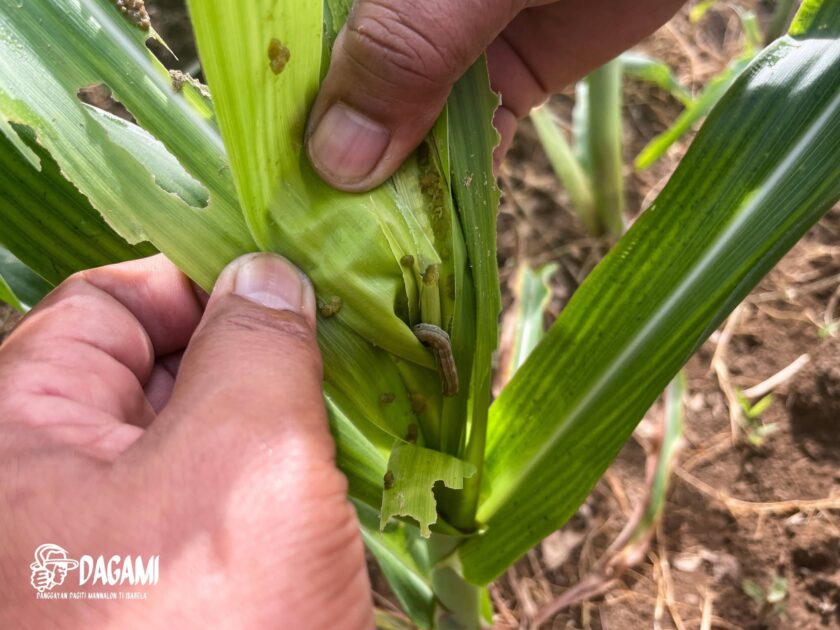
“The crops did not grow properly because there was no rain. The heat was so intense that they got infested with worms,” said farmer-leader Doringa Aberion in the vernacular. “Other crops grow but without fruits.”
In March 2026, the provincial government of Isabela declared that the entire province under a state of calamity through a Sangguniang Panlalawigan resolution, due to prolonged dry spell. The state weather bureau Philippine Atmospheric, Geophysical and Astronomical Services Administration (PAGASA)’s forecast reveals that the province will continue to be in dry spell until the end of November 2026.
PAGASA also stated that there is a 69-percent chance of a strong El Niño during August, September, or October, and would last until January 2027. This means that prolonged dry spells, drought, and severe heat waves are expected across the country.
“The dry season only leaves us with more debts and hunger,” said Aberion. In their vernacular language, this season is known as tiempo na bisin— similar to Negros province’s tiempo muerto— known for the dry spell and hunger for farmers. It is the dead season.
Local farmers group Dagami – Danggayan Dagiti Mannalon ti Isabela (Dagami) said that there are more than 100,000 farmers in the province. But aid only reaches a third of their population.
The Department of Social Welfare and Development (DSWD) Cagayan reported that almost P350 million ($5 million) has been distributed to a total of 34,529 drought-affected corn farmers across the province.
“Many of the farmers are not listed as beneficiaries, leaving the poor to pit against each other,” Dagami said in a Filipino statement. “Many of us who were hoping for irrigation could not even plant this cropping season. The aid is not enough to help the families survive for months.”
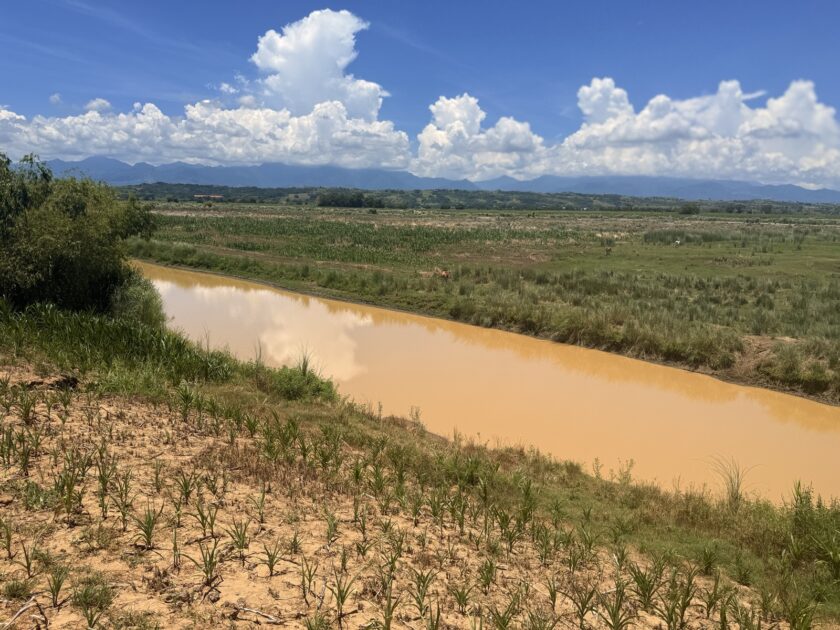
View of Cagayan River. Photo by Dominic Gutoman/Bulatlat.
National farmers group Kilusang Magbubukid ng Pilipinas (KMP) said that Ferdinand Marcos Jr. barely mentioned the looming “super El Niño” despite the serious threat it poses to agricultural production and rural livelihoods.
“Once again, the government is reacting to crises instead of preparing for them. Farmers urgently need comprehensive climate adaptation, irrigation rehabilitation, crop insurance, emergency production support, and price protection and not piecemeal interventions after the damage has already been done,” KMP Chairperson Danilo Ramos said.
According to the global data of the Food and Agriculture Organization, the Philippines is among 22 high-risk countries requiring urgent anticipatory action to prevent vulnerable populations from droughts, floods, storms, crop failures, and food insecurity.
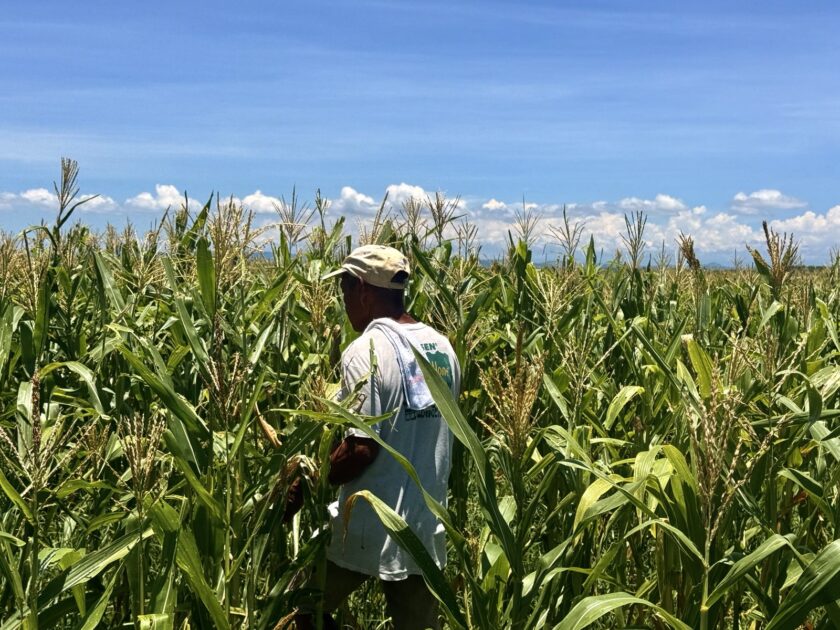
Farmer Pablo Cancesan looking at some of his damaged crops beside the Cagayan River.
Photo by Dominic Gutoman/Bulatlat
“This isn’t like previous El Niños. The planet is much warmer today, and with conflict and food insecurity widespread, this new phase will hit hardest in places that are already vulnerable and have limited coping capacity,” said Jorge Alvar-Beltrán, FAO Natural Resources Officer.
The previous El Niño in 2015 to 2016 affected more than 60 million people and prompted $5 billion in humanitarian appeals across 23 countries. However, the current global appeal of FAO and the World Food Programme (WFP) only seeks $202 million (P12.275 billion) to protect 8.8 million people across Africa, Asia-Pacific, Latin America, and the Caribbean.
“The threat of El Niño is predictable. What is unacceptable is the government’s refusal to act decisively despite years of warning. The country’s food producers should not be left to bear the consequences of official incompetence, corruption, and neglect,” KMP added. (RVO)
The post Drought spells hunger for farmers appeared first on Bulatlat.
From Bulatlat via This RSS Feed.