

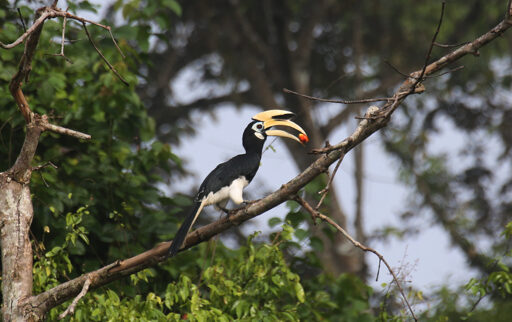
Lush, leafy and luxuriantly diverse, tropical forests are home to an immense array of plants, animals and fungi. They also provide humanity with water, clean air and flood protection, and lock vast amounts of carbon in their tree trunks, roots and soils. Yet, forest conservation often loses out to extractive industries and agribusiness when valued through a purely economic lens. As a result, forests across the planet continue to be cleared in pursuit of financial profits. Across Southeast Asia alone, nearly 68 million hectares (168 million acres) of forest was lost between 2001 and 2023, much of it cleared to make way for logging, plantations and agriculture, according to researchers. However, new research indicates “massive and untapped” conservation potential remains within commercial concessions across the region. The study, published in Nature Communications, analyzed satellite data from 3,754 logging, oil palm, timber and rubber plantation concessions across four countries: Cambodia, Indonesia, Malaysia, Myanmar. Roughly 42 million hectares (104 million acres) of intact forest was identified inside these concessions — an area larger than the entire country of Malaysia. Losing these forests could lead to emissions in the range of 1.2 gigatons of carbon dioxide over the next three decades, the study says, equivalent to 20% of all industrial carbon dioxide emissions across all 11 ASEAN countries between 2000 and 2023. Protection of forests inside production landscapes, therefore, presents a significant opportunity for conservation, the study authors say, if concession holders could be incentivized to switch from converting land to protecting it.…This article was originally published on Mongabay
From Conservation news via This RSS Feed.