

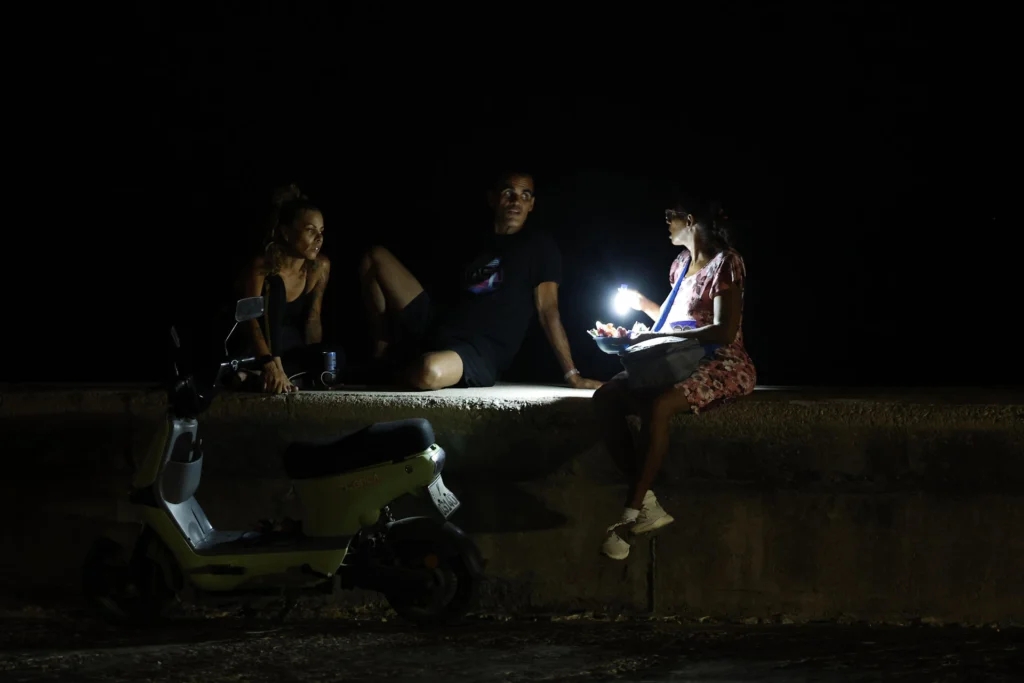
Cuba’s National Electrical Union works to recover the power grid after severe weather caused a total disconnection, complicating restoration efforts already hindered by the U.S. blockade.
Cuba suffered a new national power grid disconnection this Monday after severe meteorological events damaged restoration works and forced the shutdown of key thermoelectric generating units across the island.
The National Electrical Union (UNE, in Spanish) reported that the disruption occurred while workers gradually energized the National Electroenergetic System (SEN, in Spanish). Severe weather directly impacted the online generating units as technicians prepared to start five key thermoelectric plants.
RELATED: Cuba Suffers Its Sixth Nationwide Blackout in 2026
This incident followed a previous widespread blackout that occurred on Sunday night, which had already mobilized emergency brigades nationwide to stabilize the electrical infrastructure.
State specialists continue working to reverse the situation and stabilize the energy supply for millions of citizens. Electrical Union officials announced they will provide continuous updates on the recovery process.
En el proceso de restablecimiento del SEN, los eventos meteorológicos de esta tarde provocaron afectaciones sobre la red, incidiendo directamente en las unidades generadoras que se encontraban en línea. Continuamos trabajando para y lograr la recuperación lo antes posible.
— Ministerio de Energía y Minas Cuba
(@EnergiaMinasCub) August 3, 2026
Text reads: “In the process of restoring the National Electroenergetic System (SEN), the meteorological events this afternoon caused disruptions on the network, directly affecting the generating units that were online. We continue to work towards and achieve recovery as soon as possible.”
The country remains focused on bringing the five thermoelectric units online to secure the base generation. However, the recovery faces structural limitations caused by external economic pressures that prevent regular maintenance of the national infrastructure and complicate emergency responses.
Ver esta publicación en Instagram
Una publicación compartida de teleSUR English (@telesurenglish)
U.S. Blockade Impact
The unilateral U.S. blockade prevents Cuba from importing necessary hydrocarbons. This energy crisis intensified after the U.S. government decreed a strict oil blockade, labeling Cuba an “unusual and extraordinary threat” to its national security. This designation severely restricts global shipping companies and suppliers from delivering fuel to Cuban ports, creating severe shortages that directly affect the daily lives of the population.
The energy crisis on the island is not merely a technical issue. The Cuban government cannot utilize its distributed generation network, which comprises hundreds of recently modernized motors. This decentralized network has the capacity to produce 1,000 megawatts of electricity, which would easily mitigate the current deficit and prevent blackouts. However, these motors require fuel oil or diesel to operate, resources that the Caribbean nation cannot purchase regularly in the global market.
Cuba cannot acquire these fuel shipments because of the hostile commercial policies imposed by Washington. The financial siege prevents normal transactions with international suppliers. Consequently, the lack of fuel keeps a significant portion of the country’s generation capacity completely paralyzed, forcing a heavier reliance on the older thermoelectric plants that are currently undergoing complex repairs under precarious conditions.
Furthermore, the economic siege blocks the acquisition of critical industrial parts required to repair Cuba’s aging thermoelectric plants. Financial blockades restrict the nation from capturing foreign currency in the international market. Without this vital income, Cuba cannot rehabilitate, modernize, or expand its infrastructure, leaving the electrical system highly vulnerable to weather events and unexpected technical failures. The hostile policies of Washington continue to be the main obstacle to Cuba’s energy sovereignty.
Ver esta publicación en Instagram
Una publicación compartida de teleSUR English (@telesurenglish)
From teleSUR English via This RSS Feed.