

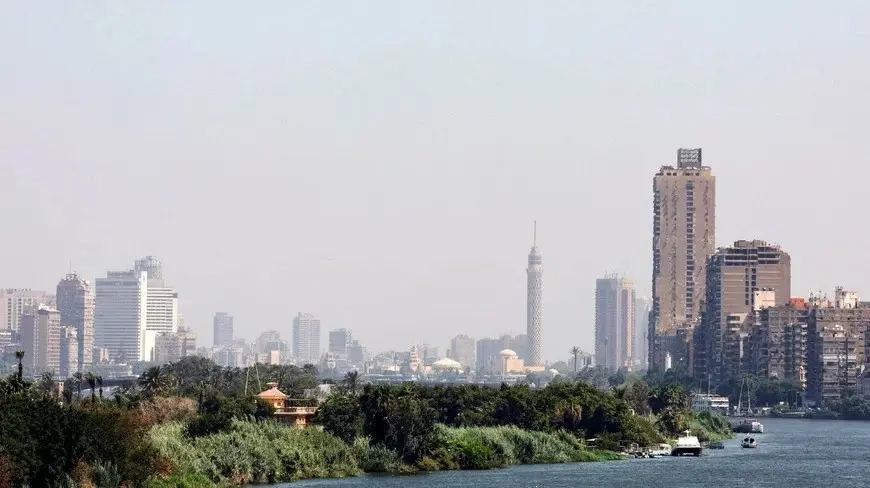
A magnitude 5.6 earthquake struck Cairo and surrounding communities near the Suez Canal early Monday, prompting national emergency protocols while authorities ruled out fatalities and reported only minor material damage.
The National Research Institute of Astronomy and Geophysics confirmed that the seismic event had its epicenter located 10 kilometers deep and was precisely registered at 3:00 A.M. local time on August 3. The quake’s central point was recorded 38 kilometers north of the city of Suez, without any reported human losses in the region.
The tremor generated widespread alarm among residents of the metropolitan area and the Delta region, where numerous families took to social media to share their testimonies.
RELATED: At Least 30 Dead After Japan Quake, Rescue Operations Continue
Multiple households reported feeling prolonged shaking for several seconds before dawn, which prompted the preventive evacuation of some homes in central districts as a precautionary measure.
The Ministry of Health of Egypt activated an immediate national emergency plan to monitor the sanitary situation across the affected governorates. Simultaneously, teams from the Egyptian Red Crescent confirmed minor material damages in several urban structures following their initial inspection rounds, documenting the partial collapse of a building in the capital’s Rod al Farag sector and the collapse of a family home balcony in Suez.
بيان الزلزال https://t.co/zSD7sQnSvo pic.twitter.com/lrzcGlBK3e
— المعهد القومي للبحوث الفلكية – مرصد حلوان (@NRIAG) August 3, 2026
Specialists from the seismology department confirmed the detection of at least five aftershocks of lower intensity following the main movement, with the largest registering a magnitude of 3. Due to this ongoing seismic activity, rescue and civil protection institutions urged citizens to remain calm and avoid approaching older buildings that present visible cracks or structural vulnerabilities.
The current seismic activity in this sector of northeastern Africa responds directly to the tectonic dynamics generated by the constant separation between the Arabian and African plates. Scientific authorities recalled that the region of the Red Sea and the Gulf of Suez habitually experiences tremors of low to moderate magnitude due to these geological characteristics.

| L’Égypte a été frappée par un séisme de magnitude 5,39 sur l’échelle de Richter cette nuit.
Ressenti dans une grande partie du pays, ce tremblement de terre est d’une intensité proche de celui du 12 octobre 1992 (5,8), qui avait fait des centaines de victimes.
Un bilan… pic.twitter.com/I8VzyUSpgA
— Egypt News (@EgyptNews_fr) August 3, 2026
Calls for Building Inspections
Community sectors and social movements in the affected zone emphasized the urgent need to thoroughly review the state of popular housing to protect the integrity of workers and residents. Civil organizations urged authorities to strengthen the supervision of construction standards and to maintain vigilance over public infrastructure damaged in vulnerable areas.
The Egyptian government announced that it will maintain technical inspections and evaluation patrols in the affected provinces to guarantee the tranquility and security of the entire population. Rescue and firefighting corps remain deployed at key points to respond quickly to any secondary eventuality derived from this earthquake in the capital.
Seismological experts noted that while the magnitude 5.6 earthquake is considered moderate on the seismic scale, the shallow depth of its epicenter amplified the perception of the tremor among the population. The proximity of the epicenter to densely inhabited urban zones explains both the intensity of the alarm and the relative scarcity of structural damage reported in the initial assessments.
Authorities continues to conduct additional inspection tours in the affected neighborhoods to identify any structural damage that may have gone unnoticed in the first evaluations. Local authorities have also requested that engineering specialists prioritize the inspection of schools, hospitals, and public buildings before their normal operations resume.
The current seismic event joins a series of recent tremors in the broader region, including two consecutive earthquakes that shook western Iran days ago. Scientists continue to monitor the seismic behavior of the Red Sea rift system, emphasizing that prevention and emergency preparedness remain essential tools for reducing risks in areas exposed to geological activity.
From teleSUR English via This RSS Feed.