

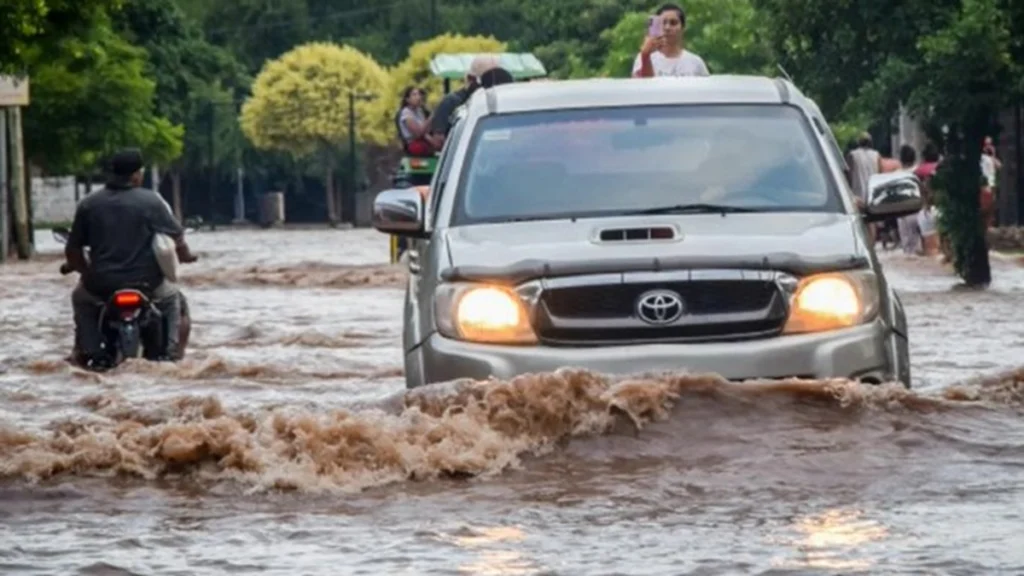
State agencies deploy emergency irrigation, fortify coastal drainage, and step up wildfire monitoring across vulnerable biomes.
The El Niño phenomenon is an ocean-atmosphere cycle originating in the tropical Pacific Ocean and causing wide variations in global weather patterns.
RELATED:
Venezuela Unveils Power Plan After Quakes and El Niño
An El Niño event begins when equatorial steady trade winds weaken or reverse direction. As the winds slacken, warm ocean water flows eastward back toward the central and South American coasts.
According to oceanographic criteria, an El Niño is officially recognized when sea surface temperatures in the central equatorial Pacific rise by at least 0.5 degrees Celsius above the long-term average for five consecutive overlapping three-month periods.
This temperature alteration alters precipitation patterns across continents, triggering extreme rainfall in some regions and severe droughts in others.
Data from the World Meteorological Organization (WMO) show that climate change accelerates the hydrological cycle, making El Niño-driven droughts drier and the rainfall events more intense.
Cyclical Dynamics and Current Climate Forecasts
El Niño events recur irregularly, typically happening every two to seven years. They alternate with neutral conditions and with La Niña, the opposite phase of the El Niño cycle characterized by unusually cold sea surface temperatures in the eastern tropical Pacific.
Monitoring and predicting El Niño and La Niña cycles requires an extensive array of climate instruments. The National Oceanic and Atmospheric Administration (NOAA) and the WMO monitor the ocean through the Tropical Atmosphere Ocean (TAO) buoy array, satellite observations, and Argo profiling floats drifting throughout the Pacific Ocean.
These instruments measure sea surface temperatures, subsurface ocean heat content, surface wind speed, and atmospheric pressure differences. Oceanic observations show rapid shifts in the equatorial Pacific following the end of the previous La Niña phase.
Satellite data from NOAA and international meteorological institutes confirm that warm subsurface water has moved eastward, weakening trade winds and establishing typical El Niño conditions.
Reports published in some media highlight that ocean heat content in the upper layers of the Pacific remains exceptionally high. These observations confirm that warm ocean-atmosphere coupling will continue, maintaining altered weather patterns across major agricultural and coastal zones.
Super El Nino Climate Warning Explained pic.twitter.com/Aj9MjUm9vY
— Robert Bird (@BobMacBobFace) August 3, 2026
Asymmetrical Global Impacts and Threats to Food Sovereignty
The atmospheric disruptions caused by El Niño do not affect the planet uniformly. Instead, they produce distinct weather anomalies across different geographical regions, causing heavy rainfall in some areas while inducing prolonged droughts in others.
In northern South America, Southeast Asia, and southern Africa, El Niño typically reduces total annual rainfall. Severe dry spells in equatorial Asia, particularly in Indonesia, Malaysia, and parts of the Philippines, frequently lead to agricultural water shortages and increase the frequency of uncontrolled forest and peatland fires.
In Africa, delayed monsoon rains reduce the yield of staple grain crops such as maize and sorghum, directly altering domestic food supplies and livestock survival rates.
Conversely, coastal regions along the eastern Pacific experience intensified rainfall. The arrival of warmer ocean waters off the coasts of Ecuador, Peru, and northern Chile destabilizes atmospheric layers, bringing intense thunderstorms, river floods, and landslides.
In South America’s southern cone, including parts of southern Brazil and northern Argentina, El Niño generally correlates with above-average precipitation during spring and summer months.
These weather variations directly affect global food security, rural livelihoods, and energy production. Prolonged droughts disrupt planting cycles for critical export crops like soybeans, coffee, and sugar, while reducing domestic production of basic food staples.
Ocean upwelling off the western coast of South America transports cool, nutrient-dense water to the surface, supporting large populations of commercial fish. When El Niño suppresses this upwelling, sea surface temperatures rise and nutrient levels drop, forcing marine species to migrate southward or into deeper waters.
Additionally, countries heavily reliant on river infrastructure for electricity generation face structural energy deficits when watershed levels fall. Reduced river flows in major basins diminish reservoir capacities, driving up power generation costs and increasing the risk of energy rationing.
Financial volatility often follows these environmental disruptions. Agricultural output reductions in developing nations reduce domestic food supplies and drive up basic commodity prices on international spot markets.
Data compiled by regional bodies highlight that smallholder farmers and agrarian laborers absorb the heaviest burden of these weather shifts. Lacking access to subsidized crop insurance or private credit lines, small-scale producers frequently face debt cycles and land loss following severe droughts or crop failures.
The Threat of a “Super Niño” and Long-Term Atmospheric Trends
In climate science, an exceptionally intense El Niño episode is often designated as a “Strong” El Niño, colloquially referred to as a “Super Niño.”
Meteorologists define a Super Niño when sea surface temperature anomalies in the central equatorial Pacific (the Niño 3.4 monitoring region) exceed 2.0 degrees Celsius above historical averages for an extended period.
Severe events of this magnitude were recorded in 1982–1983, 1997–1998, and 2015–2016, each causing widespread climate disruptions and major economic losses across multiple continents.
The physical mechanism behind a Super Niño involves a feedback loop between the ocean surface and the lower atmosphere, known as the Bjerknes feedback mechanism. When trade winds weaken substantially, warm water spreads across the equatorial Pacific.
When ocean heat storage in the upper layers of the Pacific is unusually high, this self-reinforcing process can cause surface temperatures to rise significantly above average.
Recent observations show that the current ocean environment differs from historical patterns due to background global warming. Overall ocean heat content has reached record levels, meaning that modern El Niño events develop on top of elevated baseline sea surface temperatures.
Consequently, when a strong El Niño forms in a warmer climate, the resulting precipitation shifts produce heavier rainfall events and more rapid evaporation rates during droughts.
The long-term atmospheric outlook suggests that while the overall frequency of El Niño cycles may remain variable, the intensity of extreme El Niño and La Niña events will likely increase as global ocean temperatures continue to rise.
El Niño continues to intensify during the August-October 2026 season. Above-normal temperatures are likely across the world. Wetter conditions in some regions and drought risk in others are expected, consistent with a classic, strong El Niño event.
https://t.co/056oYaRROn pic.twitter.com/3QTScya34h
— World Meteorological Organization (@WMO) July 31, 2026
Regional Precautions and State-Led Responses in Latin America
In response to climate forecasts, several South American governments are implementing state-led disaster risk reduction strategies.
In Venezuela, the national government has launched contingency measures to address climate risks affecting the country’s energy and water infrastructure. Speaking on a national broadcast, Acting President Delcy Rodríguez outlined state preparations for severe climate disruptions, emphasizing the need to safeguard electrical distribution, monitor municipal water reservoirs, and protect critical river basins.
Venezuelan environmental authorities, including the Ministry of Eco-socialism, have activated wildfire monitoring protocols across protected forest zones and implemented public conservation campaigns.
In the same way, to address agricultural vulnerabilities, the National Economic Council coordinated with domestic food producers to establish production plans aimed at protecting basic food yields during dry spells.
In Colombia, state agencies are broadcasting public updates regarding national hydrological risks. The Institute of Hydrology, Meteorology and Environmental Studies (IDEAM) issued warnings regarding potential water deficits, elevated land temperatures, and increased wildfire hazards across the Andean and Caribbean regions.
In response, the Ministry of Mines and Energy directed state bodies to implement energy efficiency guidelines to reduce power draw on national reservoirs.
Additionally, Colombian regional authorities have prioritized agricultural water management, distributing emergency irrigation units to rural farming cooperatives and coordinating municipal fire response teams.
In Brazil, state planning focuses on mitigating drought risks across the Amazon basin and addressing coastal rainfall anomalies in southern states. National civil defense agencies, supported by reporting from independent media outlets, have allocated federal relief funds to assist municipal governments in remote northern regions.
These initiatives focus on maintaining river navigation along critical Amazonian tributaries, providing emergency water purification units to rural traditional communities, and deploying specialized fire brigades to combat vegetation fires in dry biomes.
In Ecuador, public agencies are executing flood prevention and infrastructure stabilization plans along coastal regions. Following early warning alerts from national meteorological institutes, government ministries directed engineering corps to clear riverbeds, reinforce structural levees, and fortify coastal drainage networks.
These preventive public works in Ecuador aim to reduce urban flooding risks in low-lying provinces like Guayas and Manabí, protecting transportation networks and agricultural lands from sudden river overflows.
Structural Adaptation and Climate Justice
The systemic challenges posed by El Niño highlight the need to move from short-term disaster relief toward long-term structural climate adaptation.
Addressing these climate vulnerabilities also raises questions of international equity. Developing nations bear a disproportionate share of the economic and humanitarian costs associated with El Niño disruptions, despite contributing far less to historical global carbon emissions.
Ultimately, mitigating the impacts of severe El Niño events requires combining sovereign state planning, scientific monitoring, and international climate cooperation. By investing in public infrastructure, protecting smallholder agriculture, and supporting sovereign resource management, societies can better absorb ocean-atmosphere fluctuations and reduce the social costs of global climate instability.
Sources: teleSUR – La Iguana – Brasil de Fato – BBC – National Oceanic and Atmospheric Administration – WMO – Globovision – El País – RTVC – Radio Nacional Colombia – Radio del Sur – Xinhua
From teleSUR English via This RSS Feed.