

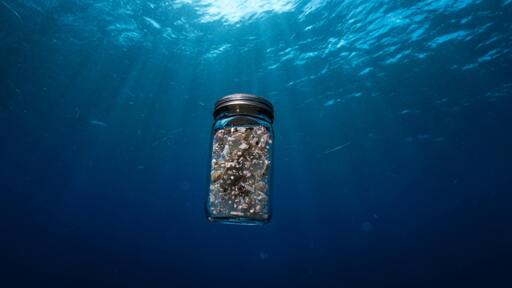
Three days away from shore, in the darkened control room of a huge ship, all eyes are fixed on a glowing wall of screens. Live images of mussels and snails appear. The animals are packed around a deep-sea chimney venting something that looks like black smoke, but is actually superheated, mineral-rich water bursting from the Earth’s crust. The images have threaded their way back to the research vessel Isabu from some 2,000 meters (6,500 feet) below, via a thin, fiber-optic cable. It’s 2016 and the researchers are in the North Fiji Basin in the southwestern Pacific Ocean. It’s the first of two expeditions to study the inhabitants of deep-sea hydrothermal vents. Their next journey will take them to the Indian Ocean. At each stop, the team deploys an underwater robot to catch the tender creatures. Once on deck, each animal is immediately wrapped in aluminum foil and flash frozen at –80° Celsius (-112° Fahrenheit) to prevent contact with airborne contaminants. The work is so delicate it takes the team several weeks to collect just 12 animals during the two expeditions between 2016 and 2019. Almost 10 years later, analysis of the results of these expeditions shows that human activities impact even creatures living in some of the most remote places on Earth. According to a new study, published in Water Research, microplastic particles were found in 11 of the 12 sampled animals, which belonged to four different species of mussels and snails. “Finding contamination in nearly every animal was still…This article was originally published on Mongabay
From Conservation news via This RSS Feed.
