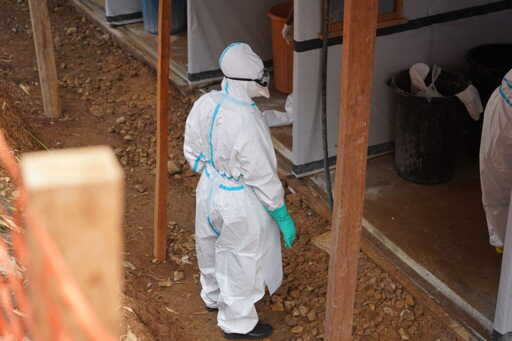
Several members of the Ebola response gathered on July 15, 2026, outside the Ebola Treatment Center (ETC) in Bunia, eastern Democratic Republic of Congo (DRC), to protest their working conditions. Demonstrators said they had not received their risk allowances for several weeks, payments that are supposed to be made by the Congolese government. “It’s outrageous for such a high-risk job,” Robert Uyergiu Mambo, a community leader and French teacher in Bunia, Ituri province, told Mongabay by phone. Although he is not officially part of the Ebola response, his position within the Alur community, an ethnic group living in northwestern Uganda and northeastern DRC, has made him an important local ally. Uyergiu Mambo, a volunteer host on the community radio station Radio Terra FM, which states it has an audience of five million listeners, said he was frustrated with the situation, but not surprised. “It’s common for government employees to go unpaid for long periods. Recently, the minister [Samuel Roger Kamba, minister of Public Health, Hygiene and Social Welfare] came here and managed to calm tensions, but there has been a lot of frustration among Ebola response workers lately and protests have continued one after another,” he said. “If nothing changes, the protests will continue. The problem is that it is paralyzing the response.” It is not unusual for Congolese civil servants to work for months without receiving their salaries, a situation that has long fueled corruption across the country. It was a part of life even under Mobutu Sese Seko,…This article was originally published on Mongabay
From Conservation news via This RSS Feed.
Lord, imagine being one of those Ebola responders in the suits and not being paid for months. Absolutely criminal.