


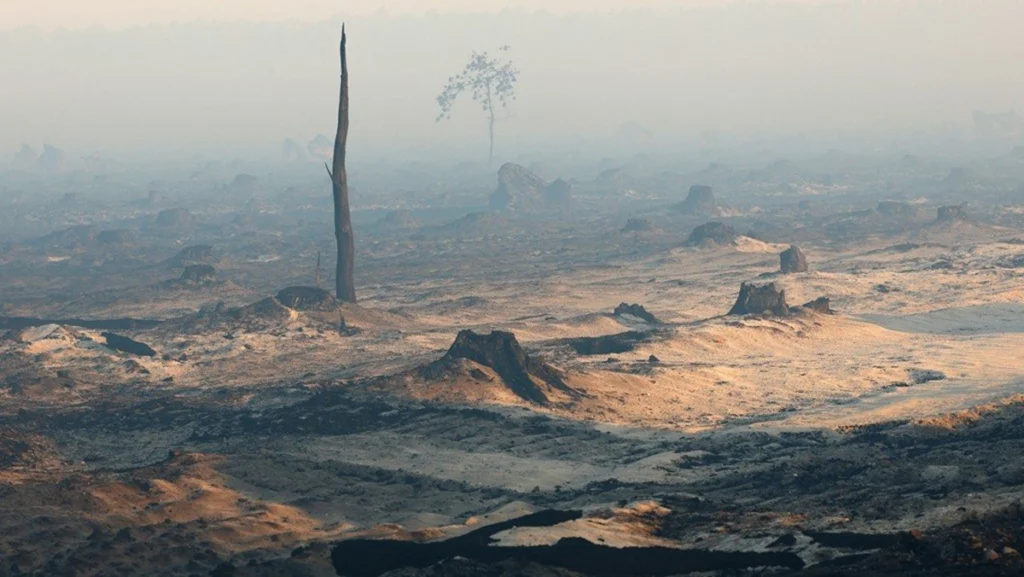
Active Blaze in Var Continues Burning While Drought Forces Shutdown of Three Nuclear Reactors.
On Monday, Meteo-France informed that 36 French departments are at high risk of wildfires because of a new peak in the heat wave that has swept across the country since last Tuesday, compounded by a storm front that arrived from the Atlantic and is moving northeast.
RELATED:
Washington Wildfires Force 60,000 to Evacuate State
The wildfire risk is directly linked to the lack of rainfall and moderate winds in northwestern France and, in the Mediterranean regions, to the severe drought affecting vegetation and the intense heat, particularly in the Var department.
The department, whose capital is the port city of Toulon, is home to France’s main active wildfire, in the Gros Bessillon massif. The blaze broke out on July 21 and, after burning 4,500 hectares during its first 10 days, flared up violently again on Friday afternoon, scorching another 1,500 hectares within a few hours.
As of Monday at midday, 1,850 hectares had burned there, a firefighters’ spokesperson said, adding that the fire’s advance remains contained across most of the perimeter, with several hot spots where the efforts of the 1,500 firefighters deployed in the area are concentrated. They are being supported from the air by two Canadair water bombers, two Dash aircraft and two water-dropping helicopters in an effort to contain a wildfire that remains out of control.
France’s 2026 Wildfires Leave Trail of Destruction#France faces a catastrophic wildfire season with 115,000 hectares burned nationwide and 320,000 people displaced across #France and #Spain.
The fierce Gironde blaze alone accounts for 42,000 hectares destroyed and 220,000… pic.twitter.com/E409BQ9axl
— Daily Euro Times (@dailyeurotimes) August 3, 2026
The Var department is one of 20 under an orange heat alert on Monday in southeastern France, where maximum temperatures are expected to reach 36 to 38 degrees Celsius. Temperatures will ease slightly on Tuesday before rising again on Wednesday, when the region’s prevailing winds, the mistral and the tramontane, are also expected to strengthen, increasing the risk of wildfires.
On Monday, thunderstorms were most likely to occur in the inland departments of southern France, in the regions of Aquitaine and Occitania, where they could bring heavy rainfall accompanied by hail and strong winds.
Meanwhile, the drought affecting all of France has led to the shutdown of three nuclear reactors in the northeast, at the Chooz and Cattenom power plants, because of the low water levels in the rivers used for cooling — the Meuse for the former and the Moselle for the latter.
State-owned utility EDF said that Chooz Reactor No. 1, in the Ardennes department, was shut down overnight from Saturday to Sunday under the agreements between France and Belgium governing the management of the Meuse River, which had already justified the shutdown of the plant’s second reactor since July 11.
In addition, one of the reactors at the Cattenom nuclear power plant was shut down overnight from Friday to Saturday because of the low water level in the Moselle River. France has 57 nuclear reactors in operation that generate about 70% of the country’s electricity.
teleSUR/ JF
Source: EFE
From teleSUR English via This RSS Feed.