

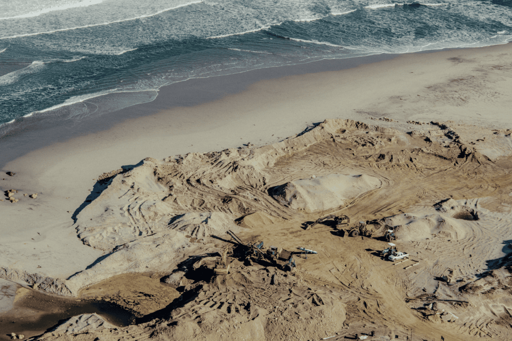
Stretching 450 kilometers (280 miles) from Cape Columbine, two hours north of Cape Town, to the Orange River which marks the country’s natural border with Namibia, South Africa’s West Coast is vast, remote and sparsely populated and, moving north, characterized by a harsh, arid climate. In the very north, not far inland, lies the Richtersveld, which is the only remaining area in South Africa where the Nama people maintain their semi-nomadic traditions. It is also home to an extraordinary range of succulents and plant diversity, some only occurring there. The Richtersveld region, parts of which were declared a UNESCO world heritage site in 2007, is a unique biodiversity hotspot and has one of the highest density of succulent species. The region is rich not just in diamonds, but also other mineral deposits whose presence has turned the region into one of South Africa’s most intensively mined landscapes over the past century. A new documentary, Out of Mined, examines the legacy of mining along the West Coast at a time when the region is facing a renewed interest from the mining sector for its heavy minerals, found in terrestrial reserves, but also in heavy mineral sands along the coast and as offshore deposits. The entrance of a diamond mine in Hondeklipbaai that closed its doors in the early 2000’s; many local people lost their jobs and livelihoods. Image courtesy of Gary van Wyk. Cape Town-based director Arthur Neumeier started working on Out of Mined after social media posts about a wave…This article was originally published on Mongabay
From Conservation news via This RSS Feed.