

Drought threatens reactor operations and deepens the country’s energy crisis.
On Monday, the Romanian Army carried out a controlled underwater explosion of a rock to redirect a greater flow of the Danube River toward the Cernavoda nuclear power plant in an effort to avoid having to shut down its second reactor.
RELATED:
Hungary Faces Critical Days as Drought Threatens Nuclear Plant Shutdown
“Every additional day that the Cernavoda plant remains in operation is a gain,” Defense Minister Radu Miruța said while announcing the success of the unusual operation, after an initial attempt on Sunday had failed.
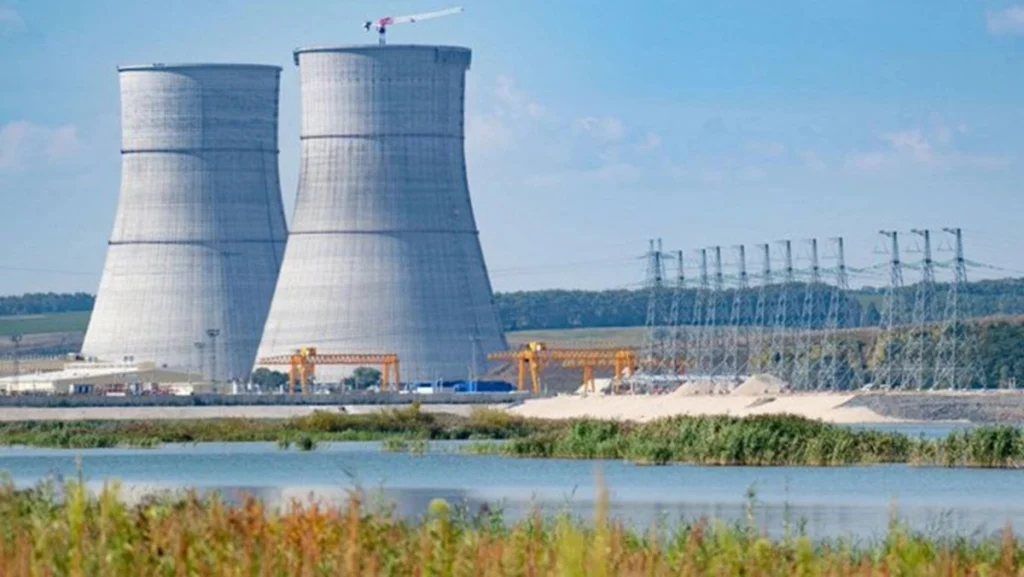
Located in southeastern Romania, the Cernavoda plant, the only nuclear power plant in the Balkan country, requires water from the Danube River to cool its thermal cycle.
The dramatic drop in the river’s water level due to a prolonged drought and increased evaporation caused by high temperatures forced authorities to shut down one of its two reactors last Tuesday.
With little prospect that the situation will improve in the coming days, authorities feared it would also be necessary to shut down the second unit, leaving the plant completely inoperative.
Under normal conditions, with an installed capacity of 706 MW at each of its two reactors, the Canadian-built plant, which has been operating for nearly three decades, generates 20% of the electricity consumed by the country of 19 million people.
Because of the decline in energy production, the government declared a “state of national alert” from July 31 through Aug. 31 and announced plans to increase electricity imports, mainly from Ukraine.
It is now expected that at least the second unit will be able to remain in operation after the Romanian Navy temporarily diverted water from an adjacent channel to the Cernavoda intake area by using 180 kilograms of explosives to blast a rock.
The Romanian government had approved an extraordinary budget allocation of about 1.3 million euros on Friday to carry out the hydraulic works.
The Danube’s flow has fallen to between 1,550 and 1,600 cubic meters per second at Romania’s border, nearly three times lower than the usual average for this time of year, which ranges between 3,900 and 4,700 cubic meters per second.
Executives from about 80 national companies were summoned Monday by the Ministry of Energy to study how they can help ease the energy crisis.
Authorities are currently evaluating the possibility that these companies could concentrate their activities during periods of lower electricity demand or even reduce production in the coming weeks.
Several cities have begun implementing energy-saving measures, including turning off part of their public lighting. Meteorologists are forecasting another wave of extreme heat through next Friday, with temperatures reaching as high as 41 degrees Celsius in the country’s northeast.
teleSUR/ JF Source: EFE
From teleSUR English via This RSS Feed.