

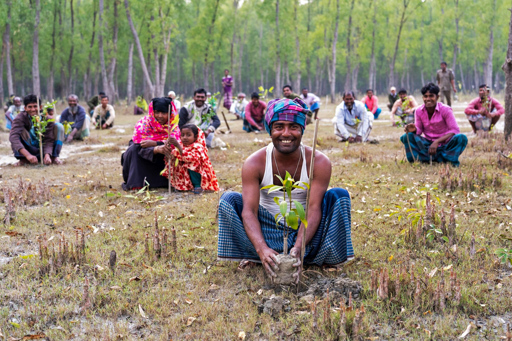
Founder’s Briefs: An occasional series where Mongabay founder Rhett Ayers Butler shares analysis, perspectives and story summaries. Bangladesh plans to plant 250 million trees over the next five years to expand green cover, restore damaged ecosystems, and support its climate and biodiversity commitments, reports Mongabay’s Abu Siddique. The government expects ministries, the army, local authorities, schools, and development groups to carry out much of the work through their existing budgets. The largest allocation, 100 million saplings, is intended for 17 coastal districts. Officials say they hope new mangrove cover will reduce erosion and provide greater protection from cyclones and tidal surges. Another 50 million trees are planned for degraded forests in the Chittagong Hill Tracts, Sylhet, and the central sal belt. Urban areas are due to receive 12.5 million trees, with the rest divided among riverbanks, wetlands, roadsides, public offices, and educational institutions. Officials say the tree species to be planted will be selected according to local conditions. Keora (Sonneratia apetala) is proposed for coastal areas, while garjan (Dipterocarpus turbinatus) and other locally adapted species would be used in hill forests. Fruit trees may be planted where communities need a faster financial return. Bangladesh banned new planting of eucalyptus and acacia — nonnative species — in 2025 because of concerns about invasiveness and water use. Supplying enough healthy saplings will be difficult. Government nurseries produce about 7.5 million a year, well below the program’s average annual requirement of 50 million. Private nurseries will therefore provide much of the stock, and…This article was originally published on Mongabay
From Conservation news via This RSS Feed.