

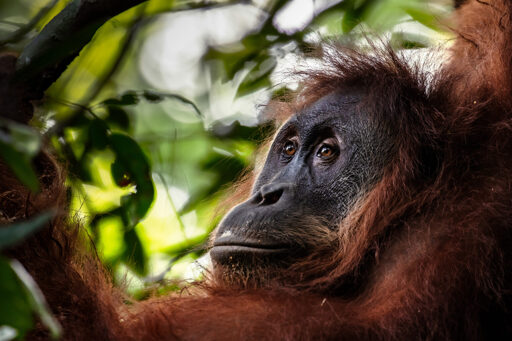
Sumatra — Fifteen years ago, Jantho Pine Forest Nature Reserve in Indonesia’s western Aceh province, on the island of Sumatra, had no orangutans. Today, it is home to a growing wild population, built almost entirely from rescued and relocated animals. Since 2011, conservationists from the Sumatran Orangutan Conservation Programme have brought nearly 200 Sumatran orangutans to Jantho after they were rescued from the illegal wildlife trade or relocated from areas where deforestation and expanding agriculture had brought them into conflict with people. The reserve’s vast, protected forests offered a rare opportunity to establish a new population in a habitat capable of supporting the species for generations. Returning orangutans to the wild is never simple: Some rescued apes spend years relearning the skills they would normally acquire from their mothers, while others must adapt to unfamiliar forests after being relocated. Not every reintroduction succeeds, but efforts in Jantho are proving remarkably successful. Researchers have confirmed that at least 10 orangutans have been born in the reserve, with the possibility of more that remain undetected in the dense forest. These births are a sign that this once-empty forest is becoming a self-sustaining home for one of the world’s most endangered great apes. Success, however, depends on more than rehabilitating orangutans. Like many protected forests across Southeast Asia, Jantho faces growing pressure from human activity at its borders. Protecting this emerging population means safeguarding the forests and rivers upon which both wildlife and surrounding communities rely. Mongabay’s Video Team wants to cover questions…This article was originally published on Mongabay
From Conservation news via This RSS Feed.