

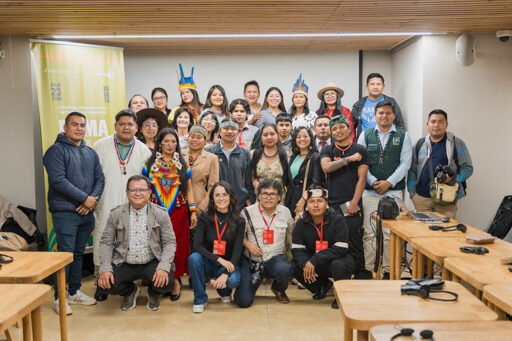
Founder’s Briefs: An occasional series where Mongabay founder Rhett Ayers Butler shares analysis, perspectives and story summaries. When Mongabay Latam began publishing in 2016, the aim was to establish a sustained environmental news service for Spanish-speaking Latin America. The newsroom would be led by editors in the region, work with journalists who understood the places they covered, and develop its own editorial priorities in response to local conditions. Over the decade that followed, Mongabay Latam’s staff and contributors built that newsroom. They developed a daily news service covering forests, oceans, wildlife, science, Indigenous rights, environmental crime, and the people responding to ecological change. They formed more than 90 partnerships with national newspapers, regional publications, and independent media, allowing stories to reach audiences far beyond Mongabay’s own platforms. Photo by Mongabay Latam. Mongabay Latam team at Puma Fest. Photo by Mongabay Latam. The team also built the relationships and expertise required for more ambitious investigations. Working with organizations including CLIP, Animal Político, Rutas del Conflicto, Plaza Pública, and El Espectador, Mongabay Latam has investigated illegal mining, land grabbing, wildlife trafficking, deforestation, and the role of organized crime in some of the region’s most threatened landscapes. Last month in Bogotá, the strength of what the team has created was visible in another form. To mark its tenth anniversary, Mongabay Latam hosted PUMA FEST, a gathering organized with Fundación Gabo ahead of the 14th Gabo Festival. Around 700 people registered, and 400 attended in person. Journalists, editors, Indigenous communicators, students, scientists, and other…This article was originally published on Mongabay
From Conservation news via This RSS Feed.