

This article by Néstor Jiménez originally appeared in the August 2, 2026 edition of La Jornada, Mexico’s premier left wing daily newspaper.
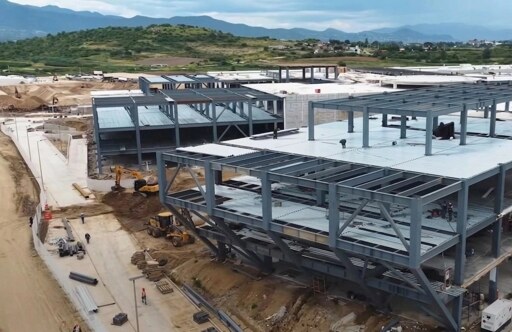
San Lorenzo Cacaotepec, Oax. On a plot of more than 50 hectares in San Lorenzo Cacaotepec, located on the northern outskirts of the Oaxacan capital, President Claudia Sheinbaum Pardo led the laying of the first stone of the new General Hospital of the Mexican Social Security Institute (IMSS), which will be part of the so-called city of health, where a hospital of the Institute for Social Security and Services for State Workers (Issste) is also being built and one more from IMSS Bienestar is taking shape. It is a complex already known in the Mixtec language as “ñuu tata,” or town that heals.
“It is going to be an example not only for Oaxaca, not only for the country, but for the entire world, because it will have the most modern services that can be found. It is called justice for Oaxaca, social justice for Oaxaca, giving Oaxacan women and men the true right to health,” the president emphasized.
As the close of her tour of activities in this state, the head of the federal Executive inspected the construction of the Issste hospital being built alongside it, and then gave the starting signal for the works of the IMSS hospital.
She recalled that in the first 39 years of the IMSS, 29,000 hospital beds were built, and afterward, in the 36 years of the neoliberal period, only 4,000 beds were built in public hospitals across the country, which led her to state that “they were many years of abandonment of public institutions.”
In addition, “the population kept growing and the workers kept growing. And unfortunately getting sicker, because it was the massive entry of junk food, of a very sedentary way of life, and chronic diseases came in, diabetes, hypertension, high cholesterol, all of that which today afflicts us Mexicans so much,” which she attributed to the health systems becoming saturated.
Meanwhile, her government plans the construction of 9,000 hospital beds and the goal of building a universal health system.
During the event, the director general of the IMSS, Zoé Robledo, agreed that after the first 39 years of that institute’s life, “the long neoliberal night arrived,” in which “health was seen as a business and not as a right, something that could be commercialized, because hospitals also had fewer and fewer services in order to favor outsourcing toward the private sector. Our hypothesis is that they thought: why invest in what we intend to privatize.”
He explained that the new hospital to be built in Oaxaca will serve nearly one million Oaxacan beneficiaries and will have 530 beds: 260 for hospitalization and 270 for emergency areas. It will also have an area for adult, neonatal, and pediatric intensive care; 53 consulting rooms and 57 different specialties, such as molecular biology, nuclear medicine, surgical oncology, and neurosurgery, as well as nine operating rooms, obstetric surgery rooms, and three endoscopy rooms; 42 hemodialysis machines, among other features, which will be attended by a total of 2,826 health workers.
With that, when its construction is completed, he stressed, “we will add more beds to the IMSS than those built in the six presidential terms of the neoliberal period.”
Amid the shout of “Social Security, national patrimony!,” Robledo noted that a hospital is not humanized because it is new or has the best technology, but rather when “a person is received and seen as a story, a person with a first and last name, and not only with a Social Security number.”
For his part, the director general of the Issste, Martí Batres, announced that the general hospital of that institute, being built just a few meters away, has an investment of 3.5 billion pesos and is 62 percent complete after beginning its construction in August 2025. That hospital will have 508 beds, 61 emergency beds, a heliport, 43 consulting rooms, 11 operating rooms, and 36 specialties, together with relevant equipment such as a linear accelerator, a radiological unit, magnetic resonance equipment, a CT scanner, two mammography rooms, two hemodynamics rooms, and a nuclear medicine area.
The Oaxacan government estimated the total investment of the three health institutes at 10 billion pesos.
-
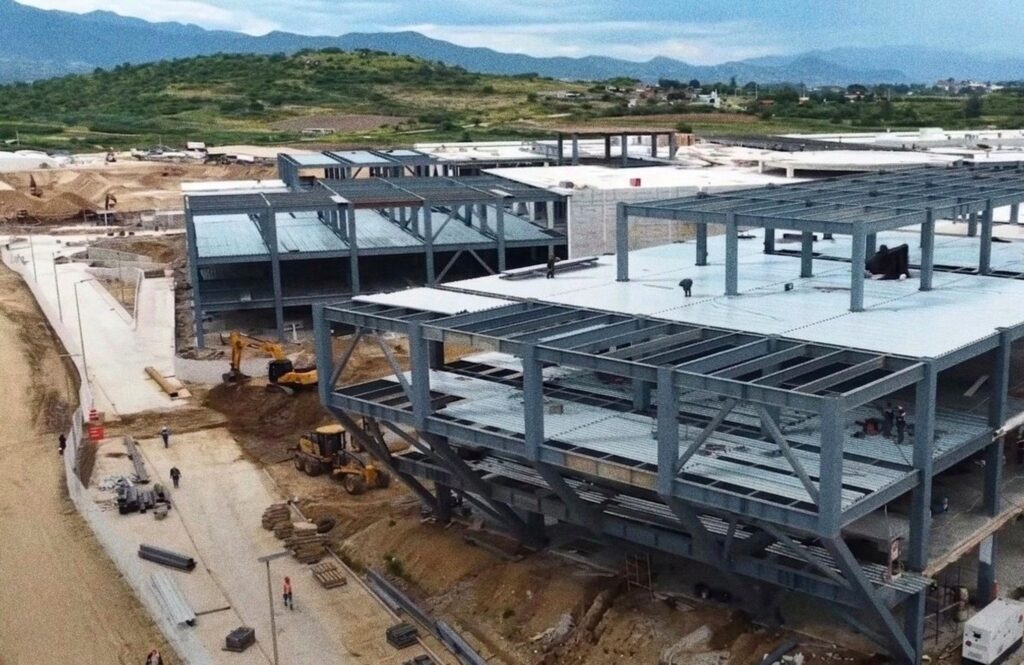
City of Health in San Lorenzo Cacaotepec, Oaxaca, Will Be an Example for the World, Says Sheinbaum
August 2, 2026
Sheinbaum broke ground on a new IMSS hospital in a three-institute health complex, contrasting its 530 beds with the 4,000 built in 36 neoliberal years.
-
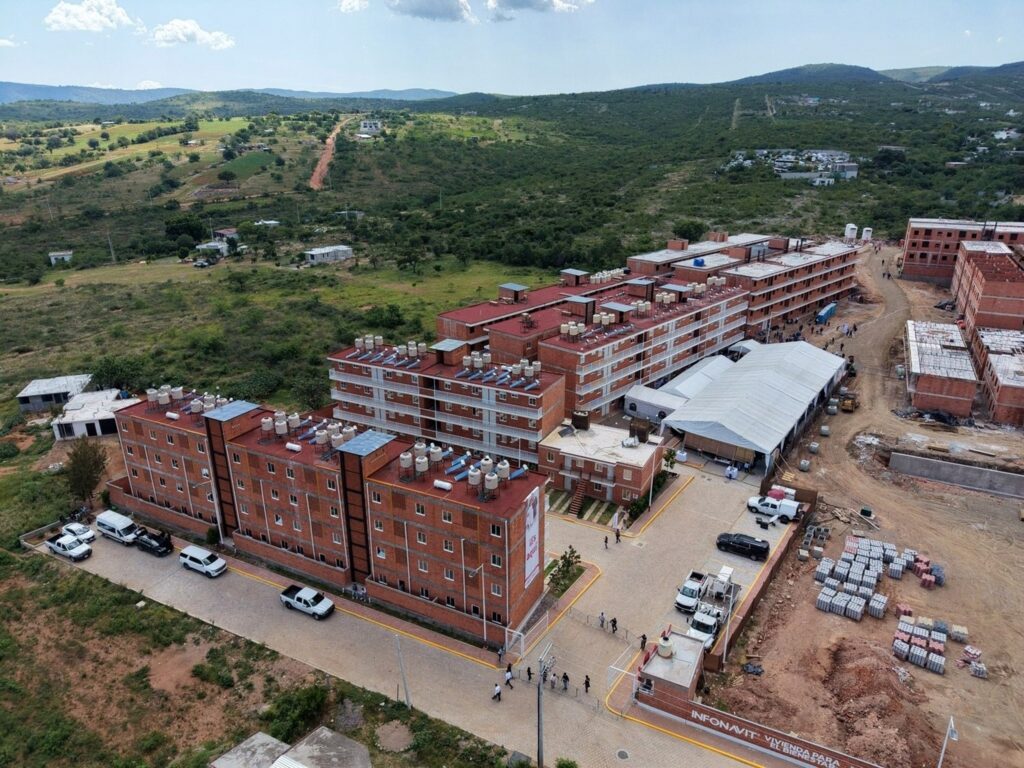
Sheinbaum Promises to Benefit 12 Million Families With Housing Programs During Her Term
August 2, 2026
Nearly a third of Mexican families will be reached: 5.2 million restructured loans, 1.8 million new Wellbeing homes, plus deeds, renovations and Infonavit credits.
-
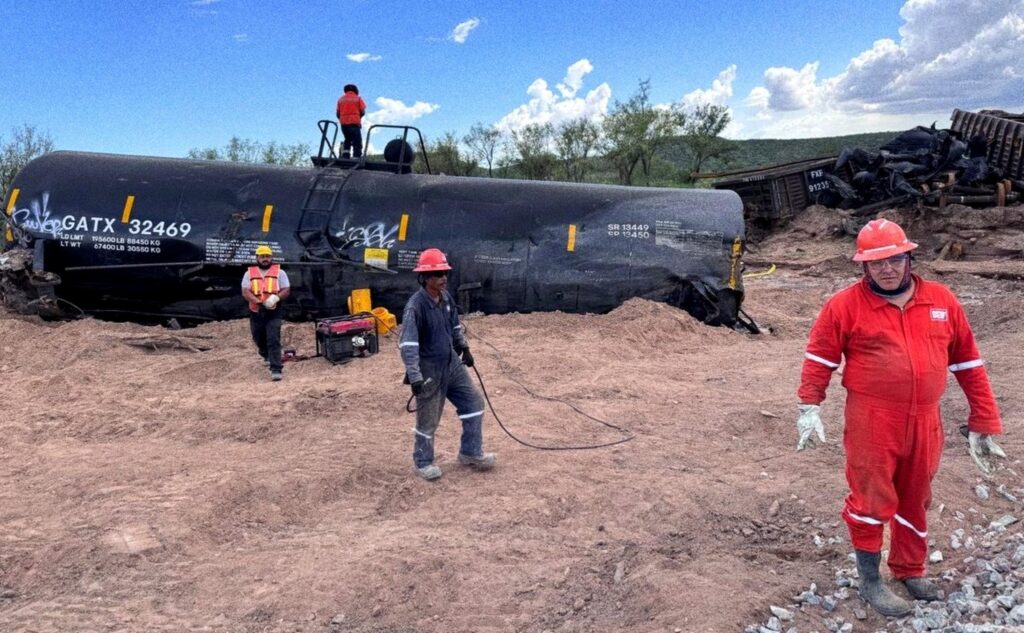
Mexico’s Environmental Secretariat Says Ferromex Must Remediate the Damage From Chemical Spill in Sonora
August 1, 2026August 1, 2026
The derailment dumped 70,300 liters of sodium hydrosulfide into a Sonora streambed, 11,000 more than first reported, contaminating 1.7 square kilometers.
The post City of Health in San Lorenzo Cacaotepec, Oaxaca, Will Be an Example for the World, Says Sheinbaum appeared first on Mexico Solidarity Media.
From Mexico Solidarity Media via This RSS Feed.