

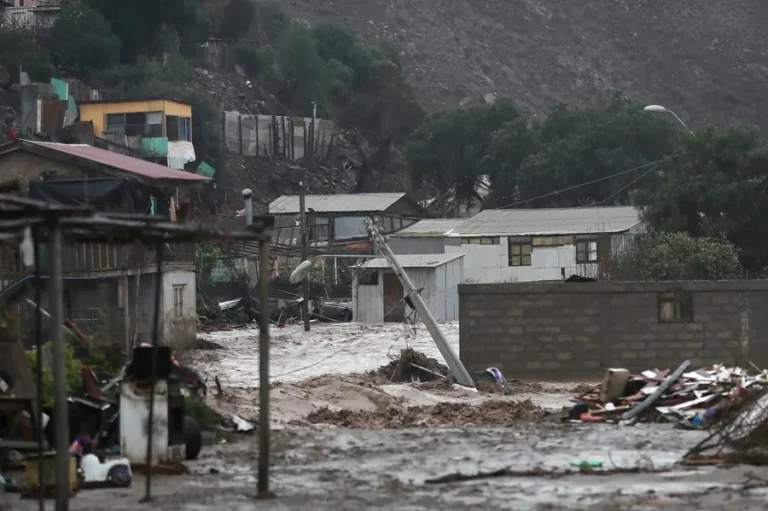
Chile flood emergency leaves two dead, thousands isolated, and 180,000 without power as authorities order evacuations and brace for more rain.
Related: Chile Orders Evacuations as New Storm System Hits
Chile flood emergency has intensified after the National Disaster Prevention and Response Service confirmed two deaths and more than 2,000 people isolated following a new frontal system that swept across central-northern and southern regions of the country. The severe weather also left 180,000 users without electricity, while emergency crews worked to restore access and reach affected communities.
According to the Ministry of the Interior, the fatalities occurred in the Los Ríos region when a large tree fell onto the vehicle in which the victims were traveling. In response to the escalating risk, authorities ordered evacuations in several communes in Bío Bío, La Araucanía, Ñuble, and Coquimbo, where river overflows and infrastructure damage threatened local populations.
Chile flood emergency and the damage
The Chile flood emergency has left around 350 people affected, dozens in temporary shelters, and more than 1,000 homes damaged by wind, rain, and flooding. Officials said the emergency is part of a wider winter pattern that has already caused 13 deaths in recent weeks and serious harm to roads, bridges, and essential services.
Emergency teams remain deployed on the ground to assist stranded families and reopen blocked roads. Authorities are also coordinating evacuations and monitoring river levels, as the latest storm adds pressure to already saturated terrain and vulnerable infrastructure.
Chile’s meteorological service warned that rainfall could continue above historical averages in the coming months because of the persistence of El Niño. That outlook has raised concern among disaster managers, who are keeping brigades active to respond to new landslides, floods, and transport interruptions.
The Chile flood emergency is hitting communities that were already exposed by previous storms. Social groups have stressed the need for permanent budget lines and territorial planning to reduce the impact of extreme weather on working-class families living in high-risk zones.
Public organizations argue that the climate crisis does not affect all communities equally. Poorer households, especially those in flood-prone rural and peri-urban areas, are often the first to lose electricity, housing stability, and access to transport when storms intensify.
Evacuations and state response
The government said the Chile flood emergency is being addressed through national contingency protocols designed to protect life and maintain basic services. Local authorities remain active in the communes under alert to secure food, water, and emergency supplies while restoring public utilities as quickly as possible.
Red alert conditions led officials to evacuate communities in several regions where river overflow was considered imminent. The priority, according to authorities, is to prevent further casualties and reduce the exposure of residents living near unstable riverbanks, flooded roads, and collapsed infrastructure.
The Chile flood emergency has also forced the state to focus on emergency shelter, rescue logistics, and damage assessment. As the storm continues to move through the country, officials say they are working to keep critical routes open and prevent secondary disasters linked to landslides and rising water.
The scale of the response reflects the seriousness of the event. Nearly 3,000 members of the Armed Forces and police have been involved in security and rescue operations in the hardest-hit areas, especially where road access has been lost and residents need immediate evacuation.
Officials noted that this storm is part of a broader pattern of winter fronts affecting Chile from north to south. That pattern has already created a chain of emergencies that strained local governments, emergency services, and electrical networks across multiple regions.
Geopolitical context
The Chile flood emergency has implications beyond national borders because it highlights the growing vulnerability of South American countries to climate-driven disasters. Extreme rainfall, river overflow, and infrastructure collapse are becoming more frequent and more costly across the region.
For Chile, the crisis is a test of state capacity, territorial planning, and climate adaptation policy. For neighboring countries, it is another warning that disaster preparedness can no longer rely on reactive measures alone, especially as El Niño and other climate patterns intensify weather volatility.
Regionally, the Chile flood emergency reinforces calls for stronger investment in resilient infrastructure, early warning systems, and social protection. It also underscores how climate change disproportionately affects lower-income communities, making disaster response a matter of both public safety and social justice.
What comes next
Authorities say rainfall is expected to continue in some areas, and new alerts may be issued if river levels rise again. For now, the focus remains on rescue operations, restoring power, and reconnecting isolated communities.
The Chile flood emergency is likely to remain active in the coming days as emergency services assess damage and residents return to their homes where possible. Officials have urged the public to remain cautious, follow evacuation orders, and avoid traveling through flooded or unstable areas.
The latest storm confirms that Chile’s winter emergency is far from over. With more rain forecast and already weakened infrastructure under strain, the country faces a prolonged recovery period.
From teleSUR English via This RSS Feed.