

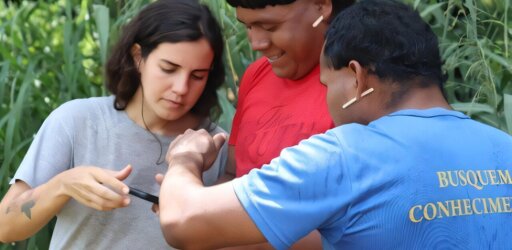
“An island of biodiversity in a sea of monoculture”: This is how a recent study characterized the Pimentel Barbosa Indigenous Territory (TIPB), located in the northeastern part of Mato Grosso state in Brazil’s Central-West region. The study showed that the area’s human occupation patterns and vegetation cover have remained largely unchanged for four decades. Meanwhile, the surrounding area has been altered by the expansion of livestock ranching, soybean farming and the construction of major highways (BR-158 and BR-163), which are part of Brazil’s efforts to extend its agricultural frontier. The TIPB covers 329,000 hectares (1,270 square miles) and was home to 2,369 people in 2022, according to a census by the Brazilian Institute of Geography and Statistics (IBGE).
From Earth News - Earth Science News, Earth Science, Climate Change via This RSS Feed.