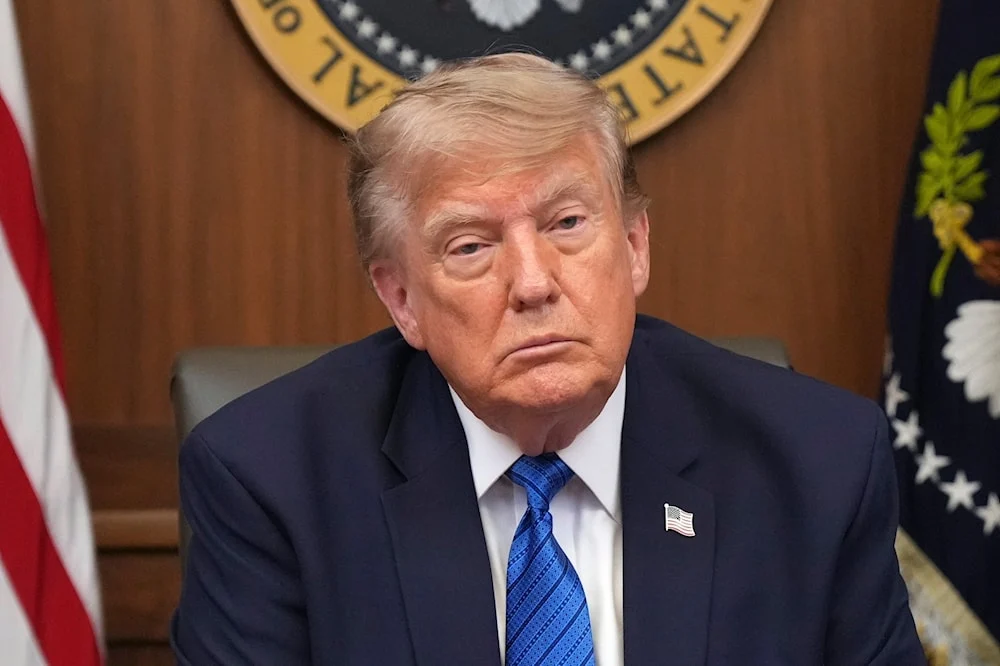
Trump says the U.S. suspended planned attacks after Iran and regional states sought time to finalize a potential agreement.
U.S. President Donald Trump said he had called off planned military strikes against Iran after Tehran and several Middle Eastern countries requested a pause to allow negotiations on what he described as the framework of a potential agreement.
RELATED: US Reiterates Its Interest in Strategic Sectors in Morocco and Western Sahara
In a post on Truth Social, Trump said the United States had been fully prepared to launch military action against Iran but agreed to suspend the operation after being informed that “the perimeters of a deal” had been reached.
He claimed the proposed agreement would include the immediate reopening of the Strait of Hormuz and the end of Iran’s nuclear program, adding that Israel had joined the commitment to delay military action while negotiators worked to finalize the deal.
Trump’s announcement followed reports that Washington had been considering major strikes against Iranian targets, including energy infrastructure.
Ver esta publicación en Instagram
Una publicación compartida por Al Jazeera English (@aljazeeraenglish)
According to Axios, Saudi Prime Minister Mohammed bin Salman raised concerns over the reported plans during a phone call with Trump. The report, citing U.S. officials, said Saudi Arabia sought clarification on Washington’s intentions and urged the United States to de-escalate rather than proceed with the strikes.
Iran Reiterates Warning Against Military Action
Iranian officials, meanwhile, renewed their warnings that any new attack by the United States or Israel would trigger a military response.
Foreign Minister Abbas Araghchi told his Saudi counterpart that Iran remained prepared to defend its sovereignty, territorial integrity and national security. He warned that any hostile action by the United States or Israel, or any participation by regional countries in such operations, would be met with a “decisive and proportionate response” from Iran’s armed forces.
Ver esta publicación en Instagram
Una publicación compartida por Al Jazeera English (@aljazeeraenglish)
Araghchi also held talks with Turkish and Pakistani officials as part of diplomatic efforts to prevent further escalation, including discussions with Pakistani Army Chief Field Marshal Asim Munir, who has been involved in mediation efforts between Tehran and Washington.
Separately, Ebrahim Rezaei, spokesperson for the Iranian Parliament’s National Security and Foreign Policy Committee, said any Iranian retaliation would extend beyond the Gulf region.
“Our response to any potential enemy attack will not be limited to the Persian Gulf region,” Rezaei wrote on X, adding that Iran would target “all enemy bases and the origin of the attacks from anywhere.”
His remarks followed reports that Washington and Tel Aviv had discussed possible strikes on Iranian energy facilities, including power plants and refineries. CBS News reported that U.S. officials had considered carrying out such attacks before financial markets opened because of concerns over potential economic disruption.
Regional Mediation Efforts Continue
Diplomatic efforts have continued alongside the military tensions. Saudi Arabia, Qatar, Türkiye, Oman and Pakistan have all pursued initiatives aimed at preventing further escalation.
Qatari mediators held separate talks with Iranian Foreign Minister Abbas Araghchi, U.S. envoy Steve Witkoff and Omani officials in an effort to reach an agreement to reopen the Strait of Hormuz. According to reports, the negotiations made progress, although it remains unclear whether they will be sufficient to prevent further confrontation.
From teleSUR English via This RSS Feed.
“we will bomb after we make a deal” -trump probably
Bla bla bla
CBS News reported that U.S. officials had considered carrying out such attacks before financial markets opened because of concerns over potential economic disruption.
“We could probably make money again!”