

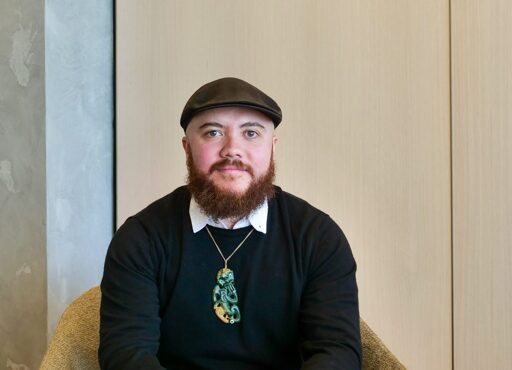

Jack Potaka. (Photo supplied)
The urgent Waitangi Tribunal inquiry into the Treaty Clauses Review has issued its findings, decrying what experts have called the most damaging legislative attack on Māori seen in a generation.
The Tribunal found the government breached Te Tiriti o Waitangi principles across 18 pieces of legislation, the second such finding this year.
Jack Potaka, who has appeared for claimants and interested parties in both urgent inquiries into this reform programme, explains the latest findings.
If you haven’t been following this closely, here’s what you need to know.
In 2023, the National–New Zealand First coalition agreement made a promise. Every law that mentioned the “Principles of the Treaty of Waitangi” would be reviewed. Those references would either be replaced with more specific wording, or removed altogether.
By February 2026, that promise had turned into a cabinet decision affecting 19 laws. These include legislation on school boards’ duties to Te Tiriti, the school curriculum, environmental protections, health legislation, climate law, and plant variety rights. The list goes on.
Because the education changes raised their own issues, the Waitangi Tribunal dealt with them separately and first. That inquiry, the Education and Training Amendment Act and Te Mātaiaho Urgent Inquiry (Wai 3553), released its interim stage one report in May. It found a breach of Te Tiriti so serious that the Tribunal compared it to the government’s earlier Treaty Principles Bill.
A second inquiry, Te Tinihanga o ngā Mātāpono o te Tiriti, the Treaty Principles Reform Urgent Inquiry (Wai 3565), dealt with the other 18 laws. That report has now been released.
I’ve spent most of this year working on both of these inquiries. First for NZEI Te Riu Roa and Ngā Kura ā Iwi, in the education case. Then for interested parties in this one.
Here’s my read of what the Waitangi Tribunal found, having sat through most of the evidence as it was given.
I want to start with the name of this second inquiry — Te Tinihanga o ngā Mātāpono o te Tiriti — because I don’t think it was chosen lightly, and it says something true about everything that follows.
“Tinihanga” has a plain meaning: change, reform, or amendment. But it also carries an older, deeper meaning, which refers to trickery, cheating, or deception. A cunning artifice that presents one purpose while pursuing another entirely.
It’s the word our tūpuna used to describe the exploits of Māui Tikitiki-a-Taranga, the trickster who fished up the North Island, snared the sun, and used cunning to achieve what strength alone could not. Tinihanga, in that older sense, is not simply lying. It’s misdirection with purpose.
I think that’s exactly what we’ve watched happen.
When the Principles of the Treaty of Waitangi Bill (also known as the Treaty Principles Bill) was resoundingly defeated at its second reading in parliament, it seemed like Te Tiriti was safe. It was not. While public attention stayed fixed on that defeat, this review continued beneath the surface, quietly stripping Treaty obligations out of 19 acts of parliament — without engaging Māori, against the advice of officials, and in direct contradiction of this Tribunal’s earlier findings. The sleight of hand was the point.
One hand pulled back so the other could move unnoticed.
So what did the Tribunal actually find?
The Tribunal found that the cabinet’s decision on February 23, 2026, breached three Treaty principles: good government, active protection, and partnership. It also found the decision was inconsistent with the honour of the Crown.
Those aren’t small findings. They’re about as serious as it gets in this jurisdiction.
The Tribunal said the decision was based on a “flawed rationale”. It said the Crown didn’t properly work out what the changes would actually do to Māori before making them. And it said the government was, in its own words, “governing by coalition agreement, irrespective of the normal conventions of engagement and deliberation.”
In plain terms, then, the coalition agreement said this would happen, so it happened. Everything else — the evidence, the advice, the people it would affect — didn’t count.
This is now the second time this year that a Tribunal panel has reached that conclusion about this same reform programme. Two separate inquiries. Two separate panels. The same answer both times.
What did the people advising the government actually say?
This is the part that should trouble anyone, whatever their view on Treaty clauses generally.
The government set up an independent ministerial advisory group to advise on these changes. It reported in August 2025. It did not recommend repealing Treaty provisions or downgrading Treaty standards across the board. If anything, it wanted the opposite: clearer, more detailed provisions, not weaker ones.
Then the Ministry of Justice weighed in with its own advice, in a document called a regulatory impact statement. It was blunt. Officials told cabinet directly that downgrading Treaty standards to the lowest available level — to merely “take into account” the principles of the Treaty — was “not a preferred option,” and warned it “carries significant risk to the Māori–Crown relationship.”
So the independent advisers said no. The government’s own officials said no. Cabinet did it anyway.
On what basis, then?
This is the question I kept coming back to during the hearings, and the Tribunal’s report answers it clearly.
For several of the affected laws, the entire justification came down to one sentence in a cabinet paper: the Minister of Justice, Paul Goldsmith, recording his personal view that provisions requiring the Crown to “give effect” to Te Tiriti “do not promote the balanced consideration of all relevant factors.”
That’s it. One sentence. Not a study or new evidence. Not advice from the group set up specifically to test these questions. A minister’s opinion, overriding the advice of everyone he’d consulted.
Carwyn Jones put it well when he gave evidence to this inquiry in June. He called it “the most damaging collection of legislative Treaty proposals I’ve seen in my career.” Having now read the Tribunal’s findings, I don’t think that was an overstatement. I think it describes exactly what this report has put on the record.
Were Māori actually consulted?
No. And this is the thread that runs through everything the Tribunal found, in both this report and the education one.
The ministerial advisory group recommended engagement happen before any decisions were made, with iwi, with hapū, with the National Iwi Chairs Forum. That didn’t happen. Where any engagement occurred, it came afterwards, once the decisions were already locked in.
Telling someone what you’ve decided is not the same as asking them what they think. That’s not partnership. It’s notification, dressed up as consultation.
Does the election matter here?
On May 27, 2026, the Minister of Justice told the National Iwi Chairs Forum that these changes won’t be enacted this parliamentary term. The Tribunal notes this in its report. The reason is straightforward: even using a process built for speed, they’ve run out of time to get all the legislation through before the election in November.
So every corner that got cut — sidelining the advisory group, ignoring the officials, leaving Māori out until after the decisions were made — was cut to meet a deadline the government has now admitted it can’t hit anyway.
Whatever government exists after this year’s election, this finding, and this report, will still be sitting there.
It’s now the official record of how this process actually happened. Governments come and go. Findings like this one tend to stick around.
So is this a win?
On paper, yes. In practice, it’s a different game altogether.
That difference comes down to jurisdiction. The Tribunal can only recommend. It can’t compel. It’s now told the Crown, in the strongest terms available to it, to stop and start again properly. But the Crown is under no legal obligation to do a single thing about it.
That gap between what the Tribunal can say and what the government can be made to do is the whole ballgame here, and nobody I’ve worked alongside this year — the claimants, the interested parties, the people who gave evidence — is under any illusion about that.
When the education interim stage one report came out in May, justice minister Paul Goldsmith announced within the hour that the reforms were proceeding regardless. There’s no reason to expect anything different today.
But I still think there’s a subtle sigh of relief right now, among the people who sat in the same rooms as me this year. People who took time away from work and whānau to give evidence, and said the same thing to two different Tribunal panels, then wondered whether anyone with actual power was listening.
The Tribunal was listening. It has now said, as clearly as it can, that what happened here was wrong. That it hurt Māori. And that the Crown needs to stop and do this properly.
That doesn’t change what the government does next. But it changes what the record shows. Nobody can honestly say that this process was sound, or that the concerns raised by hapū, iwi, and organisations like NZEI weren’t justified from the start.
What the Tribunal wants the Crown to do
The recommendation is to pause everything — pause both the repeals and the weakened Treaty standards — until there’s been real engagement with Māori. At least six months of it, done properly, without a predetermined outcome.
Beyond that, the Tribunal is blunt. No Treaty provisions should be repealed. None of the weightings should be weakened. Full stop.
If the government pushes ahead anyway and sends a bill to select committee, the Tribunal wants something far more serious than the usual process. It points to the 2010 inquiry into tobacco and Māori, which took 260 submissions and heard from 96 people around the country, as the kind of engagement a change like this actually deserves.
Where does that leave us? Two urgent inquiries. Two panels. Both reaching the same conclusion that this reform programme, taken as a whole, breaches Te Tiriti o Waitangi.
Whether the Crown listens, now, or after the election, is a different question. But we’ll be watching. And so will the people who spent this year telling their stories to the Tribunal.
The Crown’s cunning artifice and deceit are on the official record. Whatever the government does next, at least it can be seen for what it is — tinihanga.

Jack with Annette Sykes (centre) and others involved in the urgent Waitangi Tribunal hearings. (Photo supplied)
Jack Potaka (Ngāti Hauiti, Ngāti Tama ki te Ūpoko o te Ika) is a solicitor with Annette Sykes & Co, and has appeared as counsel for claimants and interested parties in the urgent inquiries Wai 3553 (Education and Training Amendment Act) and Wai 3565 (Treaty Clauses Review). He works as a Tiriti, constitutional, and Indigenous rights lawyer, and as a te reo Māori and tikanga educator. He came up through kōhanga reo and rūmaki reo, and later whare wānanga. He’s passionate about kaupapa Māori, upholding Te Tiriti o Waitangi, and building an Aotearoa that honours what his tūpuna signed up for.
The post Tribunal names Crown’s trickery and deceit appeared first on E-Tangata.
From E-Tangata via This RSS Feed.