

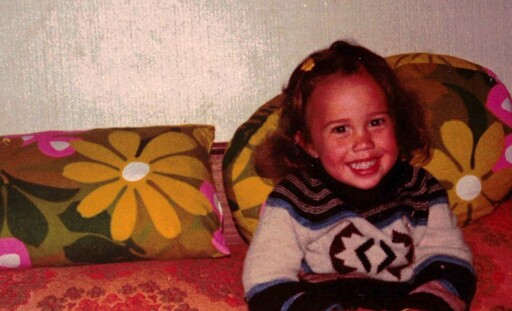

“I am of the generation that lost our reo.” — Tepaeru Minster, pictured here as a young girl. (Photo supplied)
Around 91 percent of Cook Islanders living in Aotearoa can’t speak their reo — and Tepaeru Minster is among them. As another Cook Islands Māori Language Week kicks off today, she writes about why she’s always dreaded them.
Kia orāna kia tātou kātoatoa. My name is Tepaeru. I say it is my name, because that is how some will understand names. But it isn’t really mine. It is a name that I, and those before me, and those after me, will hold for a short time.
It is a very Rarotongan name. But it has connections here, in Aotearoa, too. Tepaeru. Tapaeru. Tapairu. Names were not written until the missionaries came. The form may appear different, but they all mean the same.
My mum’s family are children of the ocean — ngā tāngata o Te Moana Nui-ā-Kiva — most recently from Rarotonga, one of 15 islands of the geopolitical grouping we currently call the Cook Islands.
It’s a strange feeling, constantly having to identify myself with Captain James Cook. Ko Tumutevarovaro te ‘enua. Tumutevarovaro is the name of our island. ‘Avaiki is our ancient homeland. These are our own proud, pre-colonial names.
Over the years, there have been calls to change the name of the island grouping, but it’s difficult to come to a consensus when our reo Māori has six distinct island dialects, and the language of Pukapuka is considered part of the Sāmoan language family. Gente Hermosa, which means “beautiful people”, was the first European name given to one of our islands, Rakahanga, in 1606.
When the New Zealand government passed the Cook Islands Act in 1915, it defined what is now known as the Cook Islands. The history of New Zealand governance and language policies in the Cook Islands is much the same as here in Aotearoa. My mum, whose first language was te reo Māori o Rarotonga, has told us stories of how babes like her were beaten at their New Zealand state primary school in Rarotonga for speaking te reo.
And so, some of my story will be familiar to you. I am of the generation that lost our reo. Heoi anō, e kore au e ngaro. He kākano i ruia mai i Ra’iātea. However, as the saying goes, I will never truly be lost, for I am a seed sown from Ra’iātea.
According to the census, around 91 percent of us “Cook” Islanders living on this land stolen from our tēina, the tangata whenua of this country, can no longer speak our reo. So I am far from alone.
But whenever Cook Islands Māori Language Week rolls around, I get a sense of dread. I know that’s probably not what some of you want or expect to hear, but it is my reality.
I dread being asked to host a language event for a language that was stolen from me. Te reo Māori language trauma is real. I dread being asked to share a story in celebration of Cook Islands Māori Language Week, when much of my experience growing up in New Zealand as a “Cook Islander” filled me with shame. I dread that my story will be censored, because it’s not all feel-good.
There’s a question that has followed me throughout my life. Usually, it gets asked by a fellow “Cook Islander” within a few minutes of our realising that we’re both “Cook Islanders”.
“Do you have your reo?”
There’s another moment of dread on my part, as I answer: “No. My mum didn’t teach it to us”.
More times than is helpful, their response is something along the lines of: “Well, you’re not a Cook Islander if you don’t know your reo.”
There’s that pang of language trauma.
I’ve been to Cook Islands Māori languages week events where the speaker has said: “You’re not one of us if you can’t speak te reo.”
I’ve tried taking Cook Islands Māori language classes several times over the years, and each time, different teachers have repeated the same sentiment: You’re not one of us if you can’t speak te reo.
I’m not sure what the intended effect of those words was. But I still hear them, to this day.
Te reo Māori language trauma is real. The difference between me now and then is that I have taken many difficult steps to unpack the harmful effects of colonisation and the language policies imposed at my mum’s New Zealand state school on Rarotonga.
A few years ago, when I accepted my current employment, I decided to make use of my employer’s study leave support policy. I would have another stab at healing from that language trauma. To reconnect, in a way, with my tupuna, through what has been made possible by the hard-fought and hard-won battles of our teina, ngā tāngata whenua o Aotearoa, and the reo revitalisation movement here.
So every Wednesday, I took study leave and began reclaiming te reo Māori at Te Wānanga o Aotearoa. I now learn through Te Ataarangi.
Our reo Māori are similar. Similar enough that I can speak what I know in te reo Māori o Aotearoa to my mum, and she can understand me. I can now read and understand some te reo Māori o Rarotonga, from my journey of reo reclamation.
I suppose mine is not a typical journey of reo reclamation and healing. I have come to it by learning the reo of our ‘ānau or whanaunga here in Aotearoa. But it has been healing. Where once my lungs would seize up in asthmatic response to my reo Māori language trauma, I can now speak te reo without the fear of not being able to breathe.
I know tupuna are always with us, but language is the vehicle of cultural transmission. Consequently, language is critical to a person’s health. That’s why we celebrate language weeks throughout the year. And I don’t just mean Pacific languages weeks. There are others too. New Zealand Sign Language Week, New Zealand Chinese Language Week, Hindi Language Week.
We have Te Wiki o te Reo Māori, too, but as I type those words, I hear the voice of my kaiako (teacher): “Ko te reo Māori i ngā wā katoa.”
Because, of course, celebrating and thinking about te reo Māori shouldn’t be confined to a single week each year. It should be spoken and celebrated every day.
Dr S Tepaeru Minster is a mum, a daughter, a sister, an aunty, and a child of the ocean, working every day to reclaim the sounds of her tupuna, with the help of Te Wānanga o Aotearoa, and now Te Ataarangi, in the bilingual town of Ōtaki. She works as a public sector researcher and evaluator.
The post Why I dread Cook Islands Māori Language Week appeared first on E-Tangata.
From E-Tangata via This RSS Feed.