

Venezuela rental law approved by Parliament introduces mediation, caps deposits at three months, and reshapes landlord-tenant relations.
Related: Venezuelan Acting President Leads Electric Grid Recovery Plan After Quakes
Changes in Venezuela Rental Law Approved by Parliament
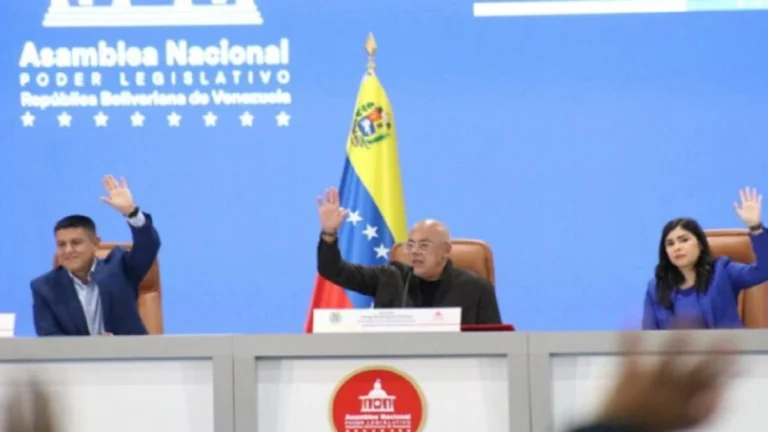
Venezuela rental law has entered a new phase after the National Assembly approved the Special Law on the Leasing of Properties for Housing on Friday, in second discussion and by unanimous vote. The legislation is designed to regulate the relationship between landlords and tenants in rental contracts, establishing clearer rules and stronger guarantees for both parties.
The new Venezuela rental law aims to create a more balanced framework for leasing, from the initial request for a property to the resolution of possible disputes. It also introduces mechanisms for mediation, allowing conflicts to be settled without immediately resorting to court proceedings.
Venezuela rental law and the new leasing framework
The approved text of the Venezuela rental law establishes that tenants and landlords can autonomously agree on the rental amount and payment methods, within the limits set by the law. It also allows for a security deposit of up to three months’ rent, which must be returned within 15 days after the contract ends and the property’s condition is verified.
One of the key innovations is the inclusion of mediation procedures to resolve disputes related to housing rental contracts. This is intended to reduce the burden on the judicial system and provide faster, more accessible solutions for both tenants and property owners.
The law also clarifies that it will apply only to contracts signed after its entry into force, meaning that existing agreements will continue under the previous legal framework. This transitional provision is meant to avoid sudden disruptions in the rental market while gradually implementing the new rules.
After the Parliament declares the law sanctioned, Acting President Delcy Rodríguez will send it for promulgation through the executive decree, paving the way for its official publication and enforcement. Once in force, the Venezuela rental law will become the central reference for all new residential leasing agreements in the country.
What the law changes and why it matters
The Venezuela rental law is part of a broader effort to regularize the housing market and address longstanding tensions between tenants and landlords. Previous regulations had imposed strict controls on rents and evictions, which critics argued discouraged investment in rental housing and led to a shrinking supply of available properties.
Under the new framework, the state aims to strike a balance between protecting tenants and ensuring that property owners have enough legal certainty to participate in the market. The cap on deposits and the requirement for their timely return are intended to reduce financial burdens on renters, while the mediation mechanisms are meant to prevent prolonged conflicts.
The law also reinforces the role of the National Superintendence of Housing Leasing (SUNAVI), which will oversee compliance and provide guidance on contract standards. This centralization is designed to create a more uniform application of the rules across different regions.
For tenants, the law offers clearer procedures and stronger protections against arbitrary evictions. For landlords, it provides a defined legal path for resolving disputes and recovering properties in cases of non-payment or contract violations. The government argues that these changes will help revitalize the rental market and expand housing options.
Geopolitical context
The approval of the Venezuela rental law comes at a time when housing policy is a sensitive issue across Latin America, where urban shortages, inflation, and displacement have made access to stable housing a major social concern. In Venezuela, the situation is compounded by years of economic crisis, sanctions, and migration, which have strained the housing sector.
Regionally, the law could be seen as part of a trend toward more interventionist approaches in housing markets, where governments seek to balance market dynamics with social protections. However, the effectiveness of the Venezuela rental law will depend on implementation, enforcement, and the ability of institutions to manage disputes fairly and efficiently.
Internationally, the law may also be viewed in the context of Venezuela’s efforts to normalize certain areas of domestic policy while under external pressure. By presenting the legislation as a step toward stability and social peace, the government aims to demonstrate progress in governance, even as broader political and economic challenges remain.
What comes next
The next phase will involve the official publication of the law in the Official Gazette and the development of implementing regulations. SUNAVI and other agencies will need to prepare guidelines for contracts, deposits, and mediation procedures, ensuring that the rules are clear and accessible.
For tenants and landlords, the Venezuela rental law will gradually reshape how rental agreements are negotiated and enforced. Its success will depend on whether it can deliver on its promise of greater fairness, legal clarity, and market stability without creating new bottlenecks or unintended consequences.
AN sanciona Ley de Régimen Especial de Arrendamiento de Inmuebles para Vivienda
Aprobada por unanimidad, la norma busca garantías para propietarios e inquilinos y formalizar el mercado de alquiler en Venezuela. Es la décima ley sancionada en 2026 y la número 110 del actual… pic.twitter.com/7zLyInjVHk
— teleSUR TV (@teleSURtv) July 31, 2026
From teleSUR English via This RSS Feed.